

A 1-bedroom apartment in Semarang runs about $235 a month. In Tasikmalaya, it drops to roughly $66. Even Ubud, Indonesia's most expensive expat hub, charges less for a 3-bedroom apartment than a 1-bedroom rents for in most major Western cities. According to Numbeo's May 2026 data, Indonesia's overall cost of living sits 68% below the United States, ranking 144th out of 155 countries worldwide for cost.
This guide covers visas, city-by-city living costs, housing, healthcare, education, and daily life, with figures checked against Indonesia's immigration authority and current 2026 cost data, not a single self-reported average.
5 Ways to Stay in Indonesia, 2026:
Indonesia's visa system has matured fast since the 2022 Second Home Visa, but it still has real gaps, especially for digital nomads, that don't get mentioned often enough.
Free Visa on Arrival, the Default for Most Tourists:
169 nationalities, 30 days, extendable once
Most visitors enter Indonesia on the free Visa on Arrival, available to 169 nationalities at international airports and ports. It runs 30 days and can be extended once for another 30 days, for a total of 60 days. ASEAN citizens (Brunei, Cambodia, Laos, Malaysia, Myanmar, Philippines, Singapore, Thailand, Vietnam) get the same 30-day visa-free access, as do citizens of Chile, Peru, and Morocco under separate bilateral agreements.
The E33G Remote Worker KITAS, Indonesia's Actual Digital Nomad VISA:
1 year, non-renewable, for foreign-employed remote workers only
Launched in 2024, the E33G is Indonesia's official limited stay permit for foreigners who work remotely for an employer registered outside the country. It costs IDR 7,000,000 in government fees (roughly $430), plus KITAS processing that typically brings total first-year costs to $600 to $1,000. Income requirements vary by source: some immigration guides cite a minimum of $60,000 a year in employment income, while others reference a personal bank statement showing at least $2,000 held over the prior three months.
The visa is genuinely restrictive in one specific way: it's issued for a single one-year period and is not automatically renewable. When it expires, you must leave Indonesia and apply for an entirely new E33G from scratch, with fresh documentation proving continued employment and income. There's no cap on how many times you can do this, but each cycle means starting the paperwork over.
The Second Home Visa, 10 Years, No Annual Renewal:
$130,000 in property or a bank deposit, family sponsorship included
Introduced in 2022, the Second Home Visa offers 5 or 10 years of residence to those who deposit funds in an Indonesian bank or purchase real estate worth at least $130,000. Unlike the E33G or standard work KITAS, it doesn't require renewal every one or two years, a genuine structural advantage for anyone planning to stay long-term. Investors can sponsor immediate family, spouses, children, and parents, for residency under the same program.
The Standard Work KITAS, for Local Employment:
Employer-sponsored, requires an RPTKA work permit first
Anyone employed by an Indonesian company needs the E23 Work Permit and a corresponding KITAS, sponsored by the employer. The employer must first secure RPTKA approval (the formal work plan for hiring a foreign national) and then an IMTA work permit, before the KITAS itself gets issued. The full process, from RPTKA submission to KITAS issuance, typically takes 8 to 12 weeks.
Once issued, the KITAS runs 1 to 2 years matching the IMTA's duration, renewable multiple times while employment continues. Foreign employees must register with BPJS Kesehatan (health insurance) and BPJS Ketenagakerjaan (employment social security) within 30 days of KITAS issuance.
KITAP, Permanent Residence After five Years:
Available after 5 continuous years on a KITAS
After five continuous years holding a KITAS, whether through employment, investment, or marriage to an Indonesian citizen, holders can apply for KITAP, Indonesia's permanent stay permit. It renews every five years, not annually, and KITAP holders gain easier access to banking, driving licenses, and long-term property arrangements compared to KITAS holders.
Moving to Indonesia: Essential Document Checklist
Gather these before applying for any visa category. Missing one item is the most common reason an application stalls at the embassy or at immigration on arrival.
Valid for at least 12 months from your date of entry for most KITAS categories.
Color photo with a red or white background, sized 4x6cm.
For the E33G, a personal bank statement showing the required minimum balance over the prior three months, including name, dates, and balance.
Proof of continued employment with a company registered outside Indonesia, for remote worker categories.
Coverage for the full duration of your intended stay, required across most visa categories.
Notarized and legalized, required for employer-sponsored work KITAS applications specifically.
A rental agreement or property document, needed for registration with the local kelurahan (village administration office) once you've secured housing.
The Average Cost of Living in Indonesia:
These figures compare Ubud, the most expensive expat hub, against Semarang, one of the most affordable, using May 2026 Numbeo data. All costs run in USD.
Eating at street vendors or local warungs runs noticeably cheaper than Western-style restaurants in both cities. Dairy products cost more than in the US specifically, due to higher import costs and limited local supply.
The Most Expensive and Affordable Cities in Indonesia:
Cost varies sharply by city, and the gap between Indonesia's priciest expat hub and its cheapest city runs nearly 10x on rent alone.
6 Cities Worth Knowing in More Detail:
Beyond the cost comparison, here's what actually distinguishes each of these six cities day to day.
Ubud
Jungle ravines, rice paddies, and spiritual temples draw a steady flow of yoga and meditation-focused expats, alongside digital nomads pulled in by reliable coworking spaces. Hike Mount Batur or visit the Tegallalang Rice Terraces and Sacred Monkey Forest Sanctuary, though the monkeys there are notorious for snatching loose belongings. It ranks among Indonesia's safest cities, a real factor in why the expat community has stayed strong despite rising costs.
Jakarta
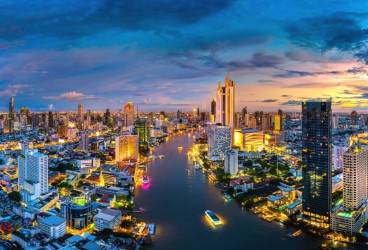
IT, sales, and banking jobs concentrate here more than anywhere else in the country, alongside the best street food and retail scene. Ancol Dreamland's theme parks, the National Museum of Indonesia, and Bogor Botanical Garden round out the cultural side. Jakarta's Cost of Living Index sits at 28.4 against New York's 100, genuinely affordable despite being Indonesia's priciest mainland city.
Surabaya
Indonesia's commercial, industrial, and port hub blends colonial-era architecture with a less tourist-oriented daily rhythm than Jakarta or Bali. English isn't as widely spoken here, though a growing community connects to universities and international businesses. East Javanese dishes like rawon and rujak cingur anchor a strong local food culture distinct from the rest of Java.
Semarang
Named for its network of river roads, Semarang draws retirees and professionals seeking a quieter life at a genuinely low cost. The Kota Lama old town preserves well-kept colonial architecture, and annual events like Tawang Fest and the Semarang Night Carnival keep the cultural calendar active despite a smaller expat population than Jakarta or Bali.
Yogyakarta
Home to Gadjah Mada University and Yogyakarta State University, Yogyakarta draws students and academics from around the world alongside expats who value traditional art and culture. The Kraton palace and the Kota Gede silver industry give the city a depth of tradition that Jakarta and Bali, both more commercially driven, don't replicate.
Tasikmalaya
Nicknamed "Kota Santri," City of Islamic Students, Tasikmalaya runs more conservative and traditional than Jakarta or Bandung, surrounded by green hills and volcanic landscapes including Mount Galunggung. Foreign residents are genuinely rare here, and daily life runs almost entirely in Indonesian, which makes language skills far more necessary than in Bali or Jakarta.
Healthcare, Education, and Getting Around:
These systems shape day-to-day life once the visa and the apartment are settled.
Public healthcare is free, but ranks low
Indonesia's free public healthcare system ranked 87th globally on the 2023 Legatum Prosperity Index, with long wait times common. Private facilities offer shorter waits, more English-speaking staff, and better equipment, but require out-of-pocket payment or insurance.
Scooters and ride-hailing apps run the show
Gojek and Grab cover motorcycle taxis (ojeks) and car rides, often cheaper and more flexible than public transport. Renting a scooter for the day is common and practical, though traffic rules require real caution for newcomers.
Three school tiers, three price points
Public school is free but underfunded. Private schools start around $1,500 a year. International schools, concentrated in Jakarta and Bali, reach up to $12,000 per child annually.
Petty crime, not violent crime, is the real risk
Most incidents involving foreigners are pickpocketing, scooter theft, or scams, not violent crime. Standard urban caution covers most of the practical risk.
Street food keeps daily costs genuinely low
Meals from street vendors and local warungs run as little as $1, far below Western-style restaurants. This single habit shift cuts food costs more than any other single choice.
Register with your local kelurahan
Anyone renting property for an extended period needs to register with the village administration office (kelurahan) using their KITAS card number. Landlords and visa agents can usually assist with this step.
Frequently Asked Questions (FAQ's):
Verified for June 2026.






{{item.get_author.first_name}} {{item.get_author.last_name}}
Level 7
5 Photos
36 Reviews
{{item.comment_txt}}
{{item_reply.get_author.first_name}} {{item_reply.get_author.last_name}}
@ {{item_reply.reply_to}}, {{item_reply.reply_txt}}