
 AI trip planner
Four days is enough to see the core of Mexico City without rushing: one day in the historic center, one in Chapultepec Park and the National Museum of Anthropology, one in Coyoacán for the Frida Kahlo Museum, and one at the pyramids of Teotihuacan. The key to making it work is order. Many of the city's major museums close on Mondays, so put the pyramids, which open every day, on your Monday.
This itinerary is planned around that rule, with neighborhoods to stay in, transport tips and 2026 entry prices.
Facts, prices and rules were checked against official sources in November 2026.

Before you go: three things that shape the plan
First, altitude. Mexico City sits at about 2,240 meters, higher than many ski resorts. Most visitors feel nothing worse than shortness of breath on stairs, but it is sensible to take the first afternoon slowly, drink plenty of water and go easy on alcohol for the first night.
Second, Mondays. The National Museum of Anthropology and the Frida Kahlo Museum are both closed on Mondays, and many smaller museums follow the same pattern. Teotihuacan, by contrast, is open daily from 08:00 to 17:00, with last entry at 16:30.
Third, advance tickets. The Frida Kahlo Museum sells tickets only online through its official site, and time slots often sell out weeks ahead. Book it the moment your dates are fixed, then build the rest of the plan around that slot.
Where to stay for four days
| Neighborhood | Character | Best for |
|---|---|---|
| Roma Norte | Leafy streets, cafés, restaurants, art deco buildings | First-timers who want to walk to dinner |
| Condesa | Parks, tree-lined avenues, calmer evenings | Couples, runners, light sleepers |
| Centro Histórico | Colonial buildings, main sights on the doorstep | Sightseeing on foot; quieter after dark |
| Polanco | Upmarket shops, big hotels, fine dining | Business travelers, luxury stays, Chapultepec access |
Roma Norte and Condesa are the most popular bases because they put you close to good food and within a short ride of everything on this itinerary. If you plan to be out late, stay there rather than in the historic center, which becomes much quieter once offices and shops close.
 Umrah packages from Dhaka
Day 1 (Monday): Teotihuacan
Start early. Buses leave from the Terminal Autobuses del Norte to the archaeological zone, and the journey takes around an hour depending on traffic. A guided tour with hotel pickup costs more but saves the bus-station logistics.
Arriving near the 08:00 opening gives you cooler air and fewer people on the Avenue of the Dead, the long ceremonial road that runs between the Pyramid of the Moon and the Ciudadela. The Pyramid of the Sun is the largest structure on the site. Walking the full length and back covers several kilometers with little shade, so bring a hat, sunscreen and water.
Foreign visitors pay 210 pesos in 2026, according to Chilango's summary of the new INAH rates. Tickets are sold at the site's ticket offices and through the official INAH channels only, so ignore resellers offering "entry" at a markup.
Back in the city by mid-afternoon, rest, then spend the evening in Roma Norte. Monday is a good night to eat well, since the neighborhood's restaurants are less crowded than at weekends.

Day 2 (Tuesday): Chapultepec and the Anthropology Museum
Chapultepec is one of the largest city parks in Latin America, and you could spend a week inside it. On a four-day trip, focus on two things.
In the morning, walk up the hill to Chapultepec Castle, the former imperial residence that now houses the National Museum of History. The terraces give one of the best views along Paseo de la Reforma. The INAH listing for the castle gives Tuesday to Sunday hours of 09:00 to 17:00, and foreign visitors pay 210 pesos in 2026. The walk up from the park gate is steep, so allow extra time.
After lunch, cross the park to the National Museum of Anthropology. According to an official INAH bulletin, it opens Tuesday to Sunday from 09:00 to 18:00, and general admission has been 210 pesos since 1 January 2026. Give it at least three hours. The Mexica hall, home to the carved Sun Stone, and the Maya hall are the two most visitors prioritize.
The museum is free on Sundays for Mexican citizens and legal residents, which makes it especially busy that day. That is another reason to visit midweek.
In the evening, Polanco is a short ride away for dinner if you want something formal, or head back to Condesa for a walk around Parque México.
Day 3 (Wednesday): Coyoacán and the Frida Kahlo Museum
Coyoacán, in the south of the city, has a village feel with cobbled streets, plazas and a large covered market. The Frida Kahlo Museum, known as the Casa Azul or Blue House, was the artist's family home and is the reason most people come.
The museum opens from Tuesday to Sunday, but on Wednesdays it starts an hour later, at 11:00, so book a late-morning slot. Your official Casa Azul ticket also covers entry to the Anahuacalli Museum, the stone building Diego Rivera designed to hold his pre-Hispanic collection, which is a short taxi ride away.
Plan on about 90 minutes in the Blue House. Afterward, eat at the Coyoacán market, walk to the twin plazas in the center, then continue to Anahuacalli in the afternoon.
A word on names: Museo Casa Kahlo is a separate venue nearby with a different ticket. Make sure the booking you make is for the Museo Frida Kahlo.
If you would rather swap this day, Xochimilco's canals, where you hire a painted trajinera boat, are in the same southern part of the city and combine well with Coyoacán on a weekend.
Day 4 (Thursday): The historic center
Save the Centro Histórico for last, when you are used to the altitude and the city's pace. Start at the Zócalo, the vast main square, with the Metropolitan Cathedral on its north side.
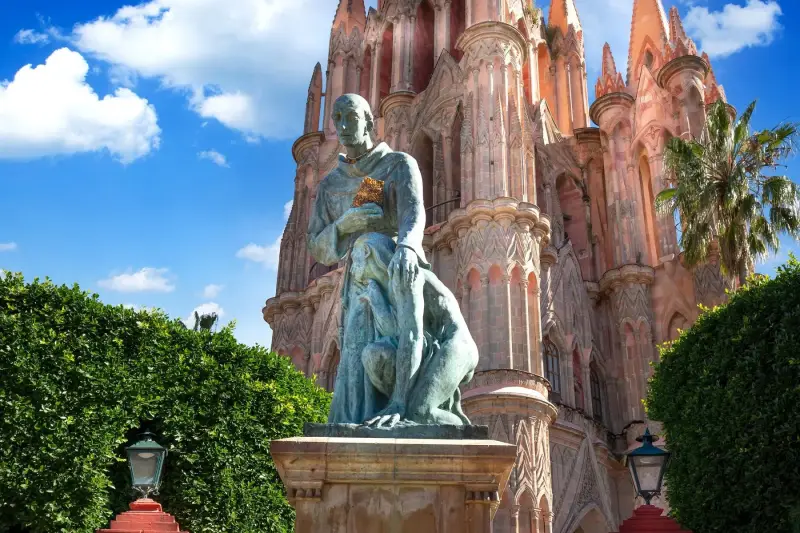
Next to the cathedral are the excavated remains of the Templo Mayor, the main temple of the Mexica city of Tenochtitlan, with its site museum. The National Palace, on the square's east side, contains Diego Rivera's murals of Mexican history; check opening and entry rules on the day, since access is controlled.
From the Zócalo, walk west along the pedestrian Madero street to the Palacio de Bellas Artes, the white marble concert hall at the edge of the Alameda Central park. Its interior holds murals by Rivera, Siqueiros and others.
End the trip with a view. The observation deck of the Torre Latinoamericana, across from Bellas Artes, looks over the whole center at sunset.
If your four days include a Sunday
Sunday changes the city. Many Mexican families head to Chapultepec, and the main INAH museums are free that day for Mexican citizens and residents, so lines at the castle and the Anthropology Museum grow long. Swap those sights to a weekday if you can.
The trade-off is worth it, because Sunday mornings bring the Paseo Dominical Muévete en Bici. From 08:00 to 14:00, the city closes a long route of major avenues to cars, traditionally including Paseo de la Reforma, and hands them to cyclists, skaters and walkers, as Chilango's coverage of the 2026 route changes explains. Routes shift for marathons and big events, so check the city's announcements the day before. Rent a bike from a stand along the route or simply walk Reforma while it is quiet.
Sunday is also when Xochimilco and Coyoacán are at their liveliest, which makes it the natural day to move Day 3 if your dates allow.
What to eat, and where to find it
Four days is not long enough to work through the city's food, so focus on a few classics. Tacos al pastor, pork marinated in chili and cooked on a vertical spit, are the defining street food of the capital, sold at taquerías from early evening until late. For breakfast, look for chilaquiles, fried tortilla pieces simmered in red or green salsa, or tamales sold from carts with a cup of atole, a warm corn drink.
Markets are the easiest way to eat well without research. The Coyoacán market on Day 3 has long counters serving tostadas, and the Mercado de San Juan near the historic center is known for specialty produce, cheeses and more unusual ingredients. In Roma and Condesa, sit-down restaurants range from neighborhood fondas with a set lunch, called comida corrida, to tasting menus that need booking weeks ahead.
Lunch is the main meal in Mexico and is usually eaten between about 14:00 and 16:00. Building your sightseeing around a late lunch, then a lighter dinner, matches the way the city eats and keeps you out of the midday heat at outdoor sights.
A rainy-season version of the plan
Between roughly June and September, afternoons often bring short, heavy storms. The fix is simple: put every outdoor part of a day before lunch. Climb the Teotihuacan pyramids at opening, see Chapultepec Castle's terraces in the morning, and save the Anthropology Museum, Bellas Artes and the Templo Mayor museum for the afternoon. Carry a light rain jacket rather than an umbrella, which is awkward on crowded pavements.
Adding a fifth day
Puebla is the best single extra day. ADO and other first-class companies run buses from the TAPO terminal in the east of the city, and the trip usually takes 2 to 2.5 hours according to Mexico Travel and Leisure's route guide, longer in heavy traffic. Puebla's tiled colonial center and its mole poblano fill a day, and Cholula, with a church sitting on top of a vast pyramid mound, is next door. Leave early and catch an afternoon bus back to avoid the Sunday evening rush into the capital.
Traveling with kids or limited mobility
The Anthropology Museum has its archaeology halls on the ground floor around a central courtyard, which makes it one of the easier big sights with a stroller or wheelchair. Teotihuacan is the hardest: the site involves long, uneven walking, and climbing the pyramids means steep stone steps. Families with young children can see the Avenue of the Dead without climbing and still get a sense of the scale.
Chapultepec Park has playgrounds, a lake with rowboats and a free zoo, giving children a break between museums. Pavements in the historic center and Coyoacán are uneven in places, so a sturdy stroller copes better than a lightweight one.
Mistakes to avoid
Booking the Frida Kahlo Museum last is the biggest. The second is planning the historic center on a Monday expecting every museum to be open, when Templo Mayor and others follow the Monday closing rule. The third is trying to cross the city at rush hour; journeys that take 20 minutes at midday can take an hour around 08:00 or 18:00, so group sights by area rather than zigzagging.
Getting around Mexico City
The Metro is fast, extensive and extremely cheap. The fare stays at 5 pesos in 2026, which the city government confirmed when it froze the price for the year. Buy a rechargeable MI card at a station window and top it up; the same card works on the Metrobús and other city transit.
Avoid the Metro at rush hour if you are carrying luggage, and keep phones and wallets in front pockets, as pickpocketing happens on crowded trains. Several lines have women-and-children-only cars at the front of the train.
Ride-hailing apps such as Uber, DiDi and Cabify are widely used and give you a fixed price and a record of the trip. For the airport, Metrobús Line 4 connects both terminals with the center, and authorized airport taxis sell prepaid tickets inside the arrivals hall.
What four days cost
| Item | Cost (MXN, 2026) | Note |
|---|---|---|
| Teotihuacan entry | 210 | Foreign visitors |
| National Museum of Anthropology | 210 | General admission |
| Frida Kahlo Museum | See official site | Price varies by day; includes Anahuacalli |
| Metro ride | 5 | Per trip, any distance |
| Metrobús Line 4 to the airport | 30 | Airport route only |
Entry fees for the main sights on this plan add up to well under 1,000 pesos per person before the Frida ticket, which remains far below what you would pay for comparable museums in Europe or the US. Hotels and eating out will be your main costs, and both span a very wide range in Mexico City.
We have not given a nightly hotel rate because prices move with demand and season. Booking Roma or Condesa a few weeks ahead usually secures the best choice.
Staying safe in the capital
Mexico City is rated Level 2 by the US State Department, the same as most of the country's main tourist areas. The practical risks for visitors are pickpocketing, phone snatching and occasional express kidnappings involving unlicensed taxis. Use apps or official taxi stands, avoid flashing valuables and use ATMs inside banks or shopping centers.
For a fuller explanation of how official advisories work by state, read Is Mexico safe for tourists?.
Extending your trip
With extra days, Puebla and the pyramid of Cholula are an easy trip southeast of the capital, and our overview of cities of Mexico covers other colonial towns. Many travelers combine the capital with the coast; our comparison of Cancun, Tulum and Playa del Carmen helps you pick a beach base, and the Mexico travel guide covers entry rules and the rest of the country.
 Get the app










{{item.get_author.first_name}} {{item.get_author.last_name}}
{{item.comment_txt}}
{{item_reply.get_author.first_name}} {{item_reply.get_author.last_name}}
@ {{item_reply.reply_to}}, {{item_reply.reply_txt}}