

Spaniards call it Nochevieja, and the country's defining New Year's ritual traces back further than most people assume. Eating 12 grapes at midnight, one per chime of the clock at Madrid's Puerta del Sol, started among Madrid's upper class in the 1880s copying French champagne-and-grapes parties, then went nationwide in 1909 when grape growers in Alicante had a surplus harvest and marketed their extra stock as "lucky grapes" timed to the clock. Today the ritual pulls in a live national TV audience watching the Real Casa de Correos clock tower drop, whether you're standing in the square or eating your own 12 grapes at a kitchen table.
Where you spend the night changes the experience completely. Madrid's Puerta del Sol is the country's largest single gathering and the broadcast everyone else follows. Barcelona splits between beach parties and rooftop venues. Ibiza runs on club culture alone. This guide covers 7 cities in depth, the real history behind Spain's New Year traditions, and what a night out actually costs.
Best Cities for New Year's Eve in Spain:
These 7 cover the range, from Madrid's national broadcast to Ibiza's club scene to Granada's more traditional, low-key night.
Madrid: Puerta del Sol and the National Countdown
The clock everyone in Spain watches, whether they're standing in the square or at home
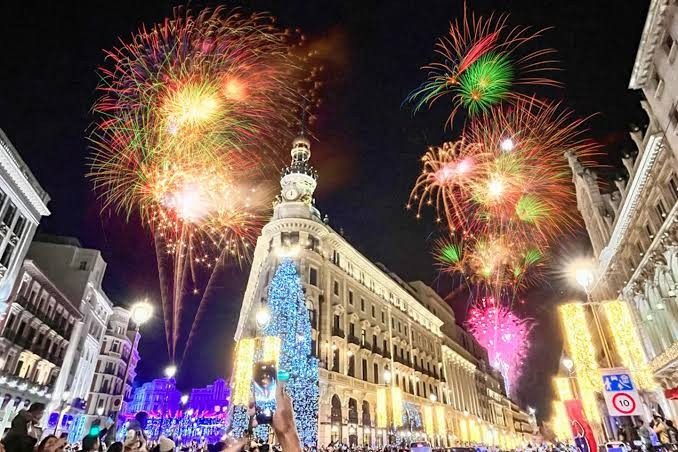
Puerta del Sol has been the symbolic center of the 12 grapes tradition since the custom took hold, and the square still draws the country's largest single New Year's crowd. The Real Casa de Correos clock tower rings 4 short chimes just before midnight, called the cuartos, a signal to get your grapes ready, followed by 12 longer chimes, the campanadas, timed to eat one grape each. Television Española has broadcast the countdown live since 1962, so millions watch the same clock whether they're in the square or on a sofa across the country.
Beyond Sol itself, Gran Vía, Callao, and Plaza Mayor fill with street parties, live music, and fireworks through the evening. Madrid's restaurant and nightclub scene runs an entirely separate track for anyone who wants fine dining and a private countdown before heading out afterward.
Barcelona: Beach Parties and Rooftop Views
A Mediterranean countdown split between Plaça d'Espanya and the seafront
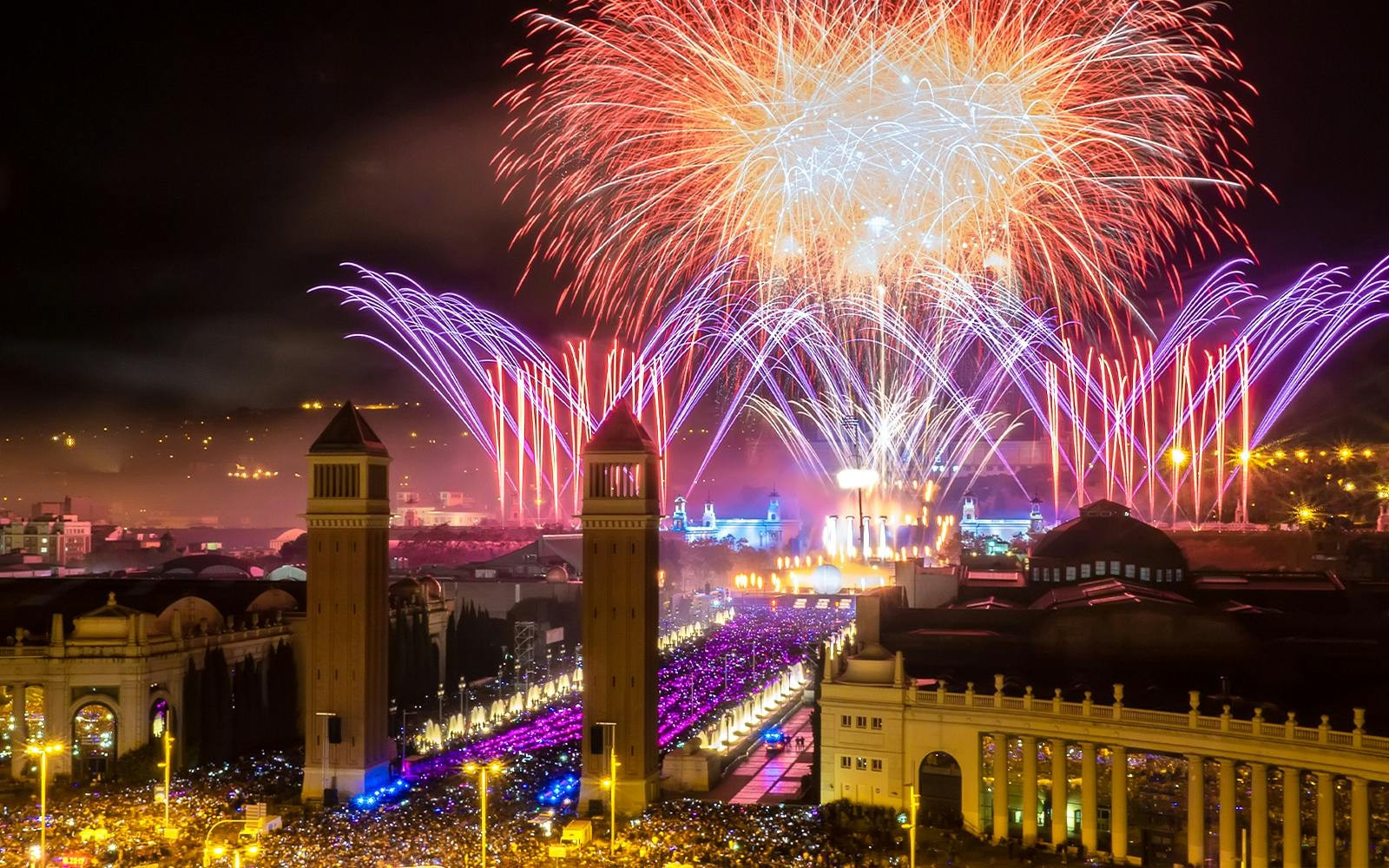
Barcelona runs its own public countdown at Plaça d'Espanya, smaller than Madrid's but with the same 12 grapes tradition and a fireworks display over the square. The bigger draw for many visitors is the city's split personality after midnight: Barceloneta Beach fills with open-air parties and music through the night, while rooftop venues across the city offer skyline views and a different, more upscale scene for the same countdown.
Catalan tradition runs alongside the national customs here. Many locals wear white or red for good fortune, and cava, Catalonia's own sparkling wine, is the drink of choice for the midnight toast, not an import from elsewhere in Spain.
Valencia: A gala Setting on The Mediterranean
City of Arts and Sciences for a formal night, Malvarrosa Beach for a casual one
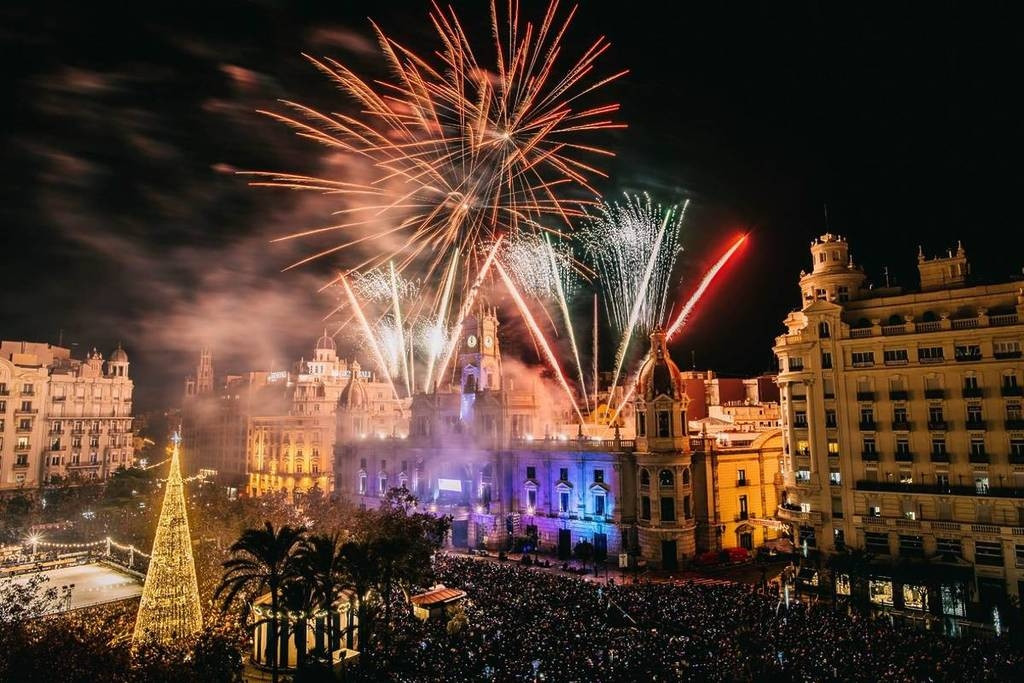
Valencia's City of Arts and Sciences complex, a set of white, curved buildings designed by architect Santiago Calatrava and completed in stages between 1998 and 2005, hosts ticketed New Year's galas with fireworks reflected across its pools. It's the most architecturally distinct countdown setting in this guide, and one of the more expensive.
Plaza del Ayuntamiento runs the city's free public countdown with the standard 12 grapes tradition, and Malvarrosa Beach offers a lower-key, bonfire-and-cava alternative for anyone who'd rather skip a ticketed event entirely.
Seville: Flamenco and A Family-First Nochevieja
A more traditional countdown built around dinner first, streets second
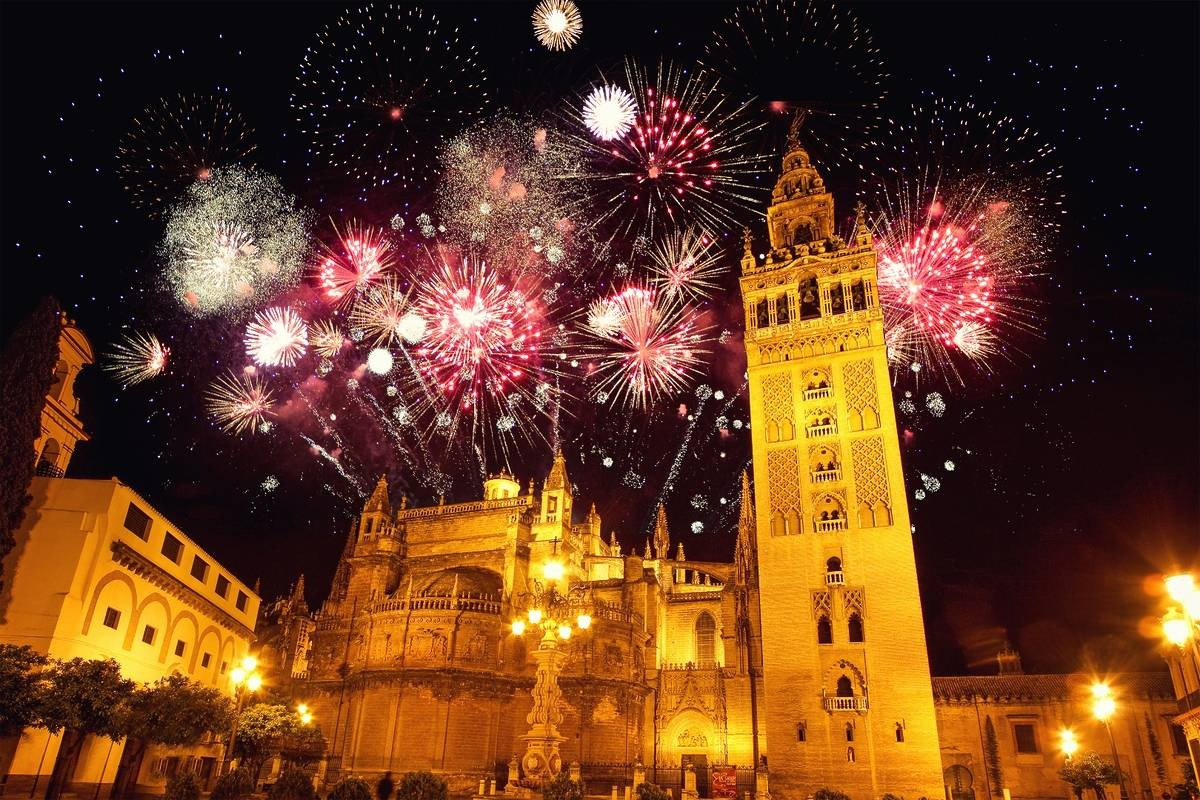
Seville leans toward how many Spanish families actually spend Nochevieja: an elaborate home meal with relatives before heading out, not a public event built around a stage or a ticket. Plaza Nueva runs the city's central countdown with the standard grapes ritual, and the Giralda Tower, the 12th-century minaret converted into the cathedral's bell tower, offers a view over the fireworks for anyone who climbs it in the days around New Year's.
The "Año Nuevo en el Río" event along the Guadalquivir River adds music and dancing on the water, and flamenco venues across the city run performances that lean into Andalusia's strongest cultural export on a night when tourists specifically come looking for it.
Granada: The Alhambra as a Backdrop
A quieter, more historic countdown beneath a UNESCO World Heritage site
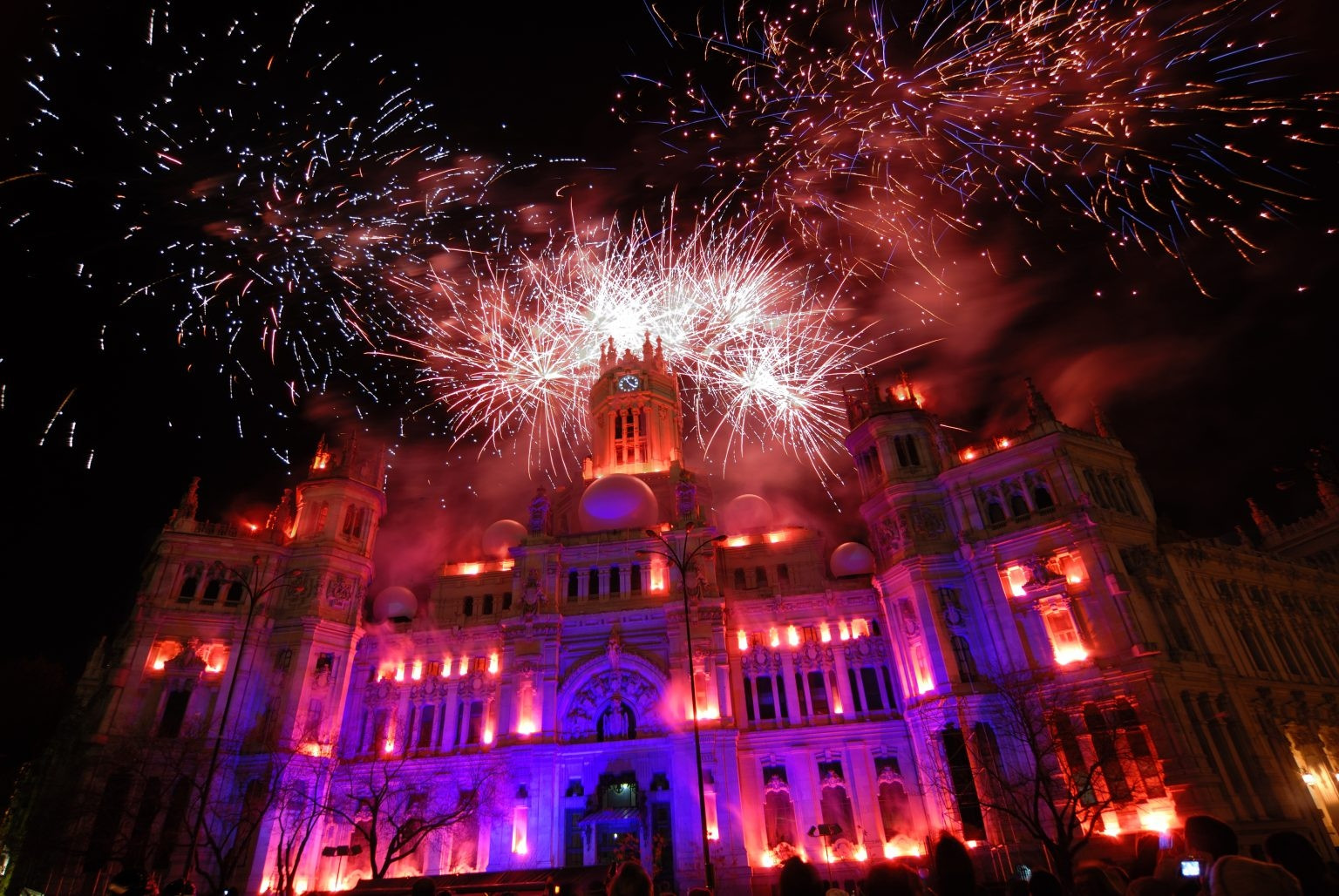
Granada's Alhambra Palace, the Moorish fortress complex built mainly under the Nasrid dynasty between the 13th and 14th centuries, gives the city's New Year's Eve a backdrop no other city on this list can match. Plaza Nueva runs the standard public countdown with grapes and fireworks, and paper lanterns released into the night sky have become a common local addition to the midnight moment.
Granada's tapas culture runs deeper than almost anywhere else in Spain: ordering a drink here typically comes with a free tapa included, a custom that turns a night of bar-hopping into a de facto dinner without a separate restaurant bill.
Ibiza: The All-night Club Scene
Spain's clearest choice for anyone who wants to dance until sunrise
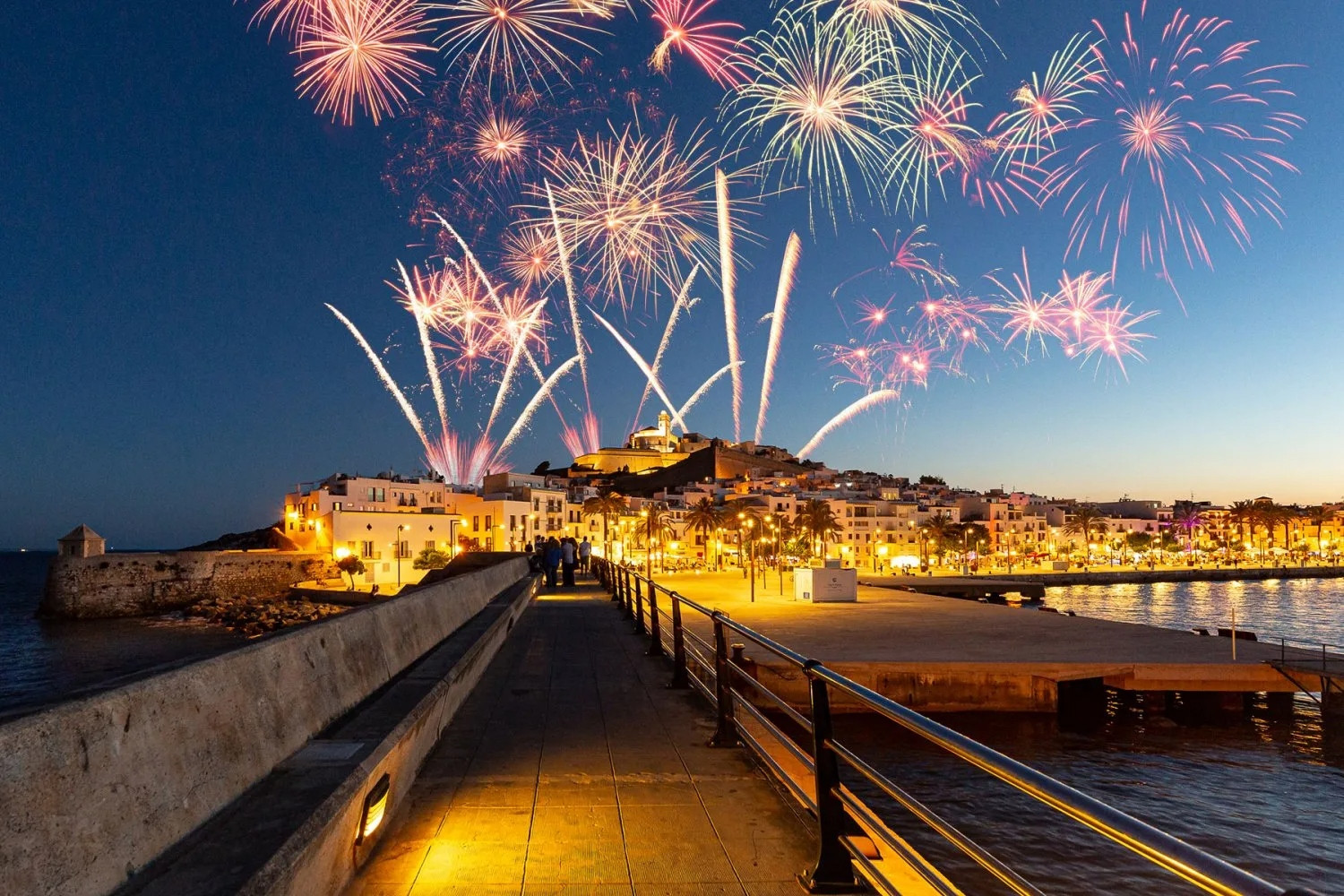
Ibiza's nightlife reputation, built over decades around clubs like Pacha and Amnesia, doesn't pause for winter. Both venues run dedicated New Year's countdown parties with international DJ lineups, and ticket prices run considerably higher here than the free public squares in mainland cities. Beachfront bars offer a lower-key, less expensive alternative for travelers who want the island's atmosphere without a club cover charge.
The island's January climate is mild by northern European standards but still cool for swimming, so the draw here is entirely the nightlife scene, not beach weather.
Bilbao: A Stylish, Less Crowded Alternative
Basque cuisine and a smaller, more contained countdown scene
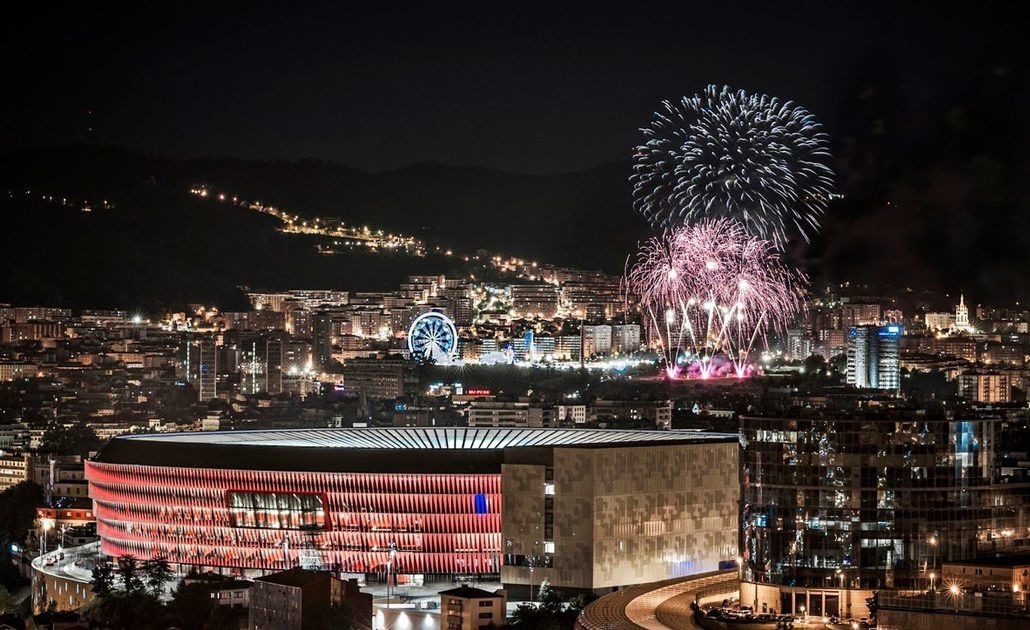
Bilbao's Plaza Moyúa hosts the city's central countdown at a fraction of the crowd size of Madrid or Barcelona, appealing to travelers who want the tradition without the crush. The city's Basque food scene runs some of the most highly regarded pintxos (the northern Spanish take on tapas) and fine dining in the country, and several upscale restaurants build multi-course Nochevieja menus specifically around the holiday.
Bilbao's modern architecture, most visibly the Guggenheim Museum's titanium-clad exterior completed in 1997, adds a different visual backdrop to the celebrations than the historic squares elsewhere on this list.
Party Cities vs. Traditional Cities:
Spain's New Year's cities split roughly into 2 camps, and the choice shapes the whole night more than any single venue does.
Madrid sits in the middle: the Puerta del Sol countdown is a genuine mass event, but the city's dining and flamenco scene gives it a traditional layer most party destinations don't have.
Spain's New Year's Traditions, and Where they Actually Come From:
Several of these customs have murkier, more interesting origins than the version usually repeated online.
Las doce uvas (the 12 grapes)
Madrid's upper class began eating grapes with champagne in the 1880s, echoing French New Year's habits. Newspaper archives from 1892 already reference the custom. Alicante grape growers turned it into a national phenomenon in 1909, branding a surplus harvest as "lucky grapes" timed to the Puerta del Sol clock's midnight chimes.
Red underwear
Shops across Spain stock red lingerie and boxers heavily through December specifically for this custom. Tradition holds it works best as a gift from someone else, not something bought for yourself, and some also believe it should be worn inside out until midnight, then turned right-side out.
The cava toast
Cava, sparkling wine produced mainly in Catalonia using the traditional method, is the standard midnight toast. Dropping a small gold object, a ring or coin, into the glass before drinking is meant to symbolize wealth for the year ahead, and some add a strawberry or raspberry for those hoping for love.
Stepping out on the right foot
As the clock finishes striking midnight, tradition holds you should take your first step of the new year with your right foot. The custom is meant to set a fortunate tone for the months ahead, and it's common enough that groups will pause together to do it deliberately.
New Year's Day lentils
Many households eat a lentil stew, often with chorizo, on January 1st. The legumes are considered a symbol of prosperity and, practically, a hearty meal that helps after a long night. It's a domestic tradition, not a public one, more likely at home than in a restaurant.
Square dancing in Barcelona
After the grapes and the cava toast, crowds at Plaça d'Espanya and similar squares in Barcelona often move straight into dancing, sometimes lasting until sunrise. It's less a formal ritual than a natural extension of the countdown crowd staying together once midnight passes.
Where to Enjoy Fireworks and Street Parties:
Every city on this list sets off fireworks at midnight, but the best vantage points and the street party scenes that follow differ a lot from one to the next.
Puerta del Sol and Gran Vía
Fireworks launch from rooftops around Puerta del Sol right after the 12th chime, visible across the packed square. Gran Vía and Callao keep the street party going for hours afterward, with bars and clubs along the avenue running at full capacity until dawn.
Montjuïc and Barceloneta Beach
Montjuïc hill gives an elevated view over the city's fireworks and hosts the Magic Fountain's light show afterward. Barceloneta Beach runs the louder, more spontaneous version: open-air dancing, drum circles, and impromptu fireworks set off by beachgoers themselves along the sand.
City of Arts and Sciences
Fireworks reflect off the water surrounding Calatrava's white buildings, a setting distinct from anywhere else on this list. Plaza del Ayuntamiento runs the free public alternative, with its own smaller display and a dense street party immediately after.
Triana Bridge and the Guadalquivir
Fireworks launch over the river and are visible from both banks, with Triana Bridge itself one of the most crowded viewing points. The "Año Nuevo en el Río" event adds live music on the water afterward, running later and more locally than the tourist-heavy Plaza Nueva scene.
Mirador de San Nicolás
This viewpoint in the Albaicín district looks directly across at the floodlit Alhambra, and locals gather here specifically to watch fireworks over the palace, skipping the crowds at Plaza Nueva. Arrive at least an hour early; the terrace is small and fills fast.
Ibiza Town harbor and beach clubs
Ibiza's fireworks cluster around the harbor in Ibiza Town and several beachfront clubs, with no single central square drawing the crowd the way Madrid or Barcelona does. The real street party here happens inside venues, not in open public spaces.
3-5 Day Itinerary for New Year's Eve in Spain 2027:
This covers a solid 3-day Madrid-based trip built around the countdown itself, with an optional 2-day Barcelona extension for anyone with 5 days to spend.
🇪🇸 Core 3 days: Madrid
Dec 30
Dec 31
Jan 1
➕ Optional extension: 2 more days in Barcelona
Jan 2
Jan 3
Where to Stay for Nochevieja:
Booking early matters more here than almost any other time of year, since rates and availability both move fast in the final weeks of December.
Near Puerta del Sol
Walking distance to the countdown itself, though street noise runs late. Book 2-3 months ahead; rates in this specific radius climb fastest of anywhere in the city for December 31.
Eixample or Barceloneta
Eixample offers easier access to both Plaça d'Espanya and the wider city; Barceloneta puts you steps from the beach parties but runs louder and busier through the night.
Ibiza Town
The island's accommodation supply shrinks considerably in the off-season. Book flights and rooms together at least 2-3 months out; last-minute options are genuinely scarce for December 31.
Santa Cruz district
Central and walkable to Plaza Nueva and the cathedral, with a strong concentration of the tapas bars and flamenco venues that define a traditional Seville Nochevieja.
Practical Tips for Nochevieja:
Buy pre-peeled or seedless grapes
Eating 12 grapes in 12 seconds is harder than it sounds. Many supermarkets sell pre-packaged, seedless "New Year's grapes" specifically for the countdown, and most locals use them.
Expect phone signal to drop at midnight
Networks get overloaded in the most crowded squares right at the countdown. Agree on a physical meeting point with your group beforehand instead of relying on texts to reconnect.
Arrange transport before you go out
Taxis and rideshares get scarce and expensive right after midnight in every major city. Book a return trip in advance or plan on staying out until public transport resumes.
Book galas and club tickets 1-2 months out
Valencia's City of Arts and Sciences gala and Ibiza's headline club nights both sell out well ahead of the date. Public square countdowns need no ticket at all.
Watch your belongings in dense crowds
Puerta del Sol and Plaça d'Espanya both draw pickpockets who work the crush deliberately. Keep bags zipped and in front of you, not on your back, once the square fills up.
Dress for cold nights, even in the south
Late December temperatures drop into single digits Celsius after dark across most of Spain, including Andalusia. Layer up regardless of which city you choose.






{{item.get_author.first_name}} {{item.get_author.last_name}}
Level 7
5 Photos
36 Reviews
{{item.comment_txt}}
{{item_reply.get_author.first_name}} {{item_reply.get_author.last_name}}
@ {{item_reply.reply_to}}, {{item_reply.reply_txt}}