

Venue
2-26-1 Asakusa, Taito-ku, Tokyo 111-0032, Japan

Sanja Matsuri (Sanja Festival) guide
Sanja Matsuri suits travelers ready for dense crowds around Asakusa Shrine and Senso-ji. It usually takes the third weekend of May, Friday to Sunday. Each day differs, from Friday's ceremony to Saturday's crowds and an early Sunday start, so decide which matters most before you book.
Sanja Matsuri is the great spring festival of Asakusa Shrine, beside Senso-ji in Tokyo's old downtown. For one weekend in May, teams of chanting bearers heave mikoshi, portable shrines, through the streets to flutes and drums, and an estimated 1.5 to 2 million people crowd into the neighbourhood to watch.
The name means three shrines, after the three men honoured here as the founders of Senso-ji. It is a neighbourhood festival before it is a spectacle. The mikoshi belong to local districts, the bearers are their residents, and visitors watch from close enough to feel the poles creak as a team turns a corner.
2-26-1 Asakusa, Taito-ku, Tokyo 111-0032, Japan
Hotels near the venue fill up around the event dates.
A mikoshi in motion is heavy, fast and hard to steer, and the people under it are concentrating. Stay out of its path and never push into a carrying team or try to slip between the bearers.
On Saturday afternoon the easiest approach is to drift. Groups pass through side streets all over Asakusa, so follow the sound of chanting and you will find one within minutes.
Sunday morning works the other way round. The shrine grounds are jammed for the Miyadashi, and you will see more from the streets outside. Find a corner on one of the routes away from the gate and let the mikoshi come to you.
You will be on your feet for hours, often standing still in a crowd. Wear comfortable shoes you can stand in all day, carry a water bottle and pack a light rain jacket, since May weather in Tokyo can turn. Small bills and coins make life easier at the food stalls, and a small bag is far easier to manage in the crush than a backpack.
The deities are transferred into the three main mikoshi; not open to the public.
The grand procession winds round the district, under the Kaminarimon gate and up Nakamise to the shrine. Rain cancels it.
Including the Binzasara dance in the main hall and on the kagura stage.
After the main ceremony, about 100 mikoshi from 44 neighbourhood associations set out from noon; the children's mikoshi follows at 15:30.
The three main mikoshi burst out of the shrine gate and spend the day on western, southern and eastern circuits.
The three mikoshi return to the shrine.
Portable shrines are sacred. Join the bearers only if a team invites you; watch from the roadside otherwise.
Each main mikoshi weighs close to a tonne. Give the teams a wide berth when they surge through a street.
Each of the three days gives you something different, so decide early which one matters most. Friday 14 May 2027 is the ceremonial day, with the grand procession and dances inside the shrine. Saturday 15 May is about volume, as dozens of neighbourhood teams take their mikoshi out from noon. Sunday 16 May starts at dawn with the three great mikoshi of Asakusa Shrine bursting out of the gate. With one day to spare, choose Saturday afternoon. You will see more mikoshi up close in a couple of hours than on any other day.
Give yourself a full day in Asakusa. The festival rewards wandering, and the best moments tend to happen in a side street you did not plan to walk down. Our notes on traveling around Japan help with the rest of the trip.
The story starts on the Sumida River in 628. Two fishermen, the brothers Hinokuma Hamanari and Hinokuma Takenari, found a small statue of Kannon caught in their net. Hajino Nakatomo, a local landowner, gave it a place of worship, and Senso-ji grew from that. The festival honours all three men as the temple's founders, and their shrine stands right beside its main hall. The present building went up in 1649, commissioned by the shogun Tokugawa Iemitsu, and it survived the air raids that flattened much of the neighbourhood around it.
A mikoshi is a portable shrine, which takes a deity out of its sanctuary and through the streets it protects. Teams of bearers heave it along, chanting all the way, with flutes and drums keeping the beat. The three main mikoshi of Asakusa Shrine carry the spirits of the three founders, which is why Sunday matters so much to local people.
That is also why the festival feels so local. Much of Asakusa was rebuilt after the war, yet the shrine and its spring procession reach straight back to the Edo period, and the teams that carry the mikoshi come from the streets around it.
Tokyo Haneda is the easier airport for Asakusa; Narita is further out. From South and South-East Asia, see Dhaka to Tokyo and Bangkok to Tokyo flights.
Take the Keikyu Line; some trains run straight onto the Toei Asakusa Line, others need a change at Sengakuji. Allow about 21 minutes to Sengakuji and 16 more to Asakusa.
The station serves the Ginza, Toei Asakusa and Tobu Skytree lines. Tawaramachi, one stop on the Ginza Line, is the calmer exit on busy days.
Cars are barred from local streets when the mikoshi are out. Agree a meeting point near Kaminarimon before splitting up.
Hotels near Kaminarimon and Tawaramachi go early for the festival weekend, so book months out, or stay a few stops along the Ginza Line.
Staying close is worth paying for if you want Sunday's 7:00 start.
Tokyo
Mid-May in Tokyo is mild and pleasant. The city averages a high of 23.6°C and a low of 14.6°C, with about 140 mm of rain over eleven days in the month (1991-2020 normals).
Friday's procession is cancelled by rain, so watch the forecast.
The busiest routes into Tokyo (NRT).
 Biman Bangladesh Airlines
Met at arrivals at Narita International Airport (NRT) and driven door to door to Asakusa Shrine.
Places to eat in Japan before or after the celebrations.
1F, 1-7-19 Otemachi, Naka-ku, Hiroshima, Japan
Cuisine:Hiroshima okonomiyaki
1-4-15 Dotonbori, Chuo-ku, Osaka 542-0071, Japan
Cuisine:OkonomiyakiOsaka
459 Shimokawara-cho, Higashiyama-ku, Kyoto 605-0825, Japan
Cuisine:Kyoto kaisekiJapanese
Minamiaoyama Garden Court, 2-6-15 Minami-Aoyama, Minato-ku, Tokyo 107-0062, Japan
Cuisine:InnovativeJapanese
Others of this kind you opened on this device, so you can get back to them quickly.
No questions yet about Sanja Matsuri (Sanja Festival). Ask the community or our travel team, and the answer will show here once it is published.
Our team answers questions here
Festivals held in the same weeks, if you want to plan more than one.

Cultural Events, Folk Festival, Social Festivals
Ha Giang, Vietnam
4 photos

Cultural Events, Folk Festival, Religious Festivals
Hanoi, Vietnam
3 photos

Cultural Events, Religious Festivals, Community Events
Cần Thơ, Vietnam
2 photos
Festivals and events across Japan, with dates, venues and ticket details where available.

Cultural Events, Religious Festivals, Parade
Tokyo, Japan
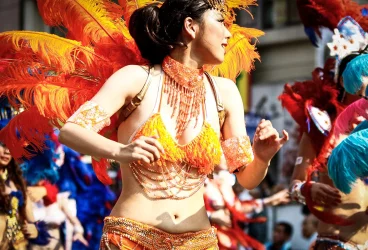
Musical Events, Carnivals, Parade
Tokyo, Japan
21 photos
Cultural Events, Arts Festivals, Film Festivals
Tokyo, Japan
Tell us where and when you want to go, and local travel experts send you offers for your trip.
General
Each of the three main mikoshi of Asakusa Shrine weighs close to a tonne. That is why they are carried by large rotating teams, and why the Sunday crowd gives them a wide berth.
Only if a team invites you. The bearers are organised by neighbourhood groups.
It winds along Yanagi-dori, Umamichi-dori and Kaminarimon-dori, then passes through the Kaminarimon gate and climbs Nakamise to the shrine. Any point on that route makes a good viewing spot on Friday afternoon.
In the shrine's main hall at 14:20 on Friday, then again on the kagura stage at 15:00. If the hall is too full, wait for the second performance outside.
They split up and take western, southern and eastern circuits of the district, each spending the whole day on the move.
The Kanda Matsuri, Tokyo's other major May festival, is due to return in full in 2027, so the city has two mikoshi festivals to choose from that spring.
Yes, and a very different one. The Asakusa Samba Carnival brings Brazilian-style parades to the same streets in late summer.
Booking
About 100, drawn from 44 neighbourhood associations across Asakusa. They spread out through the district from noon, so on Saturday afternoon several are usually within walking distance.
Timing & weather
No. At 19:00 on Thursday 13 May 2027 a closed ritual transfers the deities into the three main mikoshi. Visitors can only see what follows over the next three days.
Cancellations & changes
Yes. Asakusa Shrine has published its 2027 programme but notes that details may still change. Check it again in early May before you finalise your plans.
We use necessary cookies to make this site work. With your permission we would also like to remember your preferences, measure how the site is used, and show relevant ads and partner offers. You can change your mind at any time under "Cookie settings" on our Privacy policy page.
