

Venue
Aoba-ku, Sendai, Miyagi Prefecture, Japan

Sendai Tanabata Festival guide
Sendai Tanabata runs every year from 6 to 8 August and suits travelers who like slow walks beneath handmade decorations in roofed shopping streets. The organisers count more than two million visitors. Rooms run short in the first week of August, so reserve as soon as your dates are fixed.
Sendai Tanabata is the star festival of Sendai, the largest city in Japan's Tohoku region. For three days the roofed shopping streets of the city centre disappear under thousands of handmade paper and bamboo decorations, and more than two million visitors a year, by the organisers' count, come to walk beneath them.
It is the best-known Tanabata in Japan, and it keeps its own calendar. Most of the country marks the star festival on 7 July, but Sendai holds out for August, about a month later, to stay in step with the season of the old lunar calendar. The result is a festival of craft, made by the shops and companies of the city itself.
Aoba-ku, Sendai, Miyagi Prefecture, Japan
Hotels near the venue fill up around the event dates.
Many of the decorations hang low enough to brush your head, and some reach almost to the ground. Part them gently with a hand as you pass, as you would a curtain, and let them fall back.
Because the main displays hang under cover in the arcades, rain or hard sun matters less here than at most summer festivals, and a wet day is no reason to stay away. You will still spend hours on your feet in a humid crowd. Wear comfortable shoes, carry water, and take breaks in the shops and cafes along the route.
The arcades are narrow for the numbers they hold. Carry a small bag in front of you, and if you are with children, agree where to meet if you lose each other.
The Sendai Tanabata fireworks usually start at 19:30 and last about an hour. Claim a patch of ground early and bring water for the wait.
Walk Chuo-dori and then Ichibancho before lunch, when the light through the paper is soft and you can stop to look at the ornaments.
The arcades are packed from mid-afternoon; browse the shops and find food.
Still busy, but slower and relaxed until late.
Rooms are the hard part. Even a city of Sendai's size runs short in the first week of August, so reserve as soon as your dates are fixed. Staying central means you can walk the decorations early, go back for a rest in the heat of the day, and come out again in the evening without a second journey.
Give the festival at least one full day, and a second if you want to see the displays both quiet and busy. The decorations stay up for all three days, so there is no single moment to catch. That gives you more freedom than at a parade festival: you can arrive late on the first day and still see everything.
Plan the rest of the day around the decorations. Morning in the streets, a long lunch, an afternoon at a museum or back at the hotel, then a final walk at dusk works well. Our pages on Japan can help you plan the days either side.
Tanabata here goes back to Date Masamune, who ruled Sendai as its first lord early in the Edo period and encouraged the custom. By the 1920s it had nearly faded away. Volunteers and the city's merchants brought it back, turning it into a large public festival. It lapsed during the war and came back soon afterwards.
Raise your eyes as you go. Each fukinagashi, a streamer of washi paper, is tied to a tall bamboo pole, and some dangle so low you part them like a curtain. Shops and companies make their own, and many spend months on them. The streamers stand for the weaver's threads in the Tanabata legend.
A traditional display adds six other ornaments, each with its own wish. Tanzaku, paper strips, ask for progress in study and calligraphy. Kamigoromo, a paper kimono, guards against illness and misfortune. Orizuru, folded cranes, are for a long life. The kinchaku purse is for savings and good business, while the toami casting net asks for a full catch for fishermen. Last comes the kuzukago, a waste basket, a reminder to be tidy and thrifty.
Bullet trains from Tokyo run straight to Sendai Station; the decorated arcades begin a short walk from its west side.
Take the Sendai Airport Access Line into the city: about 17 minutes on a rapid train, 25 on a local.
Once in the centre, walk. The Ichibancho and Chuo-dori arcades are the core, but decorations also hang around the station and on neighbouring streets.
Leave big bags in a station locker or at the hotel; they are a nuisance in the afternoon crowds.
The next edition runs from 6 August to 8 August 2027. Book your room as soon as your dates are fixed, since rooms close to the festival are the first to go.
Early August is Sendai's hottest and stickiest time of year. Average highs are about 28°C and lows about 22°C, with roughly 160 mm of rain in the month (1991-2020 normals).
The covered arcades help in a shower, but the afternoon humidity is tiring.
Met at arrivals and driven door to door to Ichibancho and Chuo-dori shopping arcades.
Places to eat in Japan before or after the celebrations.
1F, 1-7-19 Otemachi, Naka-ku, Hiroshima, Japan
Cuisine:Hiroshima okonomiyaki
1-4-15 Dotonbori, Chuo-ku, Osaka 542-0071, Japan
Cuisine:OkonomiyakiOsaka
459 Shimokawara-cho, Higashiyama-ku, Kyoto 605-0825, Japan
Cuisine:Kyoto kaisekiJapanese
Minamiaoyama Garden Court, 2-6-15 Minami-Aoyama, Minato-ku, Tokyo 107-0062, Japan
Cuisine:InnovativeJapanese
Others of this kind you opened on this device, so you can get back to them quickly.
No questions yet about Sendai Tanabata Festival. Ask the community or our travel team, and the answer will show here once it is published.
Our team answers questions here
Festivals held in the same weeks, if you want to plan more than one.
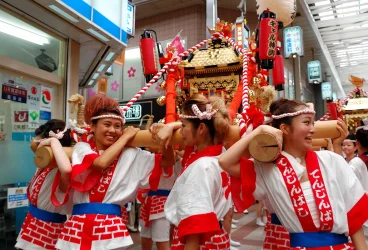
Cultural Events, Religious Festivals, Parade
Osaka, Japan

Cultural Events, Social Festivals
China
3 photos
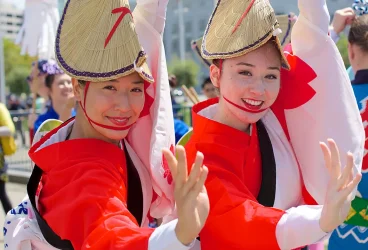
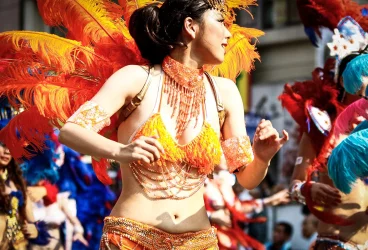
Musical Events, Carnivals, Parade
Tokyo, Japan
21 photos
Festivals and events across Japan, with dates, venues and ticket details where available.

Cultural Events, Religious Festivals, Parade
Tokyo, Japan

Tell us where and when you want to go, and local travel experts send you offers for your trip.
General
Food stalls set up in Kotodai Park, by Kotodaikoen subway station, roughly from 10:00 to 21:00 on festival days. It makes a good break from the arcades.
Nishi Park is one of the recommended spots for the display on the evening of 5 August, and watching is free. Arrive early to claim some ground.
It restarted in 1946 with just 52 decorations. A year later, when Emperor Hirohito visited in 1947, the city greeted him with 5,000.
The weaving princess Orihime and the cowherd Hikoboshi are kept apart by the Milky Way and may meet only once a year, crossing on a bridge made of magpies' wings. They are the stars Vega and Altair.
The custom is to write a wish, sometimes as a short poem, on a tanzaku paper strip and tie it to bamboo. Older custom had girls wishing for better sewing and boys for better handwriting.
A kusudama. A downtown Sendai shopkeeper devised it in 1946, modelling it on a dahlia, and it has since become a standard part of the city's displays.
Yes. Since 2018, streamers inspired by the figure skater's costumes have been displayed at the Zuihoden in Sendai, a short trip from the arcades and worth the detour for fans.
It is usually counted among the three great summer festivals of Tohoku, and of those three it is the one built around paper decorations.
Timing & weather
The fukinagashi are usually 3 to 5 metres long and hang from bamboo poles about 10 metres tall, which is why some of them sweep the heads of passers-by.
In the legend, rain keeps the magpies away, so the two lovers cannot cross the Milky Way and must wait another year to meet.
We use necessary cookies to make this site work. With your permission we would also like to remember your preferences, measure how the site is used, and show relevant ads and partner offers. You can change your mind at any time under "Cookie settings" on our Privacy policy page.

 Plan your trip with AI