

Jerusalem's Old City packs 3 religions' holiest sites into 0.9 square kilometers behind 16th-century Ottoman walls. The Western Wall, Al-Aqsa Mosque, and the Church of the Holy Sepulchre sit within a 10-minute walk of each other, a density of sacred sites unmatched almost anywhere on earth. That proximity is also why the city sits at the center of one of the world's longest-running political disputes.
This guide covers the 10 sites worth building a visit around, with the history, current access rules, and visiting practicalities for each. It also covers what's genuinely different for Palestinian travelers specifically, since permit requirements, checkpoint access, and site restrictions vary by ID type and change often. Every access detail below is checked against UN OCHA's movement tracking, the U.S. State Department's advisory, and news coverage current through June 2026.
Jerusalem sits inside an active, fast-changing political and security situation. Site hours, checkpoint access, and permit rules have all shifted on short notice multiple times in 2026, including a full closure of the Old City's holy sites on March 5, 2026, during regional escalation. Treat every access detail in this guide as a starting point, not a guarantee, and check your government's current travel advisory and each site's official channel in the days before you go.
Access to Jerusalem for Palestinian Travelers:
Access depends almost entirely on which ID a Palestinian holds, and the rules have tightened considerably since 2023.
UN OCHA documented 925 movement obstacles across the West Bank and East Jerusalem as of December 2025, roughly 43% more than the 20-year average before 2023. Exceptions to the permit suspension have generally applied to men over 55 and women over 50, though even these change with the security situation. None of this is static. Anyone planning a trip should confirm current rules through Israel's COGAT office or the Palestinian Authority's liaison offices before traveling, not from this or any other guide written in advance.
The 10 Best Attractions in Jerusalem's Old City:
These 10 sites cover the Old City's major religious and historical landmarks, in a sequence that roughly follows how most visitors move through the walled city on foot.
Western Wall:
A retaining wall from Herod's Temple expansion, Judaism's holiest accessible prayer site
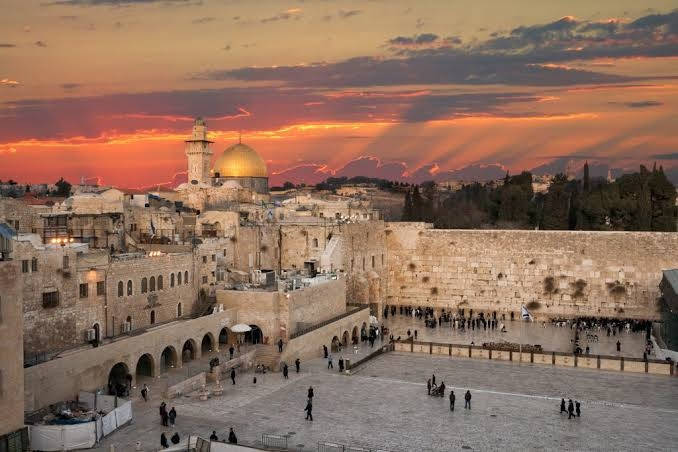
The Western Wall, called the Kotel in Hebrew, is a limestone retaining wall built as part of King Herod's 1st-century-BCE expansion of the Second Temple complex. It forms the western edge of the Temple Mount platform and is the closest place Jews can pray to the site of the destroyed Temple's inner sanctuary. The wall's visible stones vary in age, with the oldest lower courses dating to the Herodian period and upper sections added by later rulers.
The plaza in front of the wall is divided into separate prayer sections, and visitors of any faith are welcome to approach and place written prayers into the wall's crevices, a custom practiced for centuries. Security screening applies before entering the plaza, and men are required to cover their heads, with paper kippot available on loan at the entrance.
Al-Aqsa Mosque and the Dome of the Rock:
Islam's 3rd holiest site, completed in 691 CE by Caliph Abd al-Malik
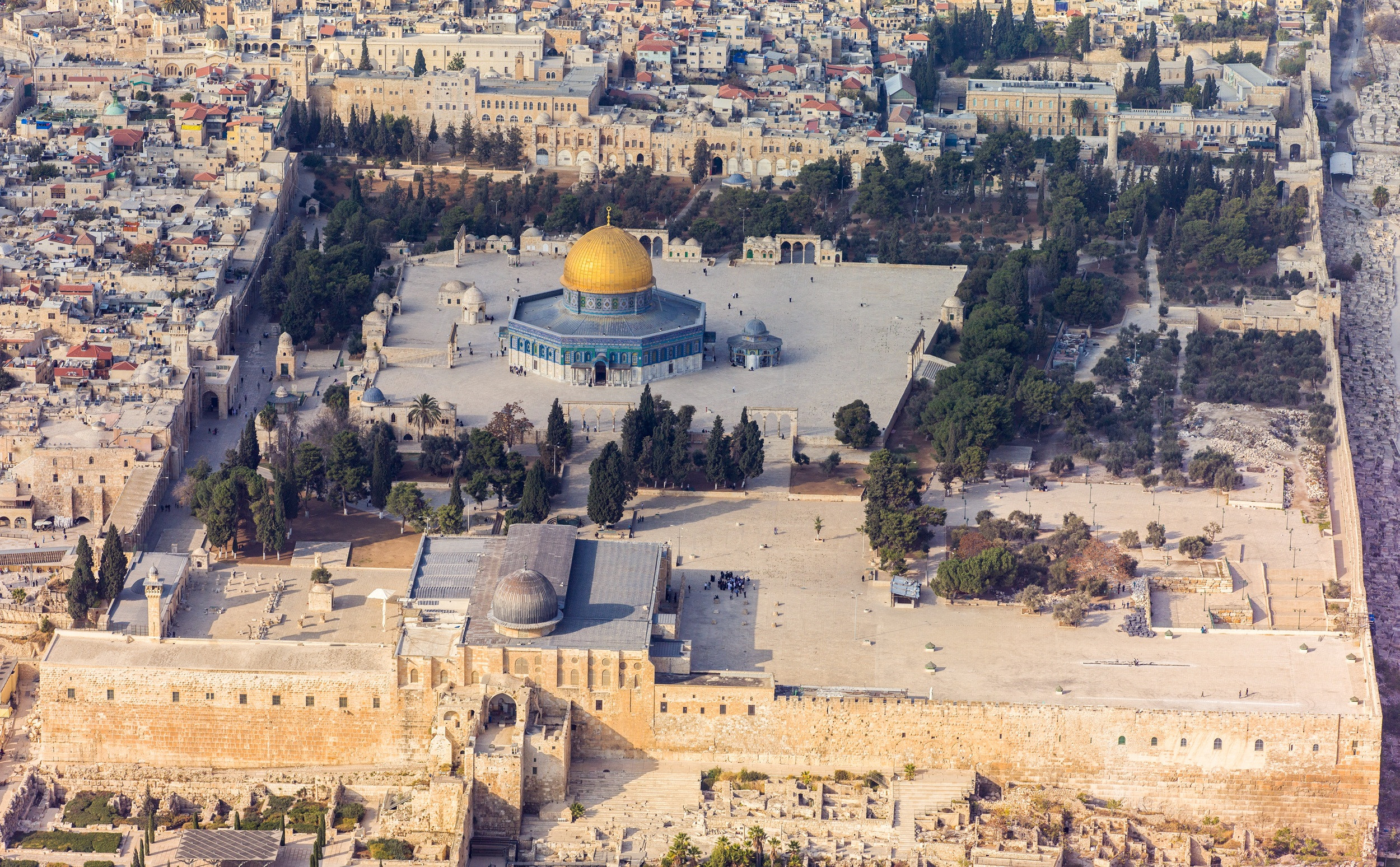
The Temple Mount platform, called Haram al-Sharif or the Noble Sanctuary in Islamic tradition, holds 2 major structures: the Dome of the Rock, a shrine completed in 691 CE marking the site from which Muslims believe Muhammad ascended during the Night Journey, and the Al-Aqsa Mosque, a working mosque covering roughly 35,000 square meters that can hold thousands of worshippers. The wider 14-hectare compound is administered by the Jordan-based Islamic Waqf, while Israel controls external security and entry.
Under the decades-old status quo arrangement, non-Muslims can walk the plaza during set hours, typically Sunday through Thursday mornings and early afternoons, but cannot enter the Al-Aqsa Mosque or Dome of the Rock buildings, and non-Muslim prayer on the Mount is prohibited. Those rules have come under real strain in recent years: Israeli police extended Jewish visiting hours during Ramadan 2026, drawing formal Palestinian Authority objections, and the entire compound closed to all visitors for a day in March 2026 amid regional military escalation.
Church of the Holy Sepulchre:
Traditional site of the crucifixion and burial of Jesus, venerated since at least the 4th century
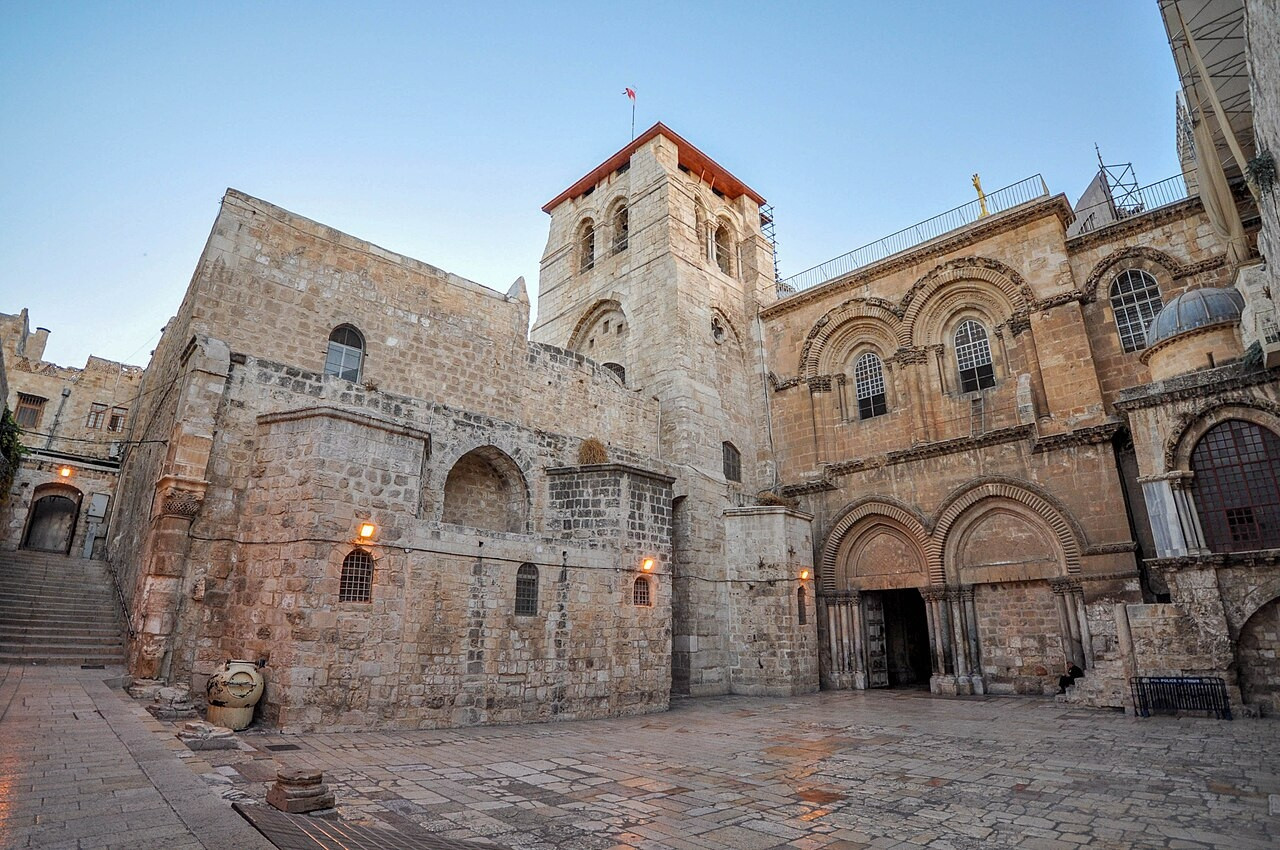
The Church of the Holy Sepulchre marks the traditional sites of Jesus's crucifixion, burial, and resurrection, and Christian pilgrims have visited the location since Roman emperor Constantine's mother, Helena, identified it in the early 4th century. The current structure dates largely from Crusader-era rebuilding in the 12th century, layered over earlier Byzantine construction. Six Christian denominations, Greek Orthodox, Roman Catholic, Armenian Apostolic, Coptic, Ethiopian Orthodox, and Syriac Orthodox, share custodianship under a centuries-old status quo agreement.
An unmoved wooden ladder has sat on a windowsill above the entrance since at least 1852, a small but telling symbol of how rigidly the shared-custody arrangement is maintained; no denomination will move it without consensus from all others. Since 1192, a Muslim family has held the ceremonial key to the church's main door under an arrangement dating to Saladin's rule, a tradition that continues today.
Israel Museum and the Shrine of the Book:
30 galleries, including the country's largest archaeological collection
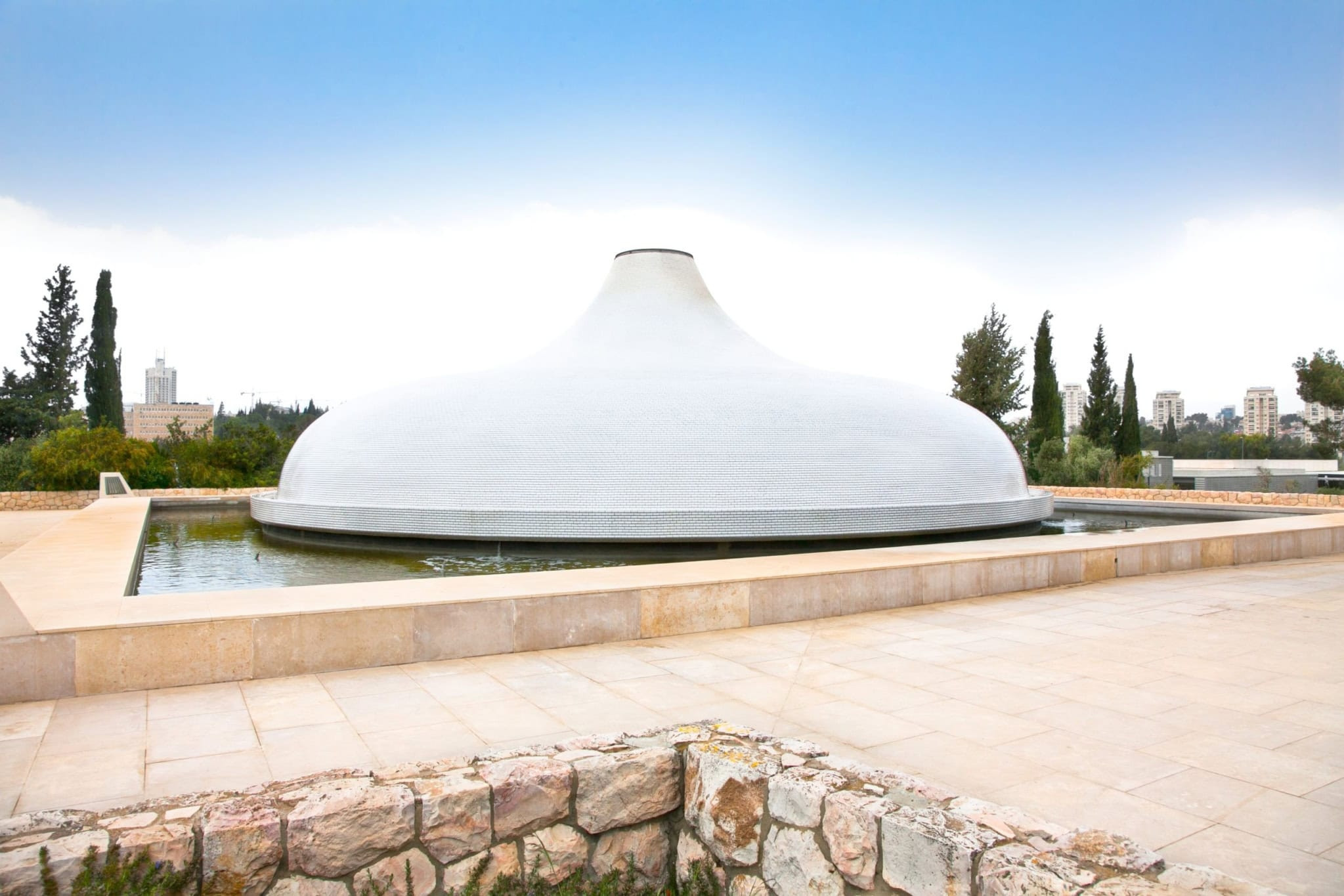
The Israel Museum, opened in 1965 in West Jerusalem, holds around 30 galleries spanning archaeology, Jewish art and life, and contemporary Israeli and international art. Its most significant single holding sits in a dedicated building, the Shrine of the Book, whose white dome-shaped roof was designed to echo the lids of the clay jars in which the Dead Sea Scrolls were found. The Scrolls, discovered in caves near Qumran starting in 1947, include the oldest known surviving copies of Hebrew biblical texts, some dating back more than 2,000 years.
Outside, a large scale model of Jerusalem as it stood in the late Second Temple period, roughly 66 CE, gives visitors a physical sense of the city's layout before its destruction by Roman forces in 70 CE. The museum's outdoor sculpture garden was designed by Japanese-American sculptor Isamu Noguchi.
Yad Vashem:
Israel's official Holocaust remembrance and research center, established 1953
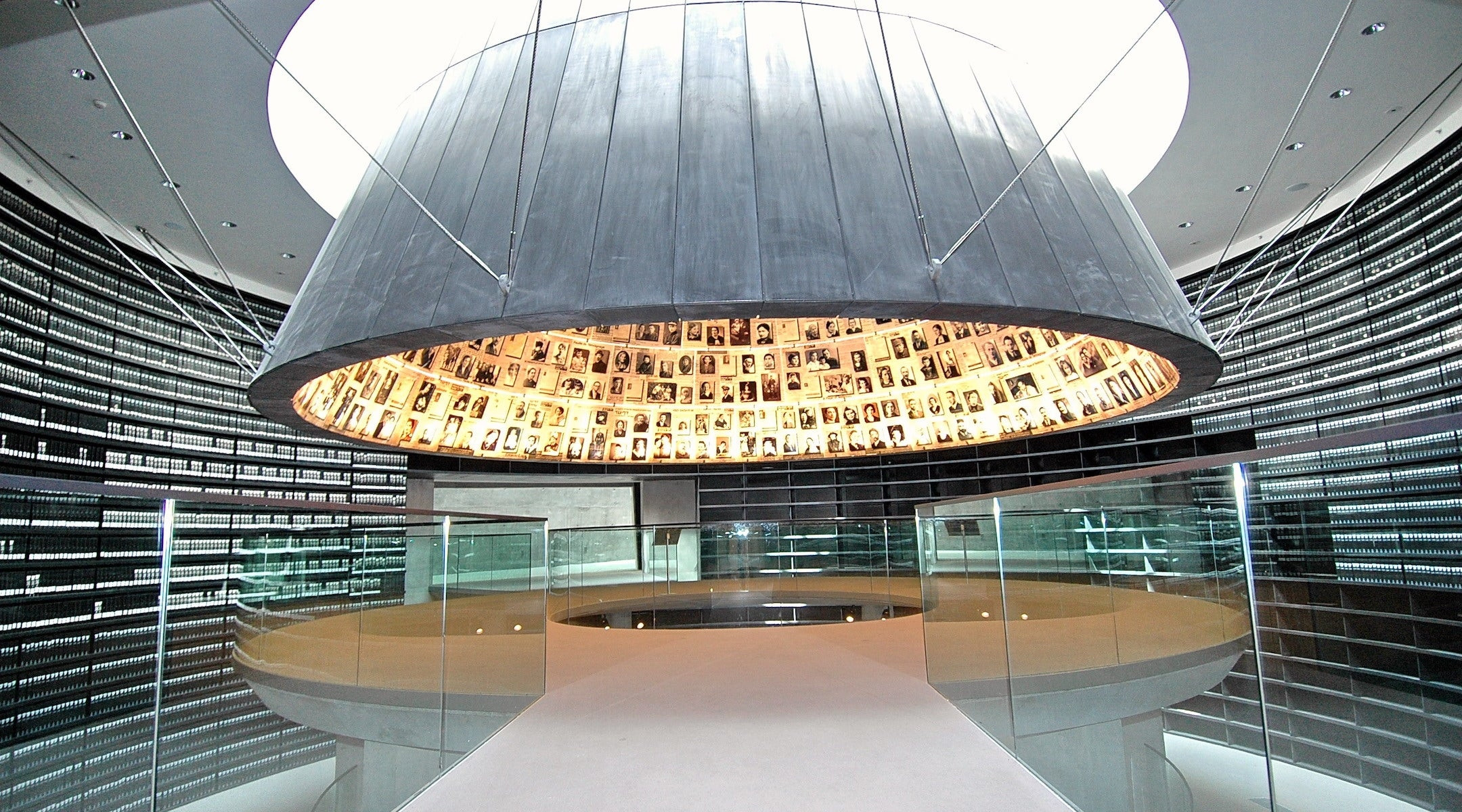
Yad Vashem was established by Israeli law in 1953 as the country's official memorial and research institution for the Holocaust, and it sits on Mount Herzl in West Jerusalem. The site combines a museum tracing Nazi persecution and genocide through personal testimony and artifact, a memorial hall, extensive archives used for ongoing historical research, and the Avenue of the Righteous Among the Nations, honoring non-Jews who risked their lives to save Jews during the Holocaust.
The Children's Memorial, a underground hall lit by candles reflected infinitely through mirrors while the names and ages of murdered children are read aloud, is widely described by visitors as the site's most emotionally difficult space. Entry to Yad Vashem is free.
Western Wall Tunnels:
Over 500 meters of excavated passage running the full length of the Western Wall's foundation
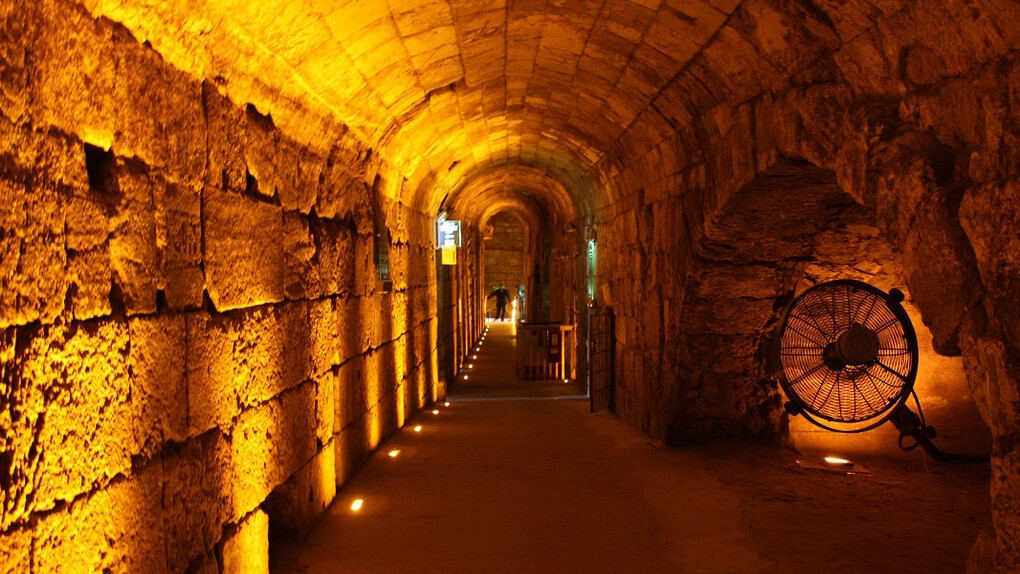
The Western Wall Tunnels run beneath the Muslim Quarter along the full original length of the Western Wall, most of which sits hidden below later construction. The visible plaza shows roughly 60 meters of the wall; the tunnels reveal the remaining several hundred meters, including the largest single stone in the wall, an estimated 570-ton block cut and placed without modern machinery during Herod's expansion.
The Western Wall Heritage Foundation manages the site and runs guided tours only, since the tunnel route is a single-direction passage without independent exploration. Tours typically take just over an hour and exit into the Via Dolorosa in the Muslim Quarter, some distance from the entrance point.
The Garden Tomb:
An alternative traditional burial site, proposed in the 19th century
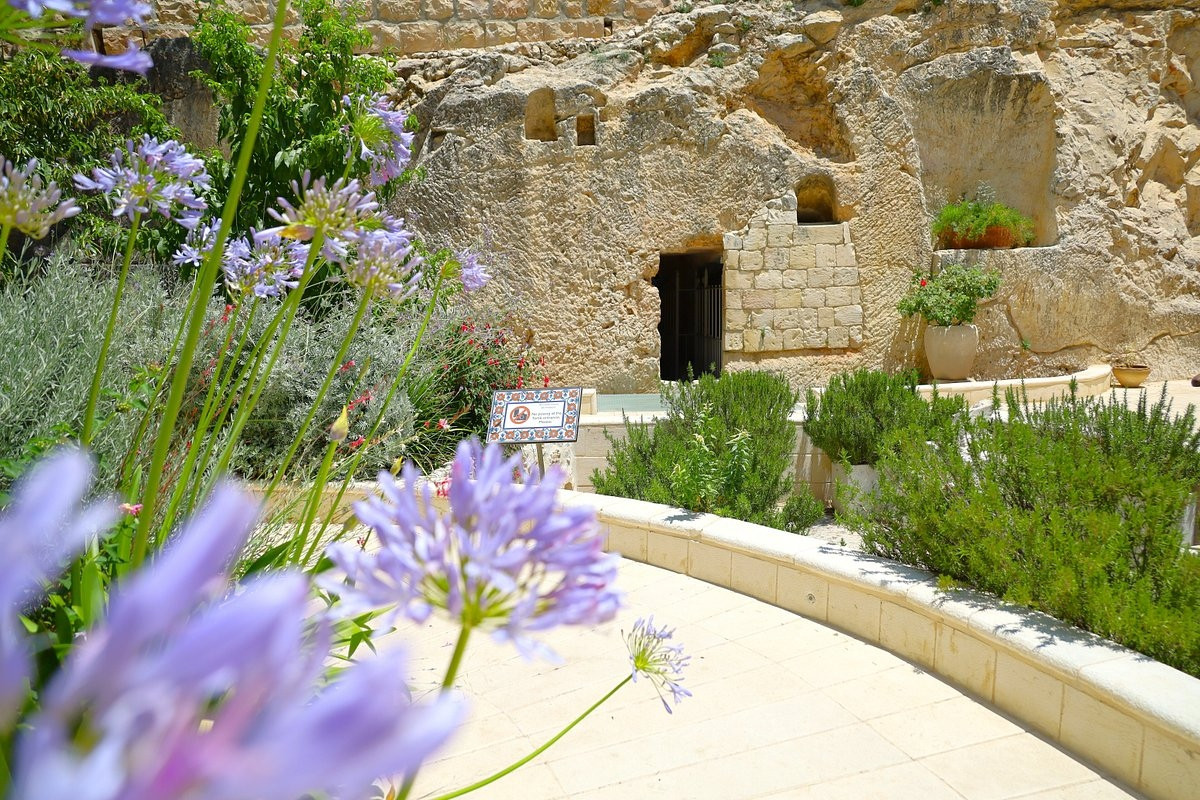
The Garden Tomb sits just outside the Old City walls near Damascus Gate, on a rock-cut tomb that some 19th-century scholars, including British general Charles Gordon, proposed as the true site of Jesus's burial and resurrection, an alternative to the Church of the Holy Sepulchre. Archaeological dating of the tomb's style suggests an earlier period than the 1st century CE, which most scholars take as evidence against the identification, though the site remains a meaningful place of reflection for many Protestant visitors regardless of the historical debate.
The Garden Tomb Association, a Christian charity, maintains the site as a quiet garden setting deliberately different from the incense and crowds of the Holy Sepulchre. Entry is free, and the association offers short devotional talks throughout the day for visitors who want them.
City of David:
The archaeological site of Jerusalem's original urban core, just south of the Old City
The City of David sits on a ridge immediately south of the Old City's current walls and covers what archaeologists identify as Jerusalem's earliest settled core, with excavated layers spanning the Middle Bronze Age through the Ottoman period. Findings include sections of ancient fortification walls, the Hasmonean-era aqueduct, and Warren's Shaft, a vertical rock shaft tied to the city's ancient water system. The biblical Pool of Siloam, where multiple gospel accounts place a healing miracle, sits at the site's southern end.
The site is operated by Elad, an Israeli organization also active in Jewish settlement in the surrounding Palestinian neighborhood of Silwan, a role that has drawn criticism from archaeologists and rights groups who argue the excavation work is entangled with a political settlement project, not purely academic research. Visitors should know this context sits directly alongside the archaeology itself.
Tower of David:
A citadel built by Herod, expanded across 2,000 years by nearly every ruler of Jerusalem
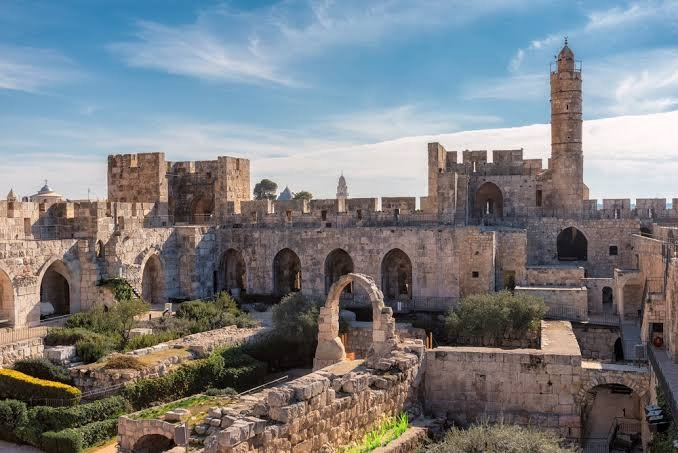
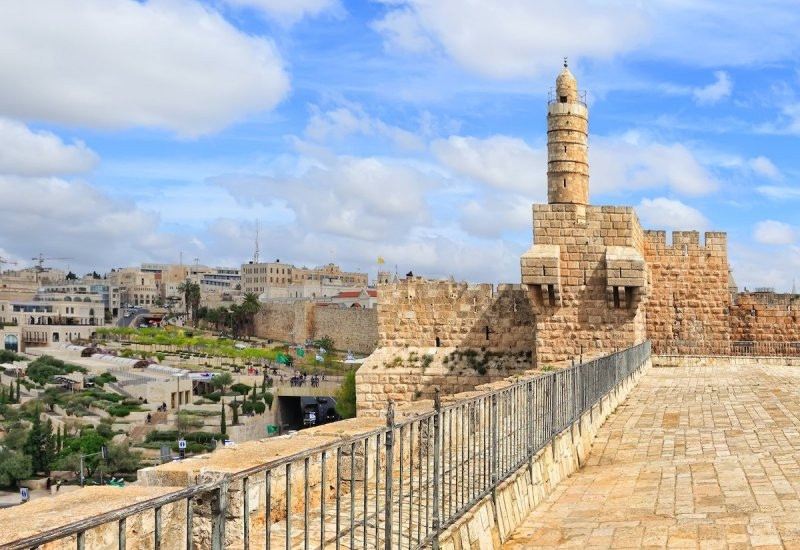
The Tower of David, also called the Jerusalem Citadel, sits beside Jaffa Gate and traces its core structure to fortifications King Herod built in the 1st century BCE. Despite the name, the site has no direct connection to the biblical King David; the name dates to a later Byzantine-era misidentification that stuck. Successive rulers, including the Umayyad Caliphate, Crusader kings, the Ottoman Empire, and British Mandate engineers, each added to or rebuilt sections of the citadel, making it a physical layer-cake of the city's political history.
Today the citadel houses a museum covering Jerusalem's history across its many periods of rule, and the ramparts offer some of the Old City's best elevated views. An evening sound-and-light show projects onto the citadel walls during parts of the year.
Damascus Gate and the Muslim Quarter markets:
The Old City's busiest gate and the commercial heart of Palestinian East Jerusalem
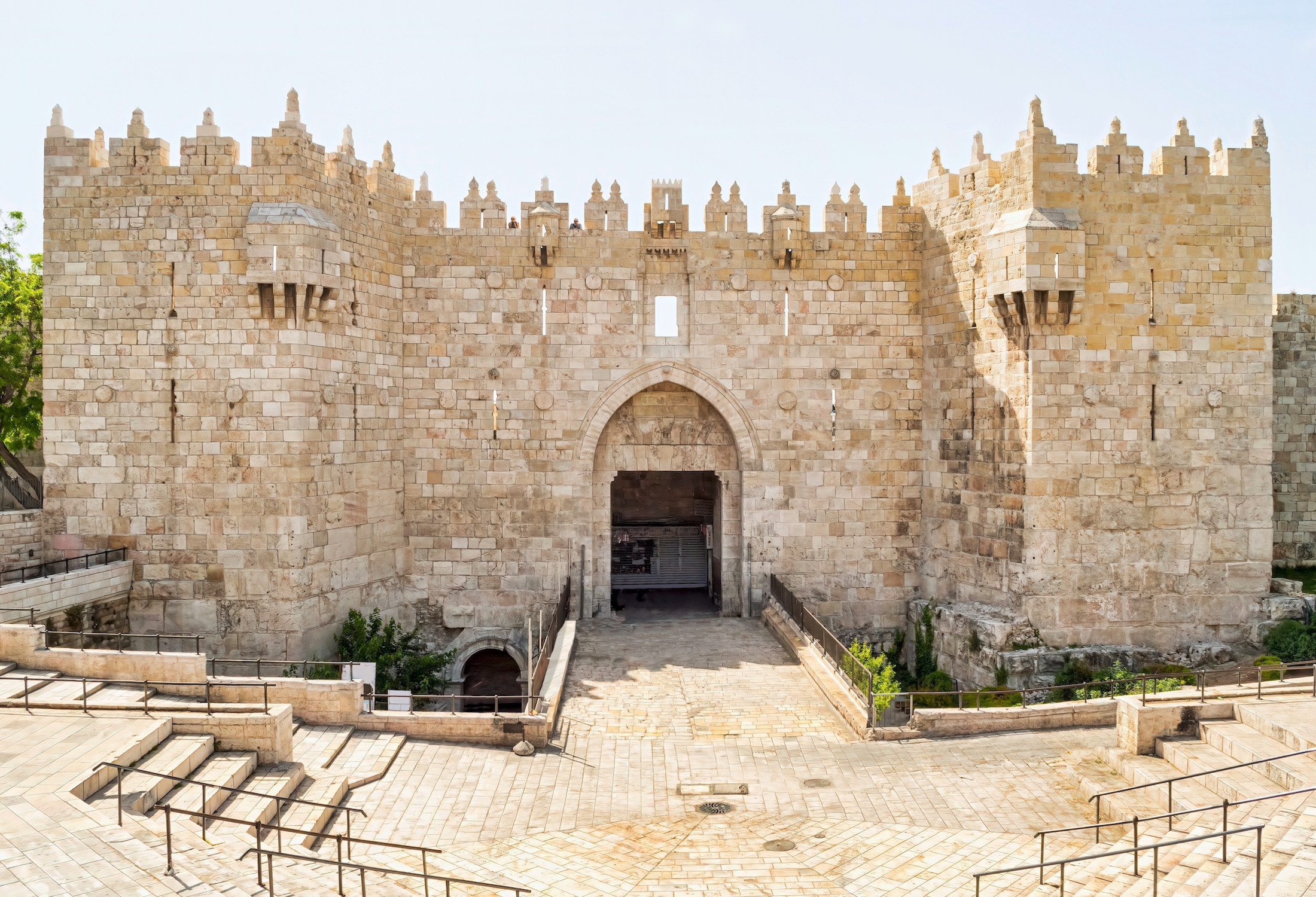
Damascus Gate, called Bab al-Amud in Arabic, is the largest and most heavily used of the Old City's gates and the main entry point into the Muslim Quarter from Palestinian East Jerusalem. The current gate structure dates to Ottoman Sultan Suleiman the Magnificent's 16th-century rebuilding of the city walls, though excavations beneath it have exposed a Roman-era gate from the 2nd century CE, visible today in an underground archaeological area beneath the plaza.
Inside the gate, the Muslim Quarter's covered markets, the souks, run in narrow stone-vaulted lanes selling spices, textiles, sweets, and household goods, a working commercial district, not a curated tourist attraction. Salah al-Din Street, running north from the gate outside the walls, is East Jerusalem's main Palestinian commercial street, with bookshops, restaurants, and businesses that serve the neighborhood's residents day to day.
Where to Stay in Jerusalem:
East and West Jerusalem run on different rhythms, different clienteles, and, for Palestinian travelers specifically, different levels of practical access.
Inside the Old City walls
Small guesthouses and hostels sit inside the Muslim, Christian, and Armenian quarters, putting every major site in this guide within a short walk. Rooms are generally simple, and vehicle access is limited by the narrow lanes.
American Colony area
A historic 19th-century hotel and surrounding neighborhood long favored by journalists, diplomats, and NGO staff working in the region. Realistic proximity to East Jerusalem's Palestinian commercial districts and a common base for those covering or researching the situation directly.
Beit Hanina
A Palestinian residential neighborhood a few kilometers north of the Old City, with homestays and smaller guesthouses run by local families. Fewer tourist services than the Old City itself, and a more residential, day-to-day view of East Jerusalem life.
West Jerusalem hotel district
The city's larger international hotels sit here, generally accessible to Jerusalem-ID Palestinians and international visitors of any background. West Bank ID holders face the same permit and checkpoint restrictions reaching this area as anywhere else in the city.
Practical Visiting Tips:
Dress modestly everywhere
Shoulders and knees covered is the baseline at every site in this guide, religious or otherwise. Carry a scarf or light layer even in summer heat, since several sites will turn away visitors in shorts or sleeveless tops.
Plan around 2 sabbaths
Jewish sites shorten hours or close from Friday sundown to Saturday sundown. Muslim sites often close or restrict access on Fridays around midday prayers. Build slack into any single-day Old City itinerary.
Carry ID at all times
Security checks happen at site entrances and occasionally on Old City streets themselves. Palestinian and foreign visitors alike should keep identification accessible, not packed away in a bag.
Check advisories the week before, not just at booking
Government travel advisories and site access rules here have changed within days more than once in 2026. Recheck official sources shortly before departure, not only when you first book.
Know where photography is restricted
Cameras are barred inside the Dome of the Rock and Al-Aqsa Mosque, and restricted in parts of the Church of the Holy Sepulchre during active services. Ask before photographing people, particularly in residential parts of the Old City.
A local guide adds real context
Given how layered the political and religious history here is, a guide, Palestinian or Israeli depending on the perspective you're after, adds context a self-guided walk won't surface on its own.
Frequently Asked Questions (FAQ's):
Verified for July 2026; recheck official sources before traveling, since conditions here shift quickly.




{{item.get_author.first_name}} {{item.get_author.last_name}}
Level 7
5 Photos
36 Reviews
{{item.comment_txt}}
{{item_reply.get_author.first_name}} {{item_reply.get_author.last_name}}
@ {{item_reply.reply_to}}, {{item_reply.reply_txt}}