

Angel Falls in Venezuela is the tallest waterfall on Earth at 979 meters (3,212 feet). Victoria Falls, 1,708 meters wide on the Zambia-Zimbabwe border, is the largest single sheet of falling water. Iguazu Falls is actually 275 separate cascades spanning 2.7 kilometers. Niagara Falls remains the easiest of the major waterfalls to reach, with direct road and rail access from 2 countries. Every measurement below is checked against national park data and the World Waterfall Database, not rounded for effect.
A waterfall's height gets reported differently depending on who measured it and when. Angel Falls has been cited anywhere from 807 to 979 meters, depending on whether a source counts the full drop or only the longest uninterrupted free fall. Gocta Falls in Peru wasn't measured at all until 2006, and its ranking among the world's tallest is still disputed by the researchers who study these things. That inconsistency is worth knowing upfront, since a lot of waterfall content online repeats numbers without checking where they came from.
This guide covers 22 waterfalls across 6 continents, each with a verified height, width, or flow figure, the best season to see it at full force, and what it actually costs and takes to get there. Some of these charge nothing at all. Others require a guided flight and cost several hundred dollars. Both extremes are worth knowing before you book anything.
EuropeCroatia, Iceland, Switzerland, and Scotland:
Iceland alone accounts for 4 of these 7 entries, a function of glacial meltwater feeding a small country with an unusually high concentration of dramatic drops.
Plitvice Lakes:
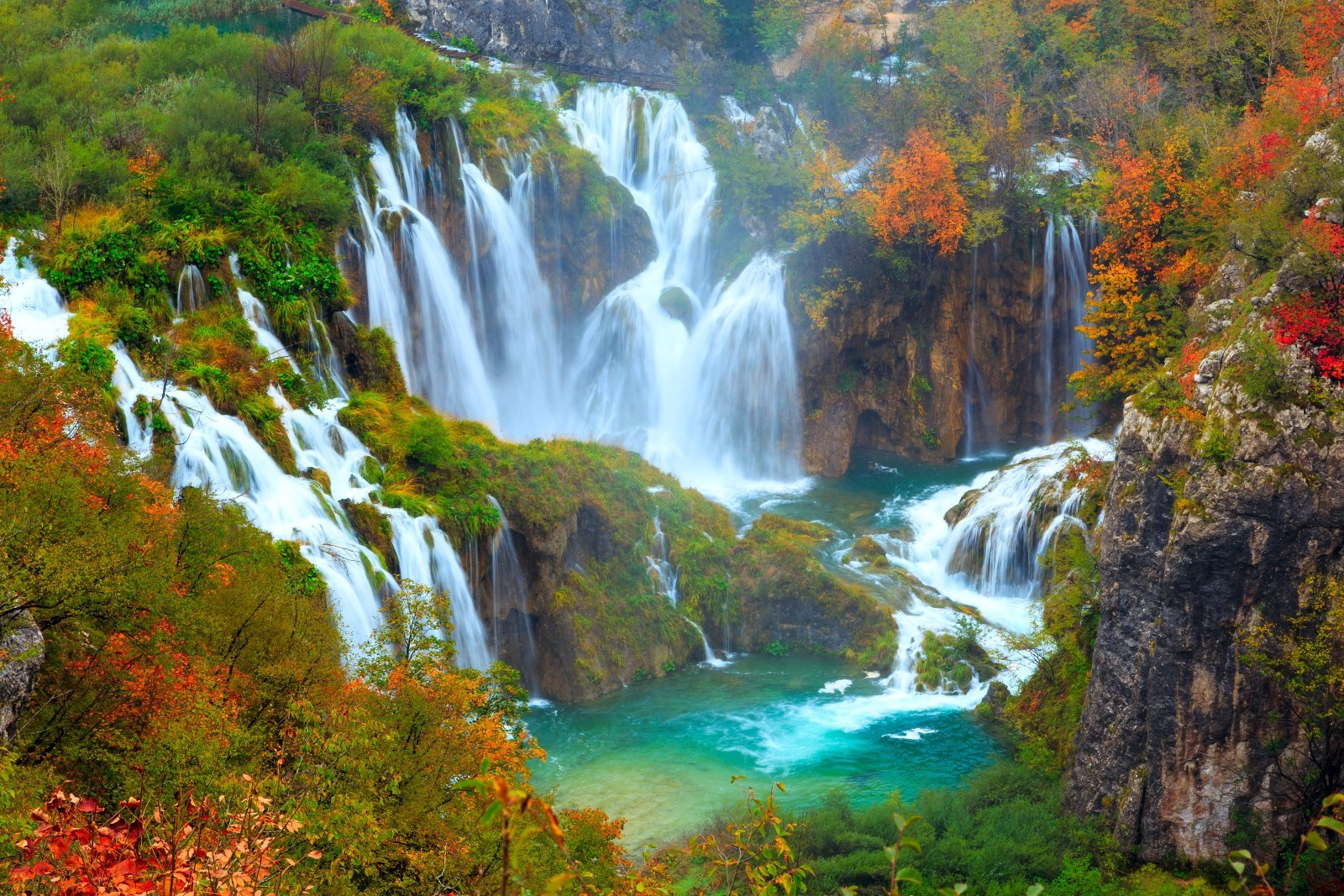
Plitvice isn't 1 waterfall. It's 16 terraced lakes connected by dozens of cascades, all fed by the same limestone karst system that gives the water its turquoise and emerald color, a mineral effect from dissolved calcium carbonate, not any artificial dye. The park has held UNESCO World Heritage status since 1979, one of the first natural sites in Europe to receive it. Wooden boardwalks cross directly over the clearest sections, close enough to see trout swimming beneath the water.
🧭 Best time to visit: May-June and September-October, for full waterfalls and fewer crowds than peak summer.
🚪 Accessibility: Easy. Reachable from Zagreb or Zadar by car, bus, or tour; works well as a day trip with 4-6 hours on-site.
👉 What makes it special: 16 turquoise lakes connected by cascades, with wooden boardwalks crossing directly over the clearest water.
💰 Entrance fee: €10-40, varying by season and entry point.
Skradinski Buk:
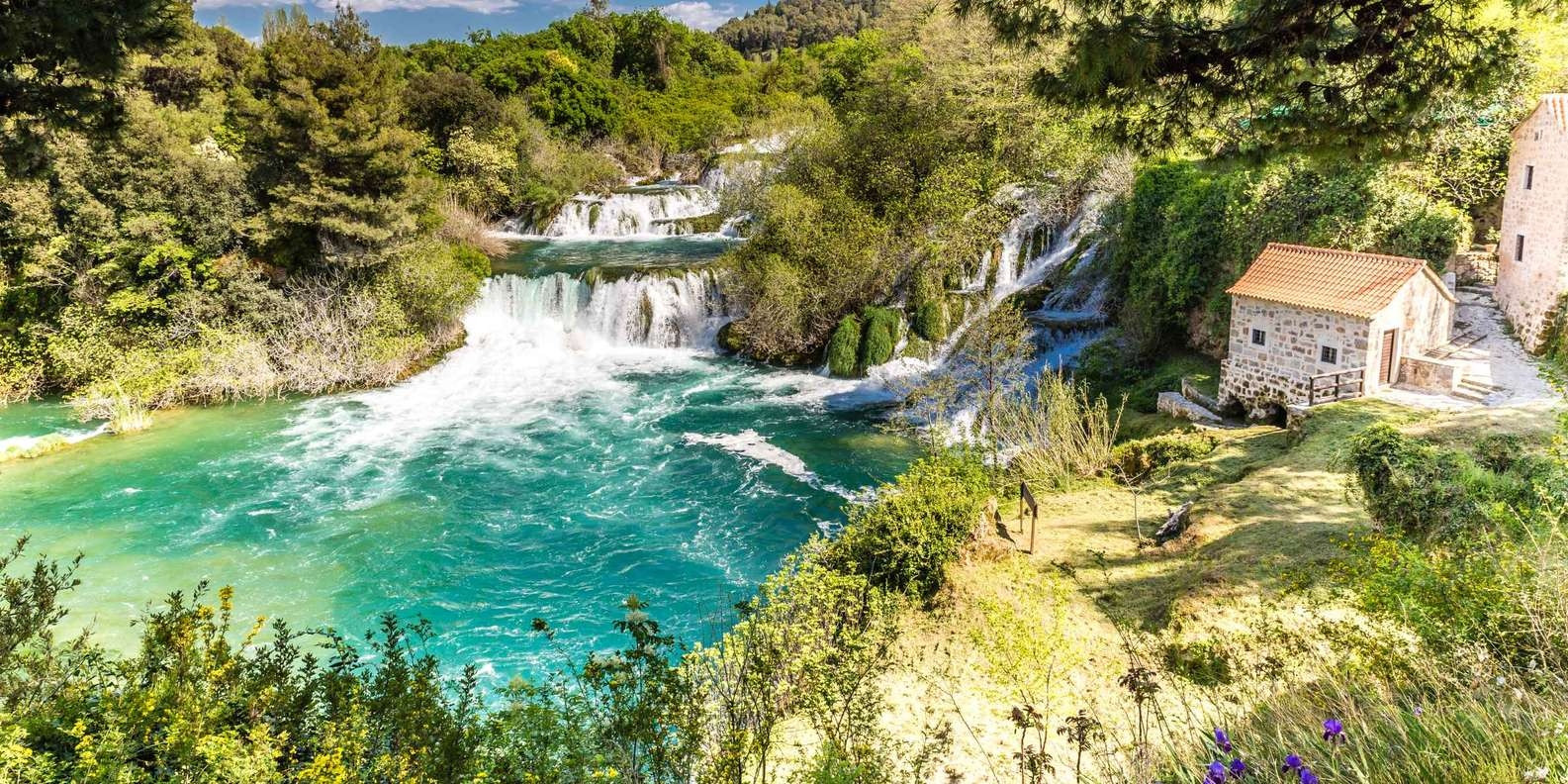
Skradinski Buk drops about 46 meters (150 feet) across a series of travertine barriers, wide enough that the water spreads across a broad terrace, not concentrated into a single dramatic plunge. Swimming was permitted directly beneath the falls until 2021, when Croatia's environment ministry restricted it to protect the travertine formation from erosion; a designated swimming area remains open nearby. Reaching it requires entering through Krka National Park near Sibenik, then a boat or shuttle to the falls themselves.
🧭 Best time to visit: April-June and September-October for strong flow and clear water; summer is busier but still worthwhile.
🚪 Accessibility: Enter through Krka National Park near Sibenik, then reach the falls by boat or shuttle. Half-day visit recommended.
👉 What makes it special: A wide travertine cascade you can walk directly beside on wooden paths, with a designated swimming area nearby.
💰 Entrance fee: €20-40, which includes full access to Krka National Park.
Gullfoss:
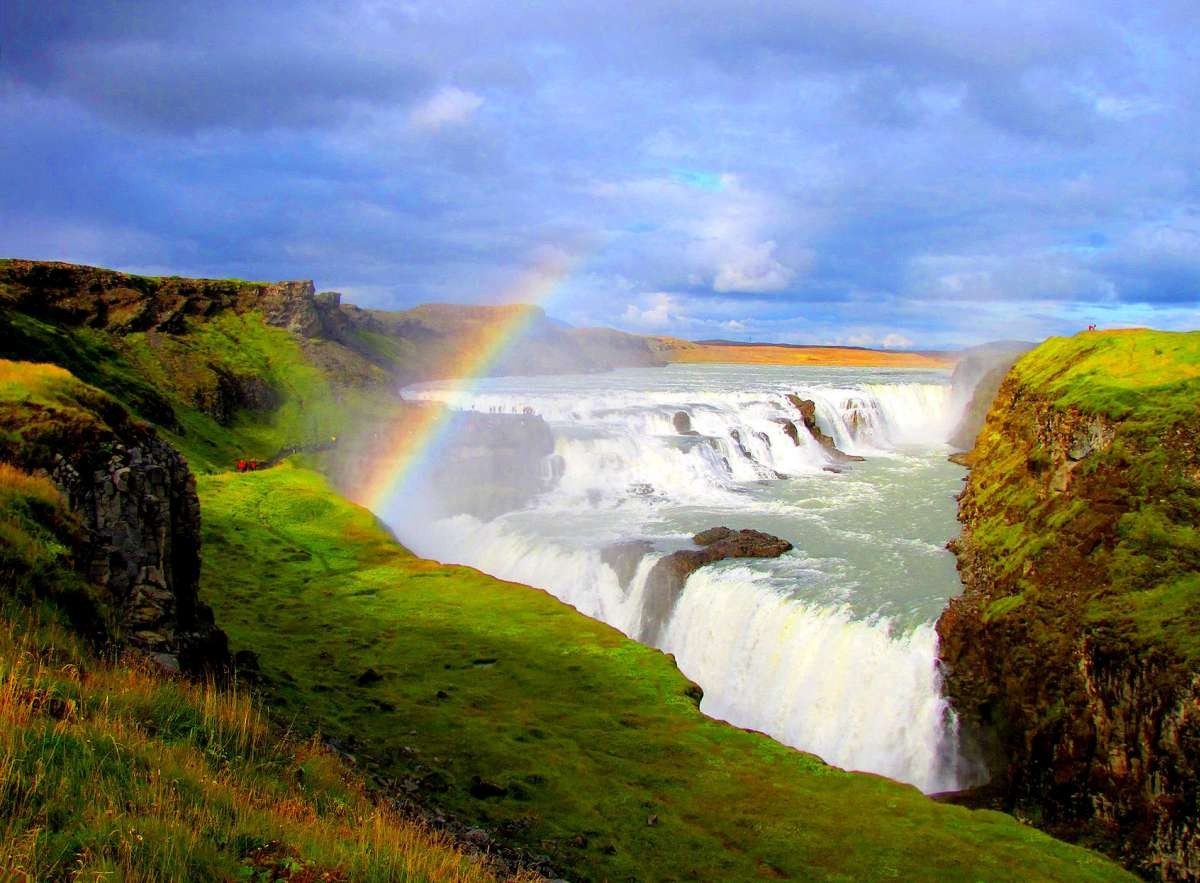
Gullfoss drops in 2 stages, first 11 meters, then 21 meters, into a canyon carved by the Hvita River over roughly 10,000 years. The name translates to "golden falls," a reference to the glacial silt that gives the water a golden tint in the right light, not any historical gold find. It sits on the standard Golden Circle route from Reykjavik, and there's no entrance fee, only a parking charge at the visitor lot.
🧭 Best time to visit: May to September, when roads are open and glacial flow is at its strongest.
🚪 Accessibility: Easy. Part of the standard Golden Circle route from Reykjavik, a short walk from the parking area.
👉 What makes it special: A 2-stage drop into a canyon, with golden glacial silt giving the water its namesake tint and frequent rainbows in the mist.
💰 Entrance fee: Free (parking may carry a small charge).
Dettifoss:
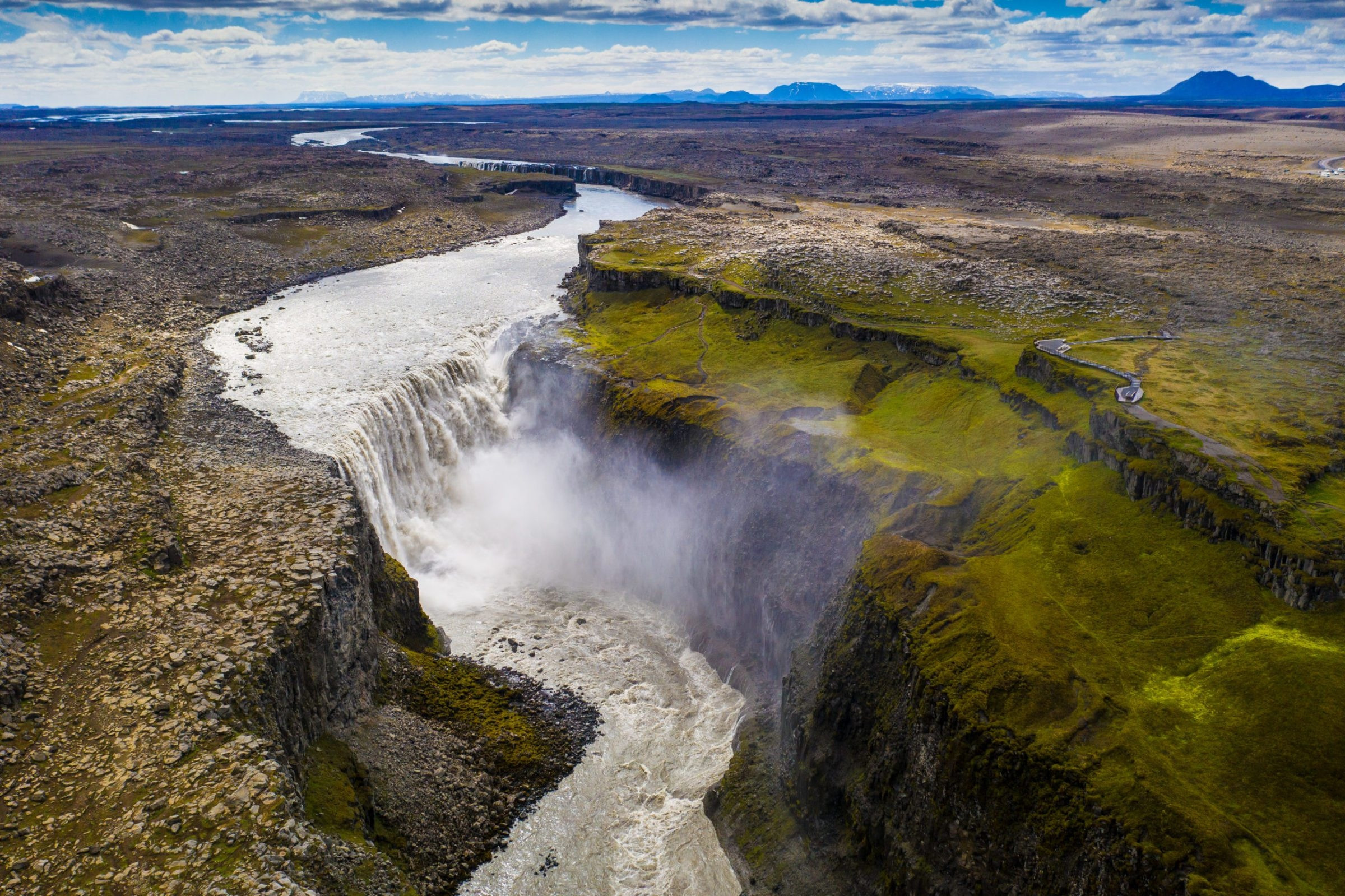
Dettifoss is Europe's most powerful waterfall by average flow rate, moving roughly 193 cubic meters of water per second at a 44-meter drop into the canyon below. The Jokulsa a Fjollum river that feeds it originates from Vatnajokull, Europe's largest glacier by volume, which is why flow peaks during summer melt and drops considerably in winter. Both the east and west sides of the canyon have marked walking paths from their respective parking areas.
🧭 Best time to visit: June to September, when roads are open and glacial melt drives the strongest flow.
🚪 Accessibility: Located in Vatnajokull National Park, about 6-7 hours from Reykjavik by car, with short marked paths on both the east and west sides.
👉 What makes it special: Europe's most powerful waterfall by average flow rate, dropping into a canyon with genuinely raw force.
💰 Entrance fee: Free (parking may carry a small charge).
Seljalandsfoss
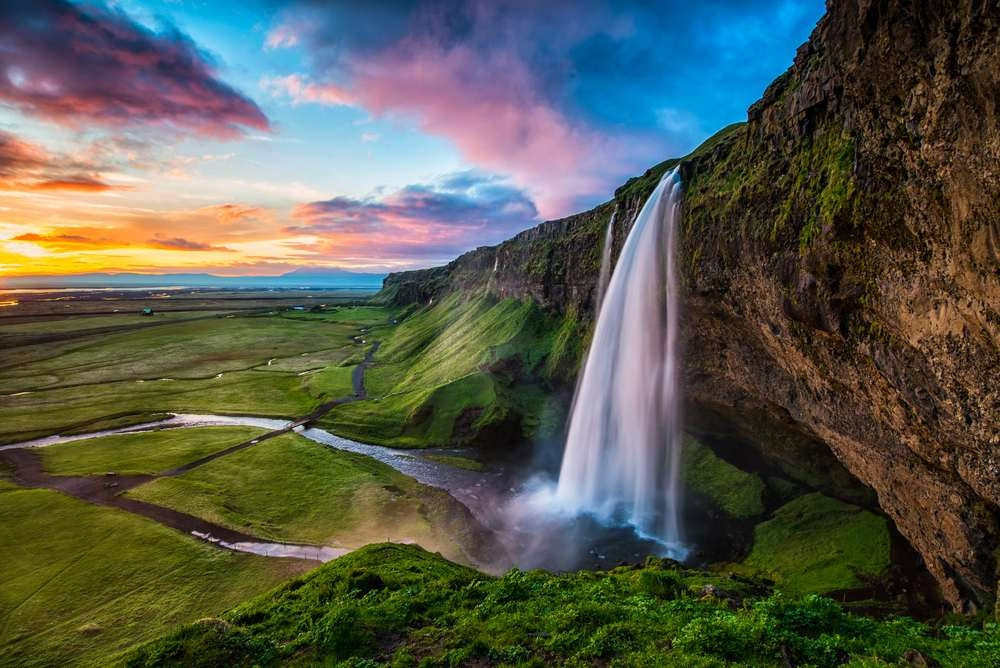
Seljalandsfoss drops 60 meters from a cliff that was once part of Iceland's coastline before the shore receded, which is why a walking path circles fully behind the curtain of falling water, an unusual feature most waterfalls don't allow due to unstable rock. The path floods and gets slippery outside summer months; check conditions before attempting the behind-the-falls route between October and April.
🧭 Best time to visit: May to September, for safer footing and full glacier-melt flow on the walk-behind path.
🚪 Accessibility: About 2 hours from Reykjavik on the South Coast, with a short walk from the parking area directly to the falls.
👉 What makes it special: One of the only major waterfalls with a path that goes fully behind the water curtain.
💰 Entrance fee: Free (parking fee may apply).
Staubbach Falls:
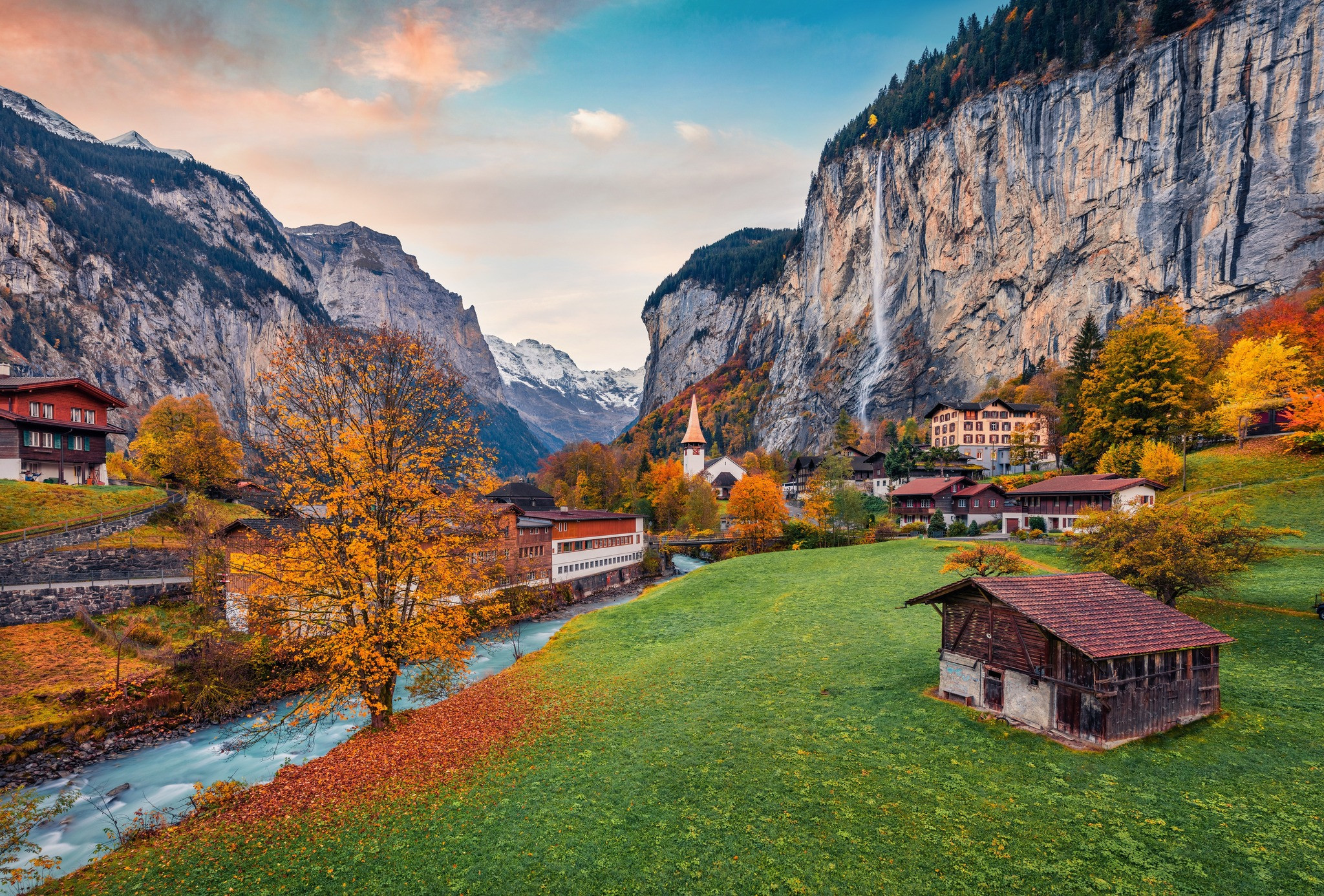
Staubbach drops 297 meters in a single free fall, among the tallest in Switzerland, from a cliff face in the Lauterbrunnen Valley, a glacially carved trough surrounded by 72 waterfalls in total according to the valley's own tourism board. The height means the water often disperses into mist before reaching the ground, especially on windy days, which is where the name comes from: Staubbach translates to "dust brook."
🧭 Best time to visit: May to September, when summer snowmelt makes the drop strongest.
🚪 Accessibility: About 20 minutes from Interlaken by train or car, then a short walk from Lauterbrunnen village to the viewpoint.
👉 What makes it special: A 297-meter single free fall, among the tallest in Switzerland, that often disperses into mist before reaching the ground.
💰 Entrance fee: Free.
Kilt Rock (Mealt Falls):
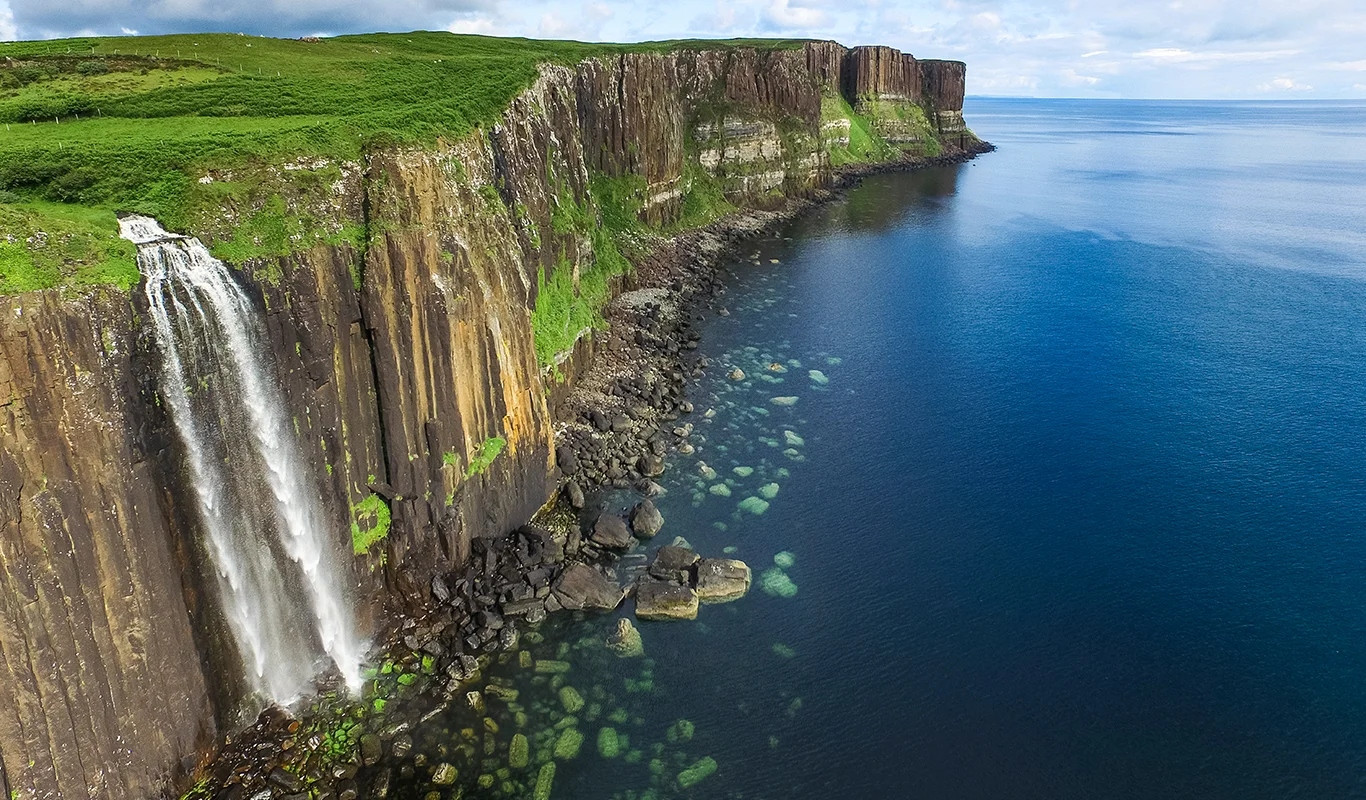
The waterfall at Kilt Rock, officially Mealt Falls, drops about 55 meters directly off a sea cliff into the Atlantic, fed by the outflow of Loch Mealt above. The cliff face itself is the main draw: layered basalt columns that resemble the pleats of a kilt, a rock formation created by successive lava flows roughly 60 million years ago. The viewpoint sits directly beside the road, no hike required.
🧭 Best time to visit: Late spring to early autumn (May-September); misty days can make the cliffs feel even more dramatic.
🚪 Accessibility: About a 30-40 minute drive from Portree on the Trotternish Peninsula; the viewpoint sits right beside the road, no hiking required.
👉 What makes it special: A waterfall dropping straight off sea cliffs into the Atlantic, framed by basalt columns that resemble a pleated kilt.
💰 Entrance fee: Free.
North AmericaUnited States and Canada:
This region ranges from the most heavily visited waterfall on the continent to 2 of the hardest to reach, one by a 16-kilometer desert hike, the other only by helicopter.
Niagara Falls:
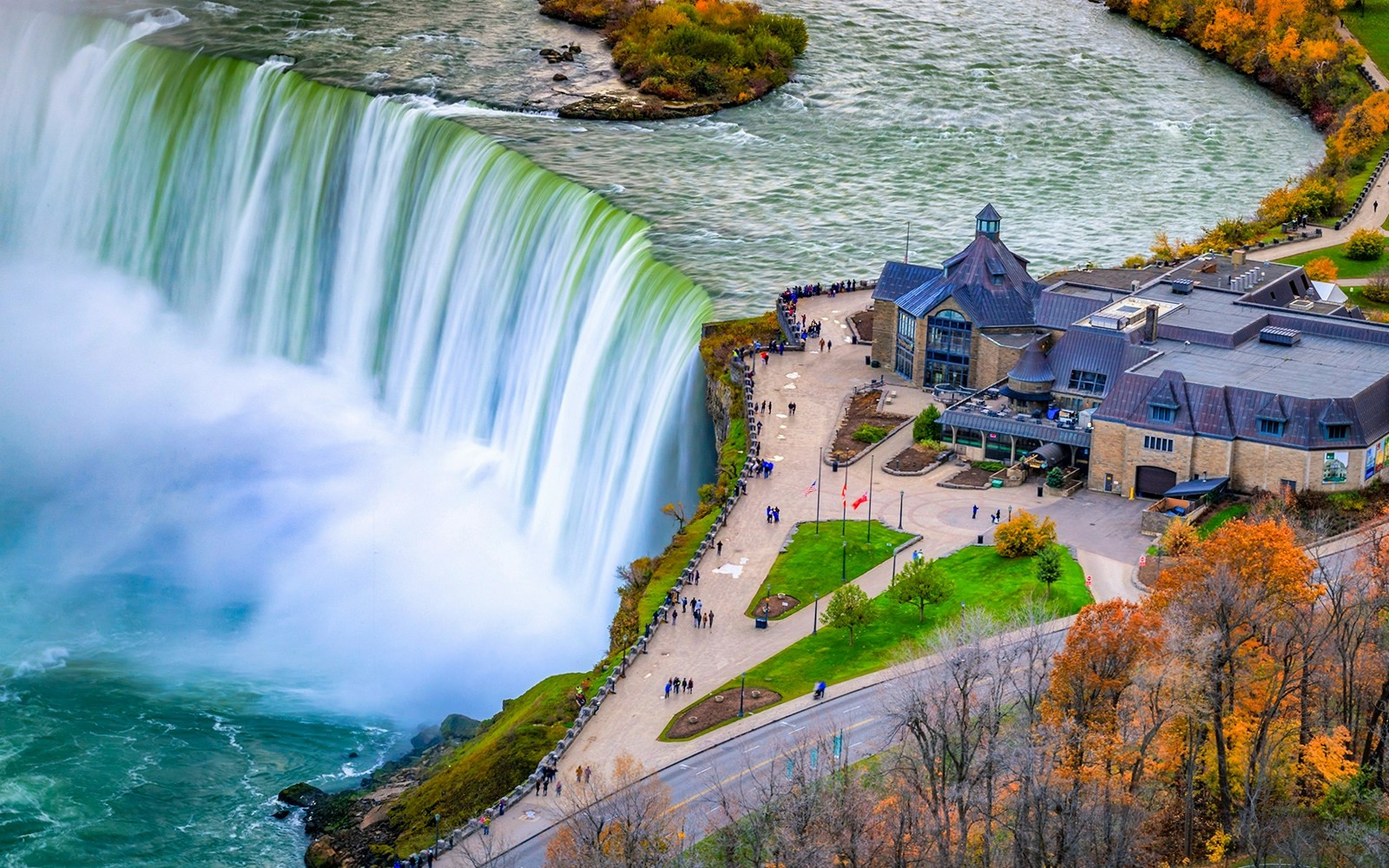
Niagara Falls is actually 3 separate waterfalls: Horseshoe Falls (the largest, roughly 57 meters high and 670 meters wide), American Falls, and the smaller Bridal Veil Falls. Combined average flow runs about 2,400 cubic meters per second, though the Niagara River's flow is partially diverted for hydroelectric power, so the visible flow is deliberately reduced from its natural maximum. It's the most developed waterfall on this list: direct road, rail, and air access from both Toronto and Buffalo, plus boat tours from spring through fall.
🧭 Best time to visit: May to September, for full water flow and fully operational boat tours; winter offers a quieter, partly frozen view.
🚪 Accessibility: Easy. Direct road, rail, and air access from both Toronto and Buffalo, with developed, paved viewpoints on both sides.
👉 What makes it special: 3 separate falls in one system (Horseshoe, American, and Bridal Veil), moving one of the highest combined flow volumes of any waterfall on this list.
💰 Entrance fee: Free to view; boat cruises and attractions cost $25-45 per person.
Yosemite Falls:
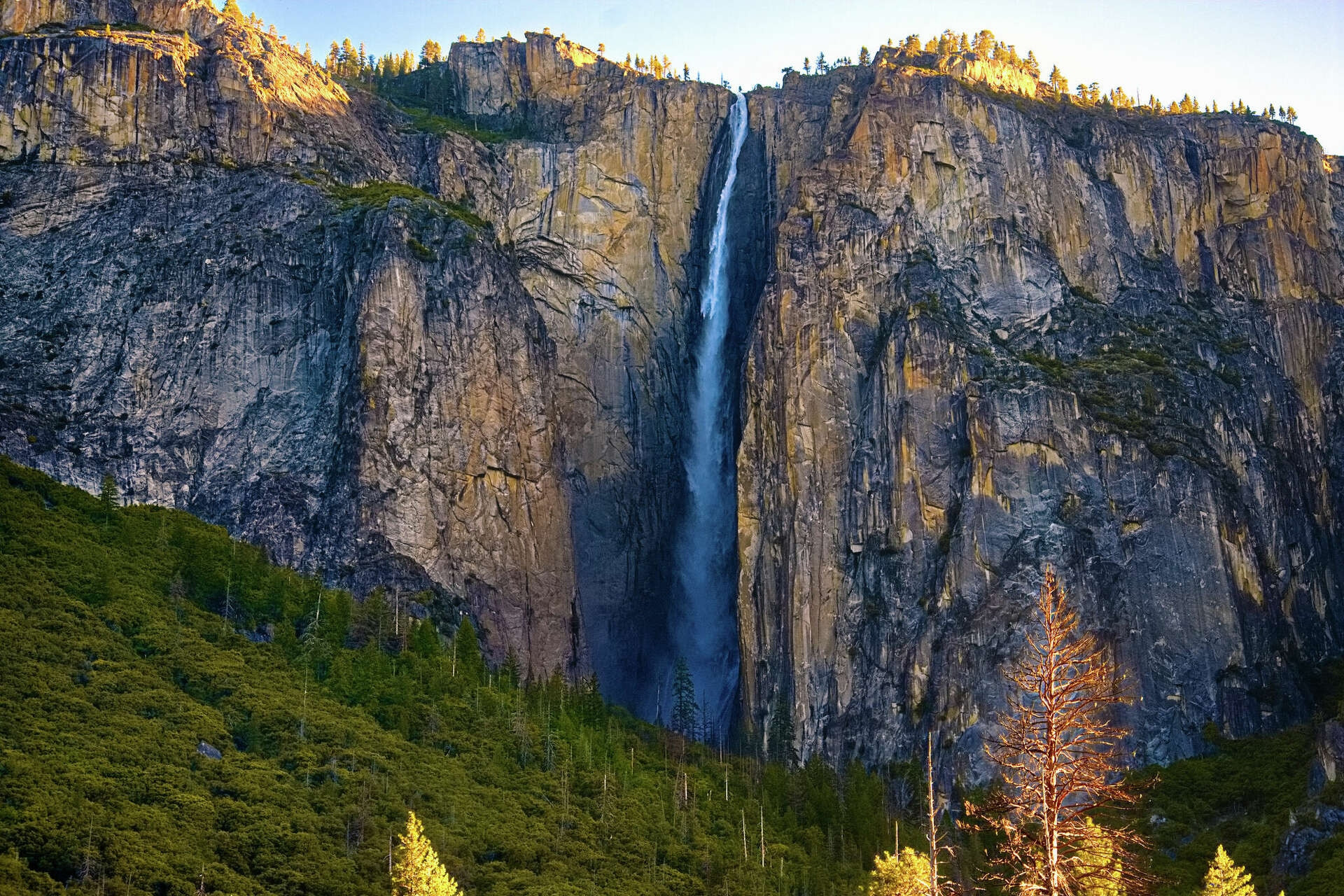
Yosemite Falls drops 739 meters (2,425 feet) across 3 sections, the tallest waterfall in North America by total height. Flow depends entirely on snowmelt timing: by late July in a dry year, the upper falls can reduce to a trickle or stop entirely, so a May or June visit is the difference between seeing a genuine waterfall and seeing wet rock. The Lower Yosemite Fall trail is a flat, paved 1.6-kilometer loop; reaching the top of the upper falls is a strenuous 12-kilometer round trip.
🧭 Best time to visit: May to June, when snowmelt is at its peak; by late summer the flow can reduce to a thin stream or stop entirely.
🚪 Accessibility: Easy from San Francisco or Fresno by car. The Lower Yosemite Fall trail is a flat, paved loop; reaching the upper falls is a strenuous hike.
👉 What makes it special: The tallest waterfall in North America at 739 meters, dropping across 3 distinct sections framed by granite cliffs.
💰 Entrance fee: $20-35 per vehicle (Yosemite National Park entry).
Multnomah Falls:
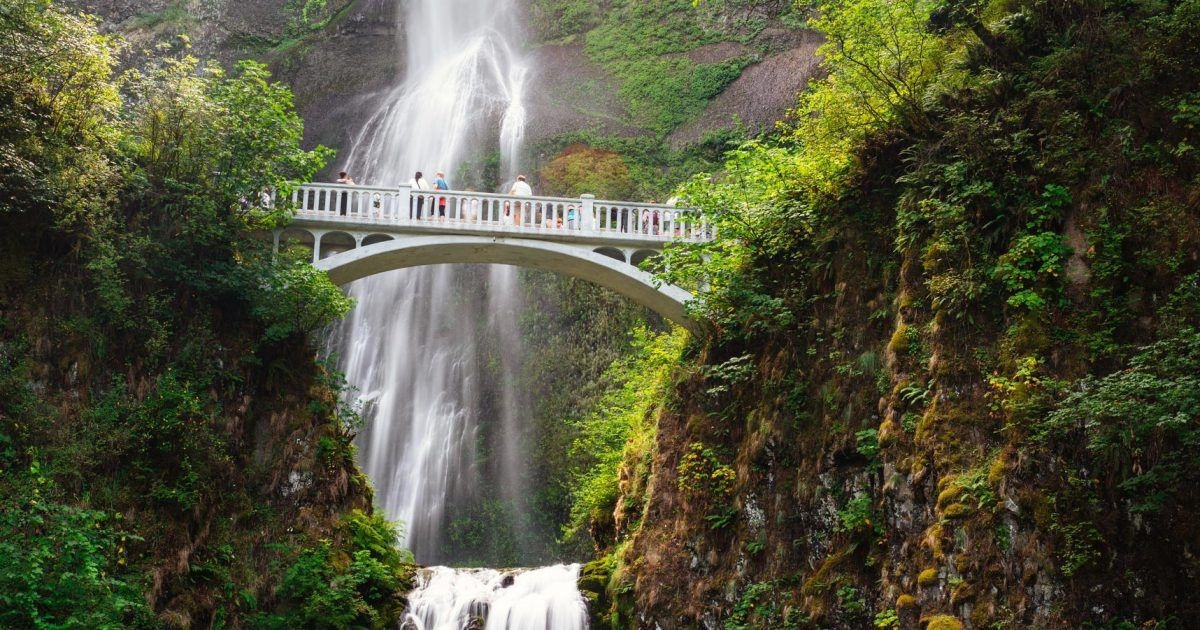
Multnomah Falls drops 189 meters (620 feet) in 2 tiers, the tallest waterfall in Oregon, and is bridged partway up by the Benson Bridge, built in 1914 and named after the local businessman who funded it. A 2017 wildfire burned through much of the surrounding forest; the falls themselves were undamaged, and the trail reopened in phases through 2018. It sits directly off the Historic Columbia River Highway, a short walk from the parking area.
🧭 Best time to visit: April-June for peak snowmelt flow, or September-October for fewer crowds and fall color.
🚪 Accessibility: About 30-40 minutes from Portland, directly off the Historic Columbia River Highway with a short walk to the bridge viewpoint.
👉 What makes it special: The tallest waterfall in Oregon, dropping in 2 tiers past the 1914 Benson Bridge.
💰 Entrance fee: Free (parking may require a timed permit in peak season).
Yellowstone Falls (Lower Falls):
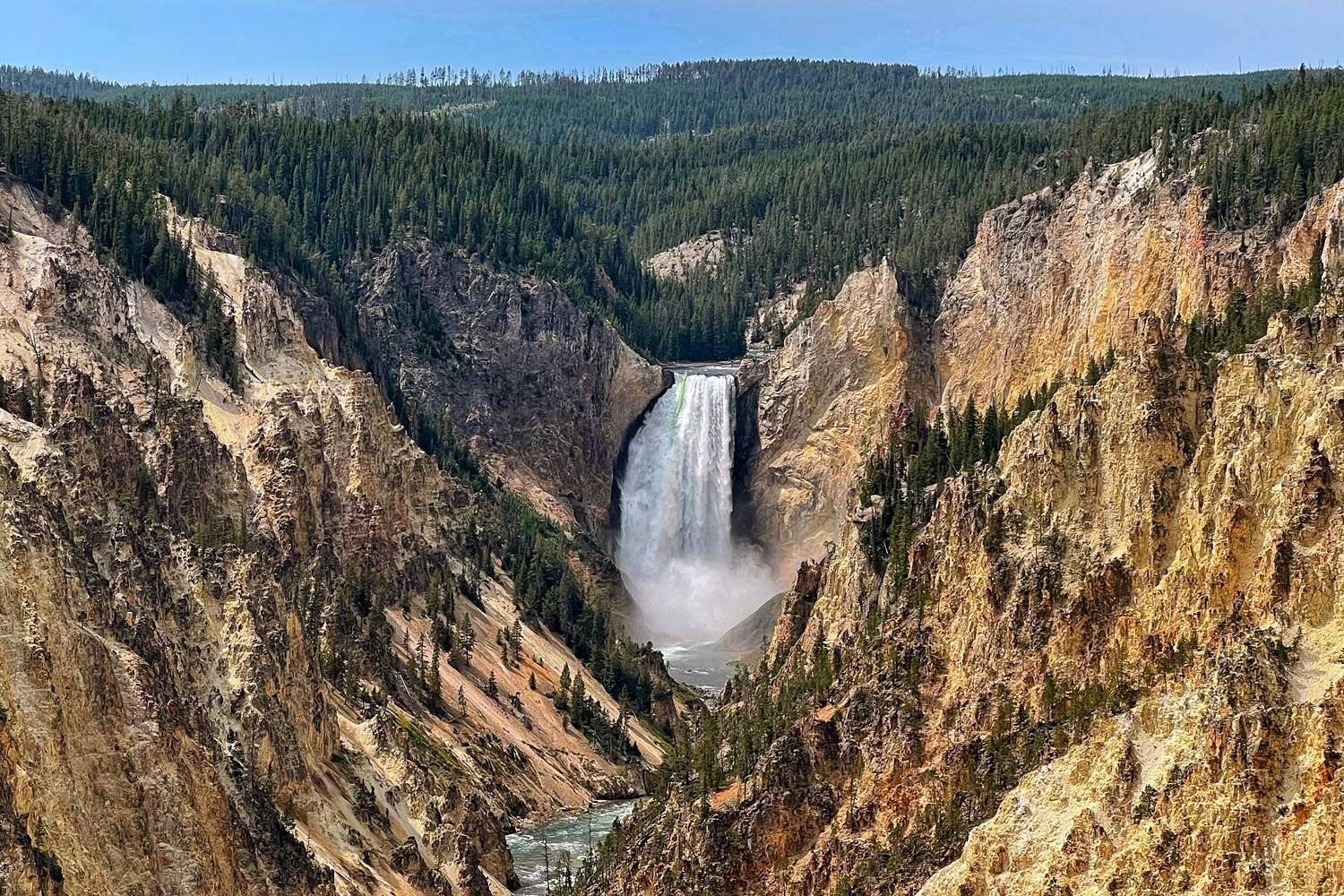
The Lower Falls of the Yellowstone River drop 94 meters (308 feet), nearly twice the height of Niagara, into a canyon whose orange and yellow walls come from hydrothermally altered rhyolite rock, not paint or mineral runoff as some visitors assume. The Upper Falls, a shorter drop upstream, gets less attention but sits directly along the same road loop. No hiking is required for the main canyon-rim overlooks.
🧭 Best time to visit: Late spring to early fall (May-October), when park roads are open and snowmelt keeps flow strong.
🚪 Accessibility: Easy from park entrances in Wyoming or Montana; no hiking is required for the main canyon-rim overlooks.
👉 What makes it special: A 94-meter drop into a canyon colored by hydrothermally altered rock, not runoff or paint.
💰 Entrance fee: ~$35 per vehicle (7-day Yellowstone National Park pass).
Manawaiopuna Falls ("Jurassic Falls"):
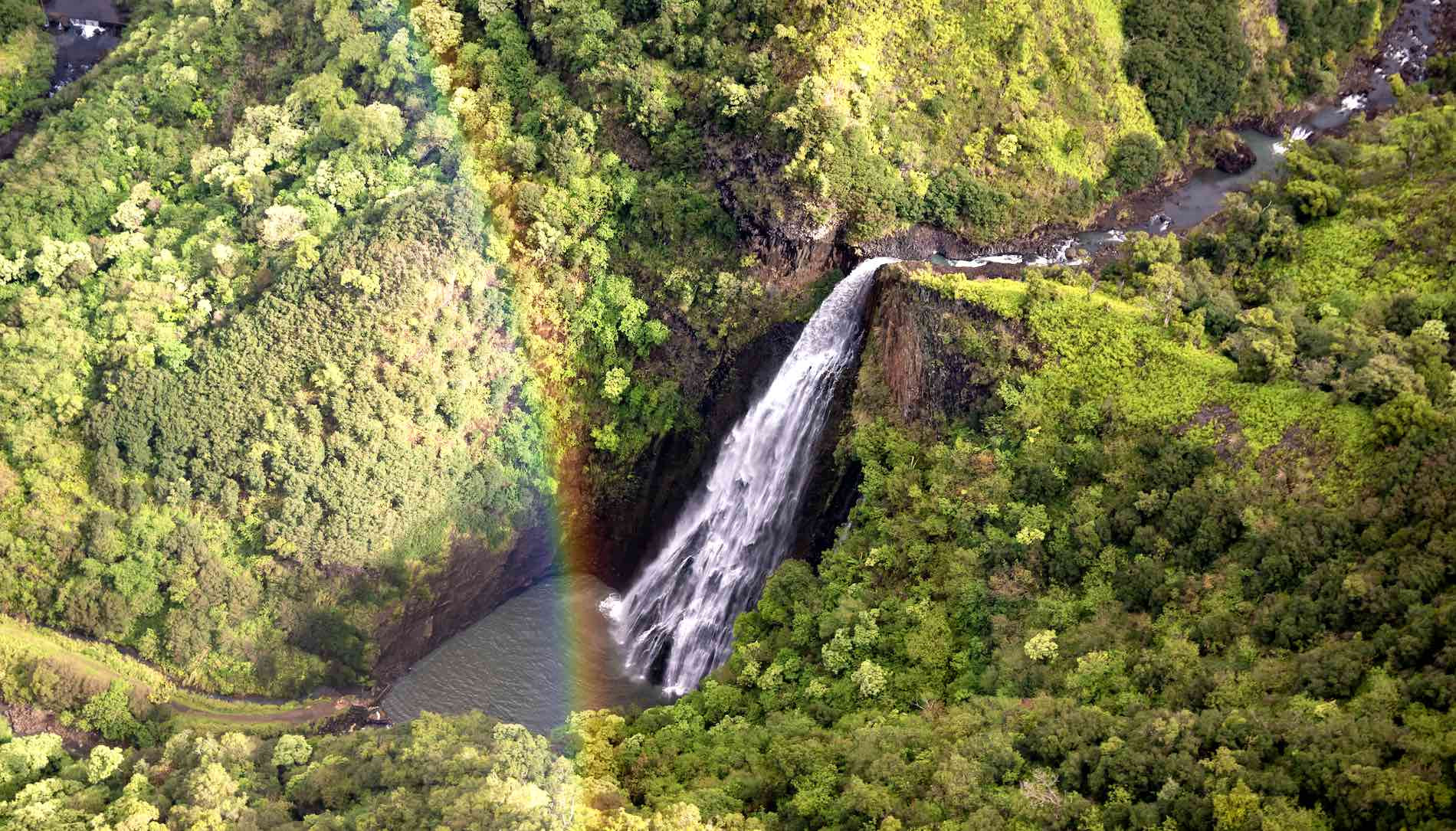
Manawaiopuna Falls drops roughly 80 meters (250 feet) on private land in a valley with no public road access at all. It earned the nickname "Jurassic Falls" after appearing in the 1993 film Jurassic Park, and the only way to see it in person remains a helicopter tour from Lihue, since the landowner permits limited helicopter landings but no ground trail.
🧭 Best time to visit: Year-round, though April to October offers clearer skies and smoother helicopter conditions.
🚪 Accessibility: Helicopter tour from Lihue only. The falls sit on private land with no public road or trail access at all.
👉 What makes it special: The waterfall featured in the 1993 film Jurassic Park, completely inaccessible except from the air.
💰 Entrance fee: No public entry; helicopter tours typically run $150-400+ per person.
Havasu Falls:
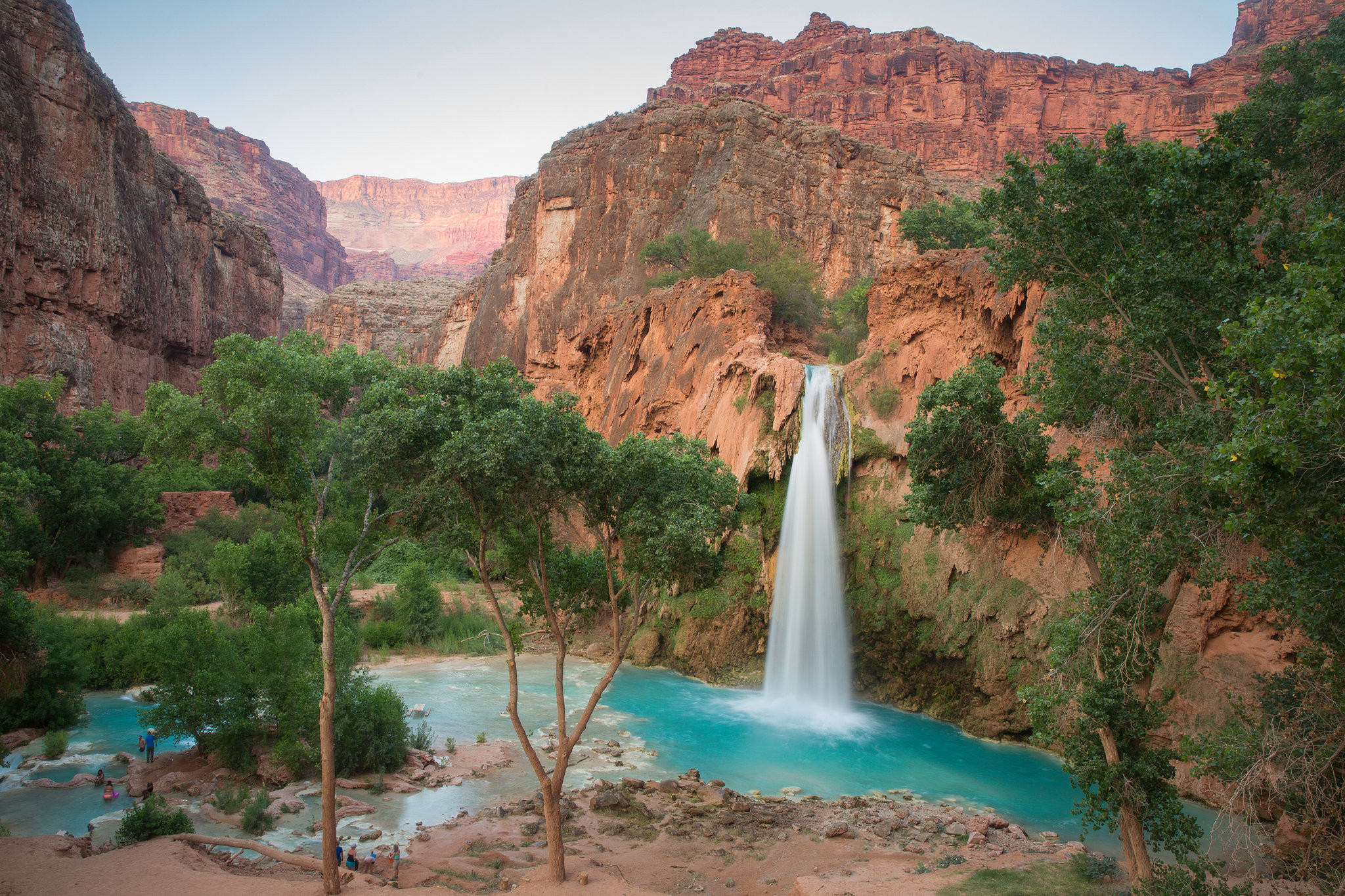
Havasu Falls drops about 30 meters (100 feet) into a pool colored bright turquoise by dissolved calcium carbonate, the same mineral effect behind Plitvice's water color, deposited from the surrounding limestone canyon. Reaching it requires a permit from the Havasupai Tribe, who manage the reservation directly, and a 16-kilometer (10-mile) hike each way from the Hualapai Hilltop trailhead. Permits sell out within hours of release each year and typically bundle camping or lodge fees.
🧭 Best time to visit: March-June and September-October, for warmer weather and safer canyon hiking conditions.
🚪 Accessibility: Requires a permit from the Havasupai Tribe and a 16-kilometer (10-mile) hike each way from the Hualapai Hilltop trailhead.
👉 What makes it special: Bright turquoise water colored by dissolved calcium carbonate, set inside a red-rock desert canyon.
💰 Entrance fee: $200-400+ per person, typically bundling the permit with camping or lodge fees.
South AmericaArgentina, Brazil, Venezuela, Guyana, and Peru:
This region holds the tallest waterfall on Earth and one of its largest cascade systems, both requiring genuine effort to reach.
Iguazu Falls
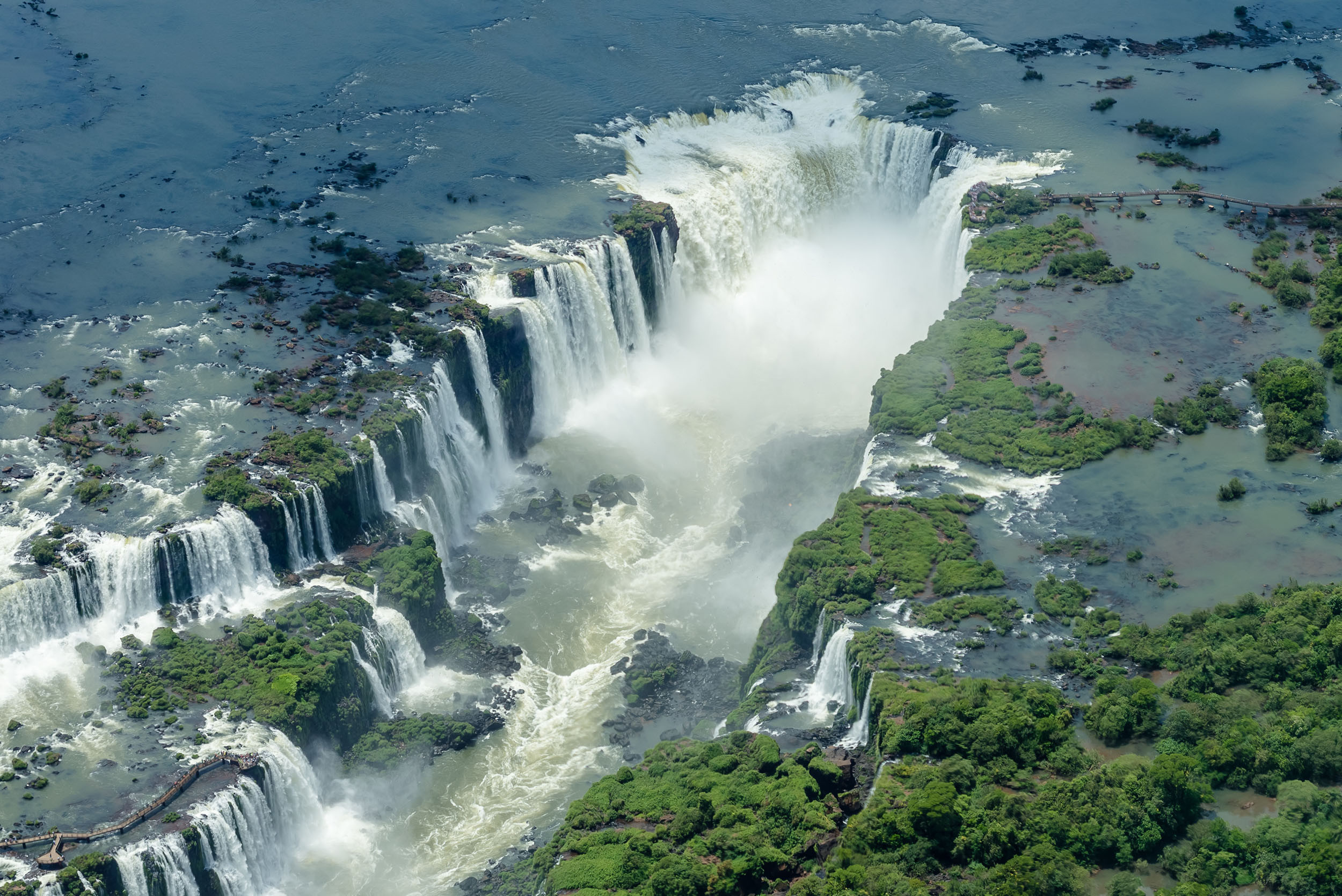
Iguazu is a system of roughly 275 individual cascades spread across 2.7 kilometers of the Iguazu River, not a single waterfall. Its centerpiece, the Devil's Throat (Garganta del Diablo), is a U-shaped chasm where the river drops 80-82 meters into a churn of permanent mist. Both Argentina's and Brazil's national parks holding the falls carry UNESCO World Heritage status, and the 2 sides offer genuinely different views: Argentina gets you onto walkways above and beside individual cascades, Brazil gives the wide panoramic shot of the whole system.
🧭 Best time to visit: March-May and September-November, for strong post-rain flow with lighter crowds than peak summer.
🚪 Accessibility: Access via Puerto Iguazú (Argentina) or Foz do Iguaçu (Brazil); both sides offer genuinely different views and are simple to cross between.
👉 What makes it special: Not a single waterfall but a system of roughly 275 cascades spread across 2.7 kilometers, centered on the Devil's Throat.
💰 Entrance fee: $15-30 per side, depending on nationality and park entry rules.
Angel Falls:
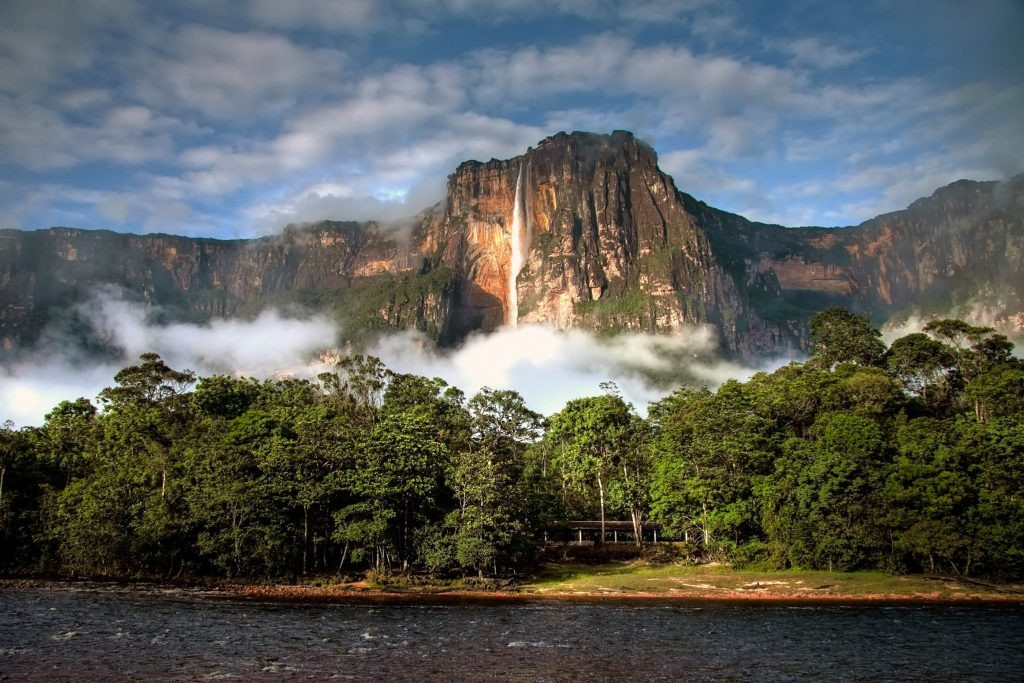
Angel Falls drops 979 meters total, with 807 meters of that as a single uninterrupted free fall off the Auyan-tepui tabletop mountain, making it the tallest waterfall in the world by a wide margin over the second-tallest. It's named after Jimmie Angel, an American aviator who flew over it in 1933 and later crash-landed near the summit while trying to return; local indigenous Pemon communities already knew the falls as Kerepakupai Meru. Access requires a flight to Canaima, then a river boat and guided hike, a multi-day trip in total.
🧭 Best time to visit: June-November, when rainfall feeds the river and flow is strongest; dry season (December-May) can reduce it to a thin stream.
🚪 Accessibility: No road access. Requires a flight to Canaima, then a river boat trip and guided hike, typically a 2-3 day trip in total.
👉 What makes it special: The tallest waterfall in the world, dropping 979 meters total with 807 meters as a single uninterrupted free fall.
💰 Entrance fee: No fixed ticket price; organized tours typically run $250-600+ per person.
Kaieteur Falls:
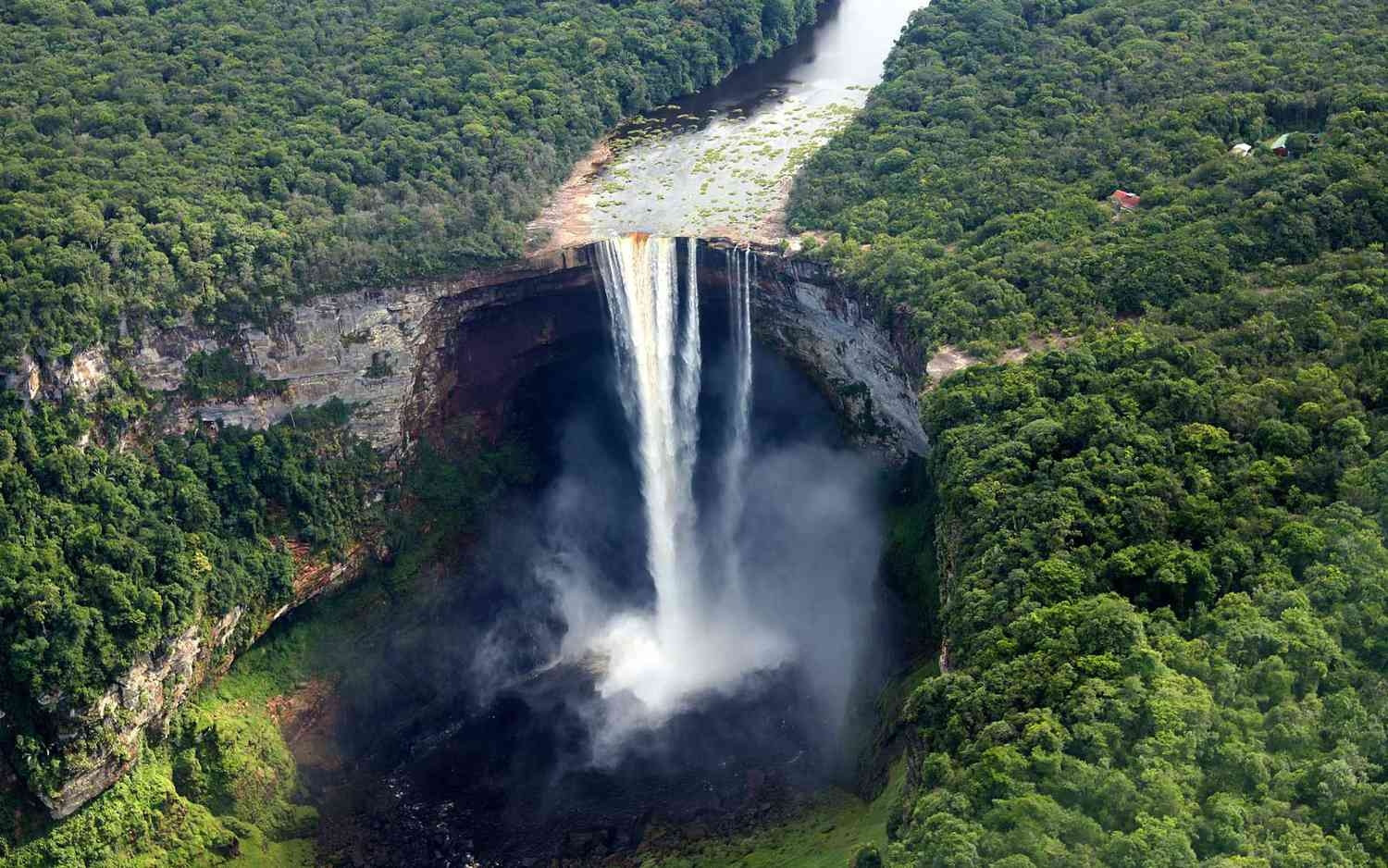
Kaieteur drops 226 meters (741 feet) in a single, uninterrupted plunge on the Potaro River, one of the most powerful single-drop waterfalls on Earth by water volume, not by height alone. The falls sit inside pristine Amazon rainforest with no road access whatsoever; the only practical route is a small aircraft flight from Georgetown, followed by a short guided walk to the viewpoints.
🧭 Best time to visit: September-November and February-April, for more stable weather and reliable flights into the interior.
🚪 Accessibility: Only reachable by small aircraft from Georgetown, followed by a short guided walk to the viewpoints. No roads reach the falls.
👉 What makes it special: A 226-meter single-drop waterfall inside untouched Amazon rainforest, with almost no development around it.
💰 Entrance fee: No standard entrance ticket; guided flights and tours typically run $150-400+ per person.
Gocta Falls:
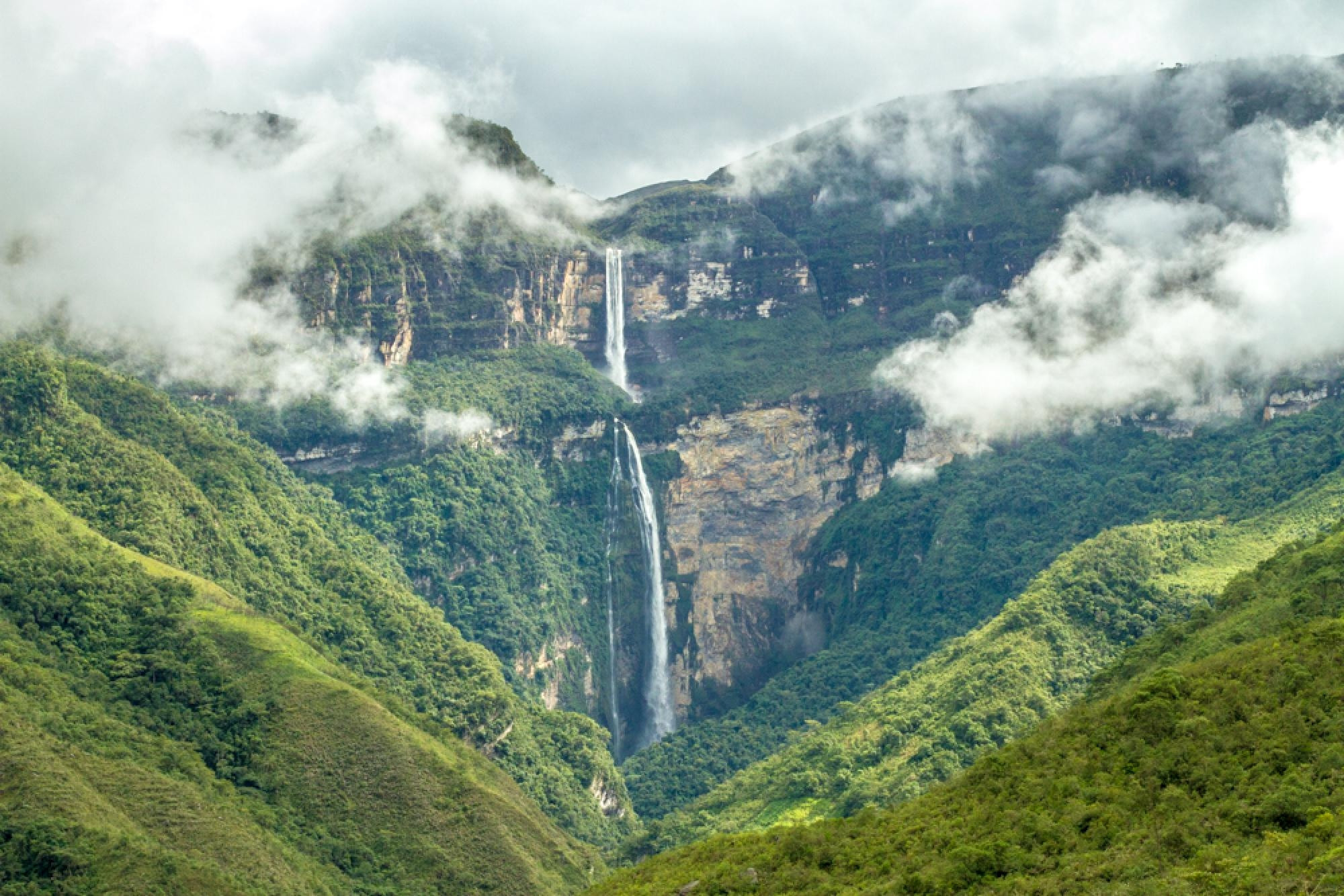
Gocta drops 771 meters across 2 stages, and it stayed off the world's radar until 2002, when German researcher Stefan Ziemendorff visited with local guides and pushed for an official survey; the Peruvian government measured and confirmed the height in 2006. Its exact ranking among the world's tallest waterfalls remains disputed, since measurement standards vary and at least 2 taller Peruvian falls (Yumbilla and Tres Hermanas) have since been documented. Most visitors base in Chachapoyas, then hike roughly 2-3 hours from the village of Cocachimba.
🧭 Best time to visit: April-November, when trails are drier and visibility is clearer; the rainy season strengthens flow but makes paths slippery.
🚪 Accessibility: Base in Chachapoyas, travel by road to Cocachimba, then a guided hike of roughly 2-3 hours to the base of the falls.
👉 What makes it special: A 771-meter, 2-drop waterfall that stayed unknown outside Peru until a 2002 expedition and a 2006 official survey.
💰 Entrance fee: $5-15 per person, plus optional guide fees.
AsiaLaos, Vietnam, and China:
Both entries here draw crowds for color and scale, not sheer height, a different kind of beautiful than the Icelandic or South American entries above.
Kuang Si Falls:
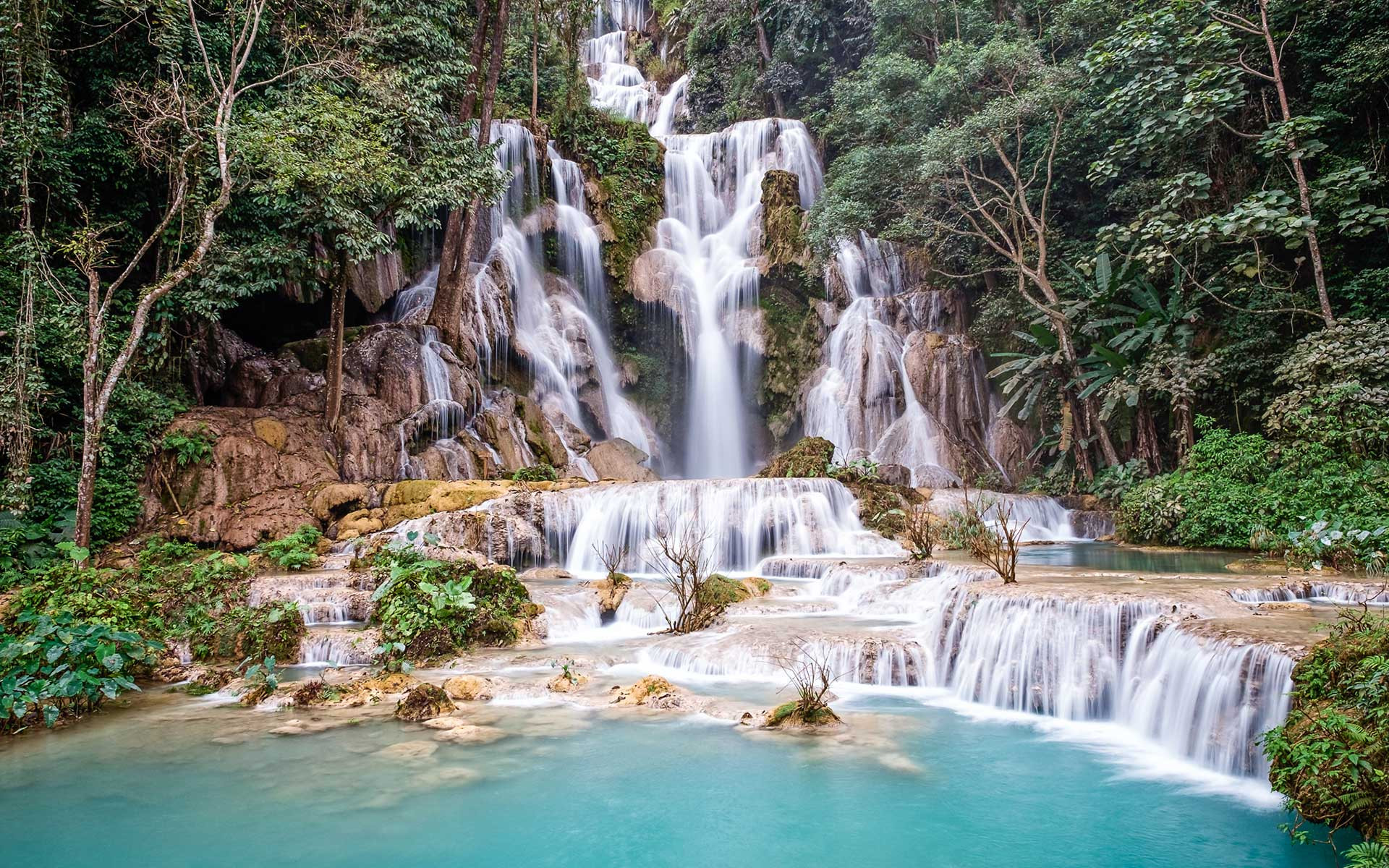
Kuang Si's main cascade drops 60 meters across 3 tiers into pools colored bright turquoise by dissolved limestone minerals, the same calcium carbonate effect seen at Havasu Falls and Plitvice. It sits about 29 kilometers south of Luang Prabang, roughly 50 minutes by tuk-tuk or scooter, with clearest water during the November-to-April dry season and stronger but murkier flow during the May-to-October monsoon.
🧭 Best time to visit: November-April (dry season) for the clearest, most vivid turquoise water; May-October brings stronger but murkier flow.
🚪 Accessibility: About 30-45 minutes from Luang Prabang by tuk-tuk, scooter, or tour; short forest paths lead to multiple levels.
👉 What makes it special: Multi-tiered turquoise limestone pools, among the most photographed waterfall landscapes in Asia.
💰 Entrance fee: $2-3 per person.
Ban Gioc-Detian Falls:
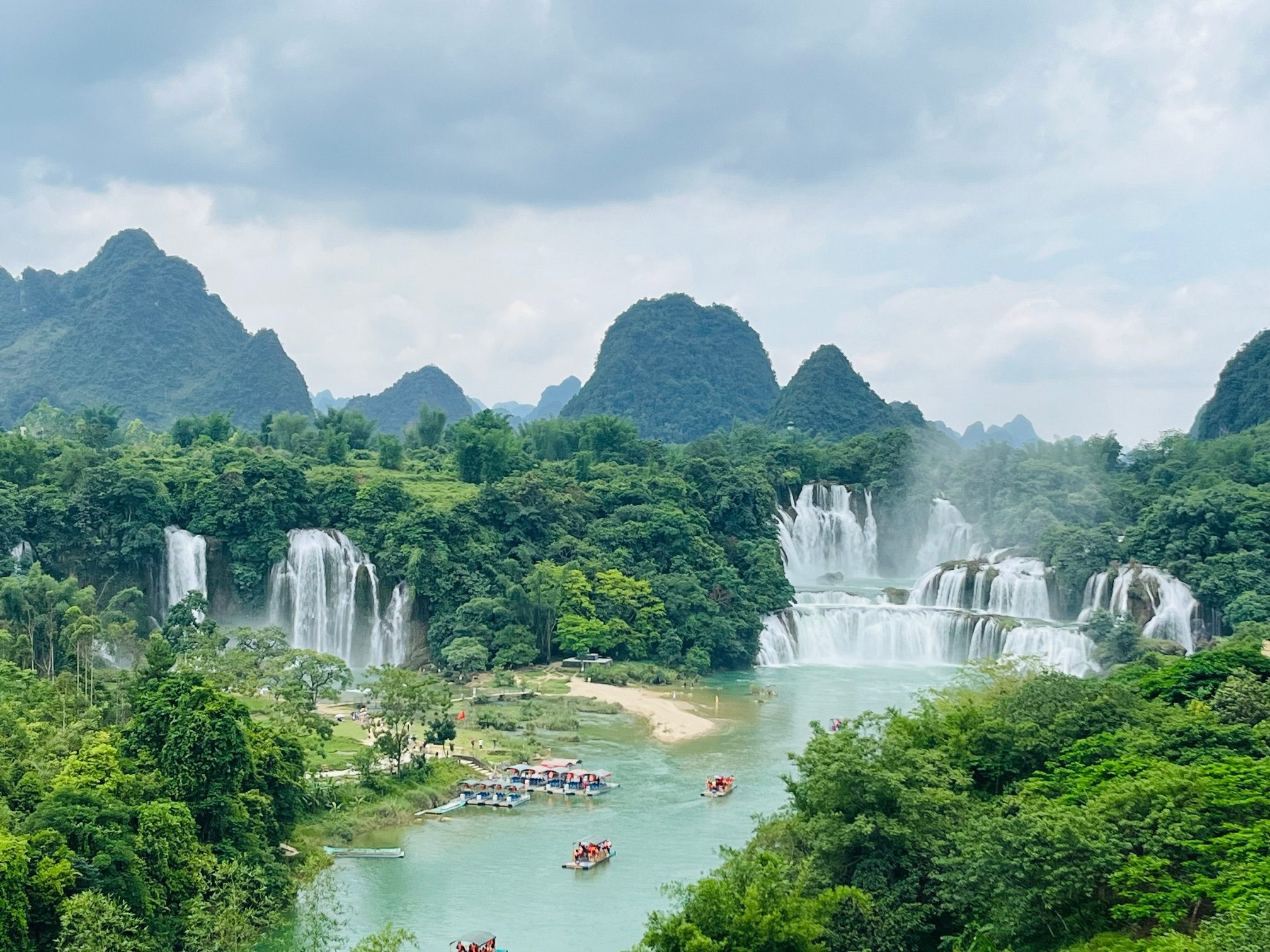
Ban Gioc-Detian is the largest waterfall in Asia by width, spanning roughly 300 meters at a 30-meter drop across the Quay Son River, which forms the border between Vietnam and China at this exact point. It's frequently grouped with Iguazu, Victoria, and Niagara as 1 of the 4 largest border waterfalls in the world. The Vietnamese side allows a closer boat approach to the lower tiers; the Chinese side offers elevated viewing platforms with a wider panoramic angle.
🧭 Best time to visit: September-November and March-May, for strong flow paired with clear, comfortable weather.
🚪 Accessibility: Approach from Cao Bang (Vietnam) by road, then a local boat to the base; the Chinese side offers elevated panoramic viewpoints.
👉 What makes it special: The largest waterfall in Asia by width, spreading 300 meters across the river that forms the Vietnam-China border at this point.
💰 Entrance fee: $2-5 per person, plus optional boat ride fees.
AfricaZambia, Zimbabwe, and Angola:
Victoria Falls dominates most conversations about African waterfalls, but Kalandula Falls, further west, moves a comparable volume of water with a fraction of the visitors.
Victoria Falls:
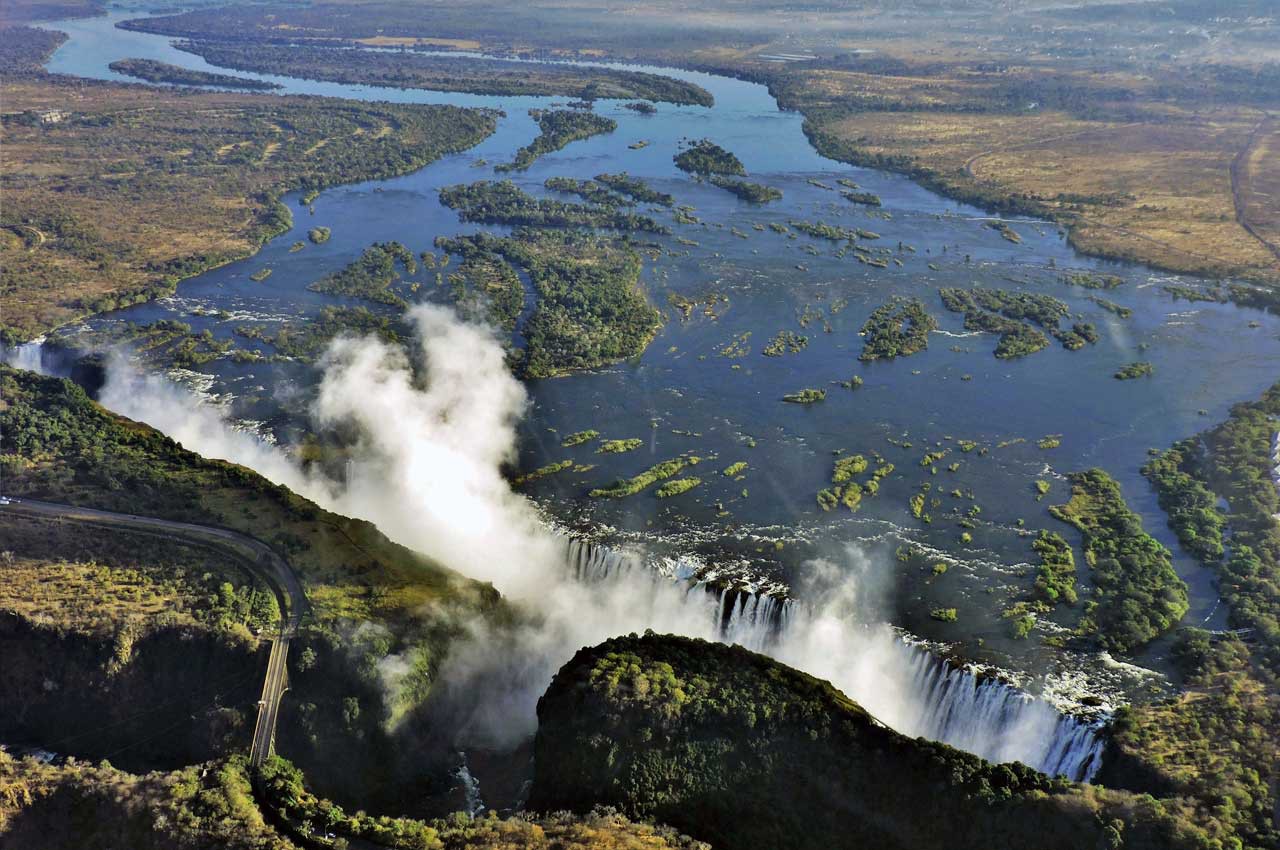
Victoria Falls spans 1,708 meters (5,604 feet) wide and drops 108 meters (354 feet), the largest single sheet of falling water on Earth by that combined width-and-height measure, though not the tallest or highest-volume individually. Locally it's called Mosi-oa-Tunya, "the smoke that thunders," a name that undersells it: spray from the falls is visible from more than 20 kilometers away during peak flow. It's held UNESCO World Heritage status since 1989, shared jointly between Zambia and Zimbabwe.
🧭 Best time to visit: February-May for maximum power from seasonal rains; June-September for clearer views with less obscuring spray.
🚪 Accessibility: Access via Livingstone (Zambia) or Victoria Falls town (Zimbabwe), with well-marked trails along the cliff edge on both sides.
👉 What makes it special: The largest single sheet of falling water on Earth, known locally as Mosi-oa-Tunya, "the smoke that thunders."
💰 Entrance fee: $20-50 per person, depending on which side you enter and which activities you add.
Kalandula Falls:
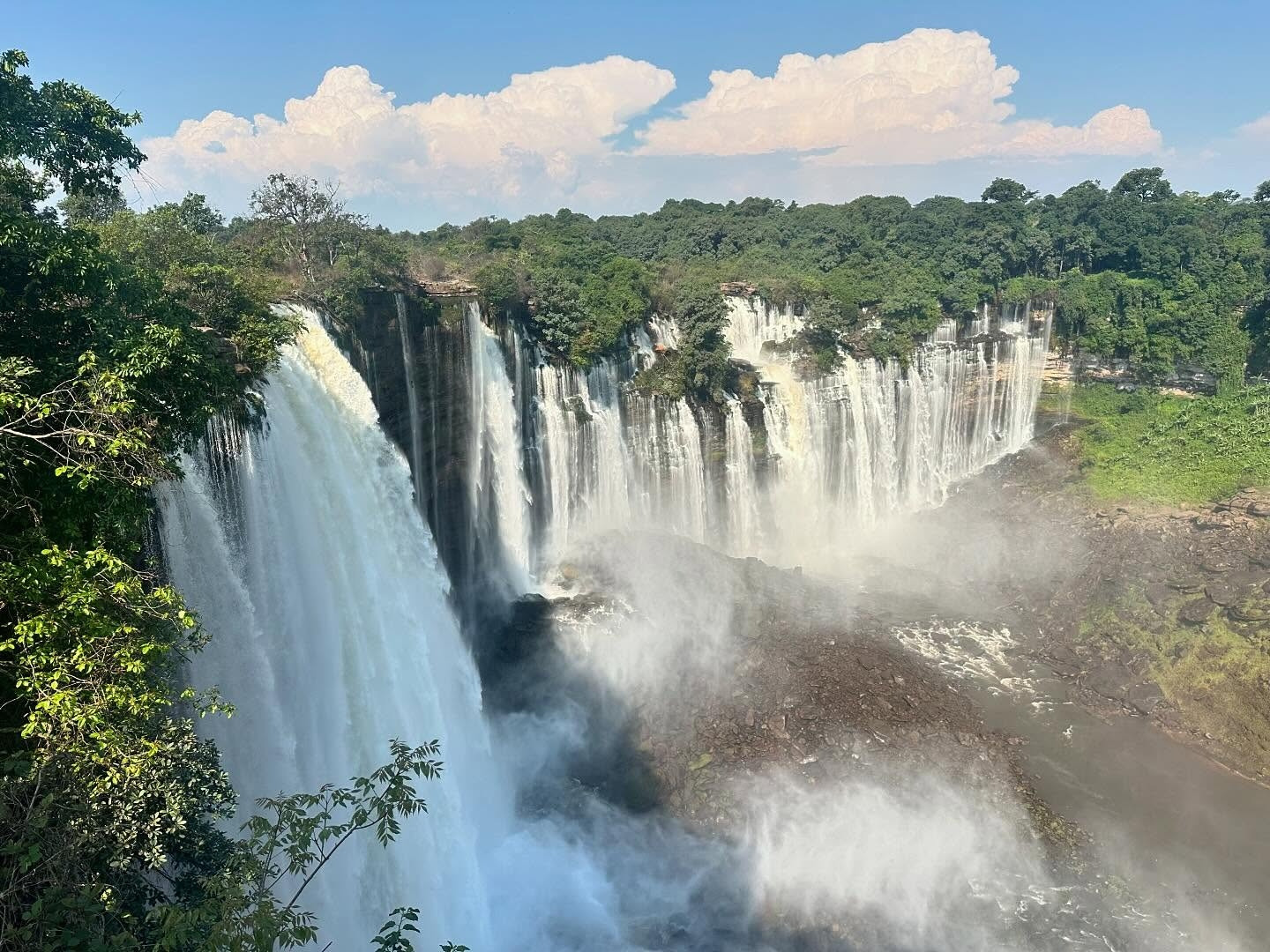
Kalandula drops 105 meters across a 400-meter-wide horseshoe curve on the Lucala River, and by volume it's considered one of Africa's largest waterfalls, potentially second only to Victoria Falls, though it remains far less documented and far less visited. It was renamed from Duque de Braganca Falls, its Portuguese colonial-era name, back to Kalandula after Angola's civil war ended in 2002. The drive from Luanda takes 6-8 hours on roads that vary considerably in condition by season.
🧭 Best time to visit: May-September (dry season), when roads are easier to access and flow is still strong.
🚪 Accessibility: About 6-8 hours by road from Luanda, or via a guided tour; the final stretch passes through rural villages before reaching the viewpoints.
👉 What makes it special: One of Africa's largest waterfalls by volume, spreading in a wide horseshoe curve with far fewer visitors than Victoria Falls.
💰 Entrance fee: $5-10 per person, depending on the local access point.
OceaniaNew Zealand:
Milford Sound alone holds 6 permanent waterfalls; this is the one most cruise routes get closest to.
Stirling Falls:
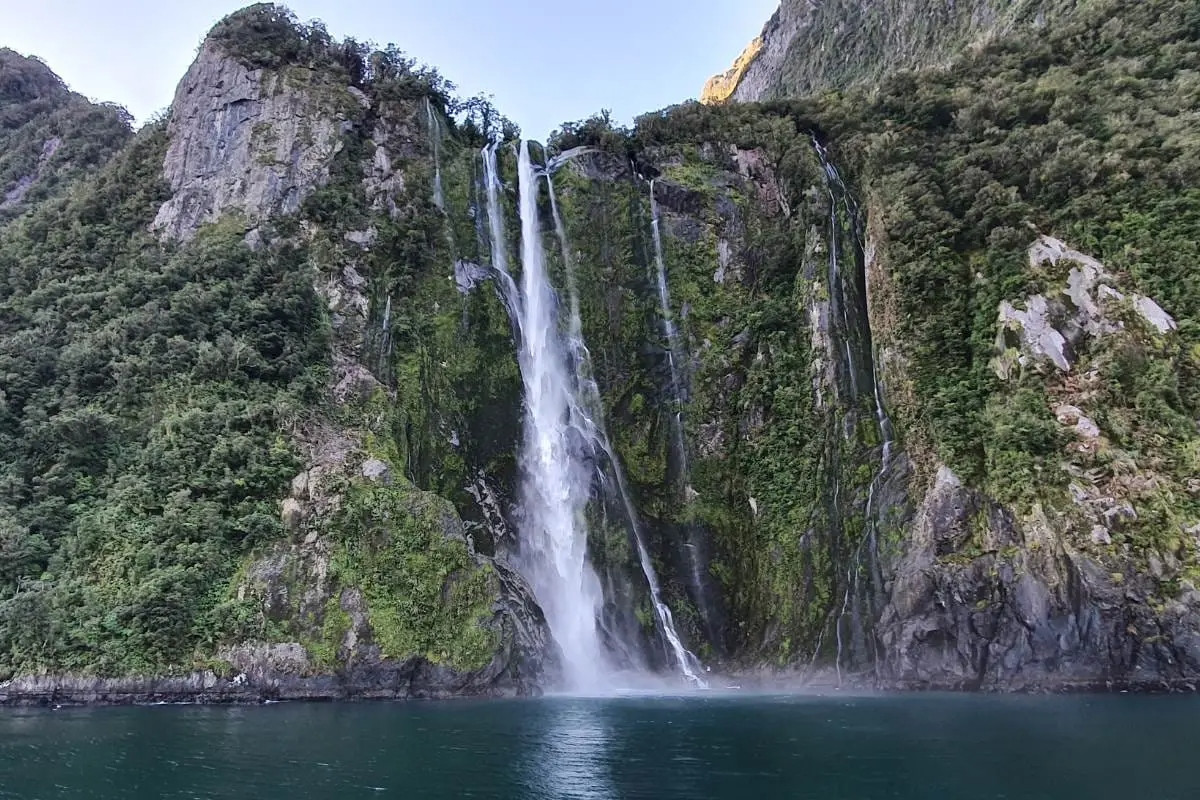
Stirling Falls drops 155 meters from a hanging valley directly into Milford Sound, named after Captain J.G. Stirling, who surveyed the fiord. It's the second-tallest of Milford Sound's 6 permanent waterfalls, behind Bowen Falls at 162 meters, though most cruise operators bring boats close enough to Stirling Falls for passengers to feel the spray directly, something rarely possible at Bowen Falls due to its position near the wharf. Milford Sound sits inside Te Wahipounamu, a UNESCO World Heritage Site since 1990, and access is by boat cruise or scenic flight only; no road reaches the falls themselves.
🧭 Best time to visit: October-April, when weather is more stable; rain actually increases the falls' power and drama.
🚪 Accessibility: Only reachable by boat cruise, kayak, or scenic flight from Te Anau or Queenstown. No road reaches the falls directly.
👉 What makes it special: A 155-meter drop straight into the Milford Sound fjord, with cruise boats getting close enough for passengers to feel the spray.
💰 Entrance fee: Milford Sound cruises typically run $60-150+ per person.
❓ Frequently Asked Questions (FAQs):
01. Which is the most beautiful waterfall in the world?
There is no single answer, but many travelers consider Iguazu Falls the most visually stunning due to its massive scale and rainforest setting. Others prefer the height of Angel Falls or the power of Victoria Falls.
02. What is the tallest waterfall in the world?
Angel Falls is the tallest waterfall in the world, dropping nearly 1,000 meters from a tabletop mountain in the Venezuelan jungle.
03. Which waterfall is the most powerful?
Victoria Falls is widely considered the most powerful waterfall in the world due to its massive water flow and wide curtain-like drop.
04. Which waterfall is easiest to visit?
Niagara Falls is the easiest to visit because it is highly developed with roads, viewpoints, hotels, and boat tours on both the US and Canadian sides.
05. What is the most photogenic waterfall?
Kuang Si Falls is one of the most photogenic waterfalls thanks to its turquoise pools and soft jungle surroundings.
06. Are waterfall destinations expensive to visit?
It depends on location. Some waterfalls like Seljalandsfoss are free to visit, while remote destinations like Angel Falls or Kaieteur Falls require guided tours or flights, which can be expensive.
07. What is the best time to visit most waterfalls?
Generally, spring and early summer are best because snowmelt or seasonal rain increases water flow. However, each destination varies depending on climate and geography.
08. Which continent has the most beautiful waterfalls?
Every continent has its own highlights. South America is known for scale, Africa for power, Europe for scenic beauty, and Asia for hidden turquoise gems.






{{item.get_author.first_name}} {{item.get_author.last_name}}
Level 7
5 Photos
36 Reviews
{{item.comment_txt}}
{{item_reply.get_author.first_name}} {{item_reply.get_author.last_name}}
@ {{item_reply.reply_to}}, {{item_reply.reply_txt}}