
 AI trip planner
Japan is one of the easiest countries in Asia for a first trip: trains run on time, cities are safe to walk at night, and most of what a visitor needs works by tap card or credit card. The things that trip people up are newer rules, such as the tax-free shopping change of November 2026 and a higher departure tax, plus a few habits around cash, trash and quiet that nobody explains at the airport.
This guide covers the practical layer you need before you book, then points you to our detailed posts on cost, visas, the rail pass, where to stay and a full week's route.
Facts, prices and rules were checked against official sources in November 2026.
Plan the big decisions first
Three choices shape a Japan trip more than anything else: when you go, how many cities you try to fit in, and how you move between them. Get those right and the rest is detail.
When to go
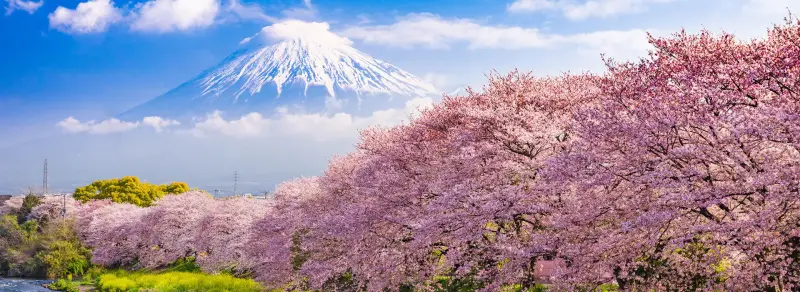
Spring and autumn are the popular windows, and hotel prices in Tokyo and Kyoto rise to match. Late March and early April bring the blossom crowds; our guide to cherry blossoms explains how the bloom moves north and why fixed dates are a gamble. Late November is the autumn-leaf equivalent in Kyoto. Summer is hot and humid with a typhoon risk, and winter is cold but clear, cheaper and good for Hokkaido snow.
Japanese holiday periods matter as much as weather. Golden Week at the turn of April and May, the Obon week in mid-August and the New Year break fill trains and push up room rates, so check them before you lock in flights.
How long to stay
A first trip of seven to ten days covers Tokyo, Kyoto and one more stop without feeling like a relay race. Our 7 days in Japan itinerary lays out the classic Tokyo, Hakone or Fuji area, Kyoto and Osaka loop day by day, with notes on where to drop a city if you have less time.
The common mistake is adding Hiroshima, Nara, Kanazawa and the Alps to a one-week trip. Each is worth it, but each costs half a day in transit, and Japan rewards slow wandering more than ticking boxes.
What it costs
Japan is cheaper for visitors than its reputation, mainly because the yen has been weak against the dollar and pound. Accommodation is the biggest variable, followed by long-distance trains. We break down daily budgets at three levels, with real hotel, food and transport figures, in how much a trip to Japan costs, so we will not repeat the numbers here.
Entry rules, visas and the new departure tax
Many nationalities, including US and UK passport holders, can visit Japan for short tourism stays without a visa, while Indian travelers need to apply in advance. The rules, documents and fees for each group are in our post on Japan visa requirements for US, UK and Indian travelers.
Two newer charges are worth knowing about. Japan's International Tourist Tax, a departure levy added to your air or ferry ticket, rose from 1,000 yen to 3,000 yen for departures from 1 July 2026, as Business Today reported when the increase took effect. Children under two and passengers transiting within 24 hours are exempt. You do not pay it separately; it is collected through the ticket price.
Japan also plans an online pre-travel screening system called JESTA for visa-exempt visitors, similar in idea to the US ESTA. As of November 2026 it has not launched, and no official fee or start date has been published. Ignore any website currently selling a JESTA application.
Visit Japan Web
Visit Japan Web is the government's free online service for immigration and customs declarations. You enter your passport, flight and address details before you fly and receive a QR code to scan at the airport. It is optional, but it saves filling in paper forms on the plane, and since November 2026 it also plays a part in tax-free refunds when you leave (more on that below).
Register using the exact passport details, and screenshot the QR code in case your phone has no signal in the arrivals hall.
 Get the bookingMentor app
Money: cash, cards and what to carry
Japan used to be the cash-heavy outlier among rich countries. That has changed quickly. The Ministry of Economy, Trade and Industry reported a cashless payment ratio of 58.0 percent for 2025 under its revised measure. In cities, chain hotels, department stores, convenience stores, most restaurants and train ticket machines accept Visa and Mastercard; American Express and JCB are common too.
Cash still matters at the edges. Small family-run restaurants, ramen shops with ticket machines, shrine and temple offerings, rural buses, market stalls and some ryokan may be cash only. Carry 10,000 to 20,000 yen in notes as a buffer and top up as you go.
The easiest places to withdraw yen with a foreign card are ATMs inside 7-Eleven stores and at Japan Post offices, both of which accept international cards. Check your bank's foreign transaction and ATM fees before you leave, and always choose to be charged in yen rather than your home currency when a card terminal asks.
Tipping is not part of the culture. Leaving money on the table usually means a staff member chasing you down the street to return it. Good service is included in the price.
Getting around: IC cards and trains
IC cards for city travel
A rechargeable IC card is the single most useful thing to set up on day one. You tap it on subway and train gates, city buses and many convenience store tills, and the fare is deducted automatically. Suica (JR East) and PASMO are the Tokyo cards; ICOCA is the Kansai equivalent; all work across the major cities.
Physical Suica and PASMO cards went back on general sale in March 2025 after a chip shortage. If you use an iPhone, JR East's Welcome Suica Mobile app lets you create a visitor card in your Wallet without buying plastic. According to this IC card guide, the mobile version stays valid for 180 days against 28 days for the physical Welcome Suica sold at the airports. Android users can buy a regular physical card from station machines.
Long-distance trains and the rail pass
The shinkansen is fast, frequent and expensive by point-to-point fare. Whether the Japan Rail Pass saves money depends almost entirely on your route; after the big price rise in 2023, it rarely pays off for a simple Tokyo to Kyoto and back trip. We run the sums for common itineraries in is the Japan Rail Pass worth it, including the regional passes that often work out better.
Book reserved seats in advance during holiday periods. On the Tokaido, Sanyo and Kyushu shinkansen, bags measuring more than 160 cm in total (length plus width plus height) need a free "seat with an oversized baggage area", reserved when you book; bags over 250 cm are not allowed at all. Board without that reservation and JR Central charges a 1,000 yen fee and may tell you where to store the bag. Many travelers skip the problem by sending bags ahead with a luggage delivery service from their hotel, which usually arrives the next day.
Where to base yourself
In Tokyo, staying near a station on the JR Yamanote loop line saves more time than any amount of planning. Shinjuku and Shibuya suit night owls, Ueno and Asakusa are cheaper and older in feel, and Tokyo Station area works for early trains. Our neighborhood-by-neighborhood breakdown of where to stay in Tokyo matches areas to budgets and trip styles, and our list of the top attractions in Tokyo helps you see which bases sit closest to what you want to do.

Kyoto is different: the main sights are spread out and buses get crowded, so staying close to a subway line or Kyoto Station matters. We compare Gion, Downtown, the station area and quieter northern districts in where to stay in Kyoto.
Book at least one night in a ryokan, a traditional inn with tatami rooms and shared or private baths. Dinner and breakfast are often included and served at set times, so check-in late is not an option at many of them.

Tax-free shopping after the November 2026 change
This is the rule most guides online still get wrong. For purchases made on or after 1 November 2026, Japan switched from instant tax-free sales to a refund system. Shops now charge the full price including the 10 percent consumption tax, and you get the tax back after you prove at departure that the goods are leaving Japan. The Japan Tourism Agency explains the new process.
What stays the same and what changes, based on the agency's guidance and Japan Guide's summary:
- You still need to spend at least 5,000 yen before tax at one store on one day.
- The old split between consumables and general goods, and the separate cap on consumables, is gone.
- Goods must leave Japan within 90 days of purchase.
- At the airport, before check-in, you complete a departure procedure at a customs kiosk or through Visit Japan Web. A red result means a customs check of the goods.
- If several items are on one receipt, all of them must be with you at departure, or the whole purchase loses its refund.
- The refund itself is paid by the store, using its own method, after customs confirms export.
In practice, keep receipts sorted by shop, keep your passport handy when you buy, pack tax-free items where you can reach them at the airport, and do not open or use them in Japan. If you entered through an automatic gate, ask an officer for an entry stamp; stores and customs may want to see proof of your entry date.
Etiquette that actually comes up
Most visitors worry about bowing and chopsticks. Those matter less than everyday public behavior, which is where foreigners tend to stand out.
On trains and in streets
Keep phone calls off trains and talk quietly. Queue at the marked lines on platforms and let people off first. Eating while walking is frowned on in many places, and you will find few public trash cans, so carry a small bag for your own rubbish and use the bins at convenience stores.
Indoors
Take shoes off where you see a raised entrance step, shoe racks or slippers, including some restaurants and temple halls. Bathroom slippers stay in the bathroom. At onsen and public baths you wash thoroughly at the shower stools before getting in, and swimwear is not allowed. Some baths still turn away guests with large tattoos, though many now accept them or offer private baths, so check ahead if this applies to you.
At shrines and temples
Follow what locals do at the purification fountain, keep voices low, and look for signs banning photography inside halls. In Kyoto's Gion district, residents of several private lanes have banned photography since 2019, and since May 2024 signs on Kosode Koji also bar tourists from entering, warning of a fine of up to 10,000 yen, as Lonely Planet reported. Public streets such as Hanamikoji stay open. Respect the signs and never photograph geiko or maiko without consent.
Phones, data and daily practicalities
An eSIM bought before departure is the simplest way to get data, and most modern phones support it. Pocket Wi-Fi routers are still rented at airports and suit groups sharing one connection. Free Wi-Fi exists in stations and convenience stores but is patchy for navigation.
Japan uses Type A two-pin plugs and 100 volts. US devices plug straight in; UK and Indian travelers need an adapter, and most phone and laptop chargers handle the voltage without a converter.
Convenience stores are a genuine travel tool rather than a last resort. They sell good cheap meals, have ATMs and toilets, print documents and handle luggage delivery forms.
Mistakes first-time visitors make
Overpacking the schedule is the big one, closely followed by assuming the rail pass is automatically worth it. Others we see often in reader questions:
- Arriving with no cash and finding the first ramen shop or rural bus does not take cards.
- Booking Kyoto hotels far from transit to save a little, then losing an hour a day on crowded buses.
- Planning blossom trips around a single date instead of a flexible week.
- Buying tax-free goods and packing them in checked luggage before the customs procedure.
- Reserving popular restaurants, teamLab or the Ghibli Museum too late; some sell out weeks ahead.
 Umrah packages










{{item.get_author.first_name}} {{item.get_author.last_name}}
{{item.comment_txt}}
{{item_reply.get_author.first_name}} {{item_reply.get_author.last_name}}
@ {{item_reply.reply_to}}, {{item_reply.reply_txt}}