

Chengdu travel guide
Pandas, teahouses and Sichuan cooking in the capital of Shu
Chengdu is Sichuan's capital and the gateway to giant pandas, the ancient Dujiangyan waterworks and some of China's most famous food. April, May and October are the most comfortable months. Plan three days in the city and add day trips to Qingcheng or Sanxingdui.
Chengdu is the capital of Sichuan Province in southwest China, a sub-provincial city of almost 21 million people at the 2020 census spread over more than 14,000 km². The urban area sits on the Chengdu Plain at about 500 m above sea level.
People have lived here for well over 3,000 years. The Sanxingdui and Jinsha sites date from roughly the 18th to 10th centuries BC, and the Kingdom of Shu founded the city in the 4th century BC. After the Qin conquest in 316 BC, Zhang Yi built its first wall, and Li Bing, appointed governor in 256 BC, oversaw the building of the Dujiangyan irrigation system.
The city served as capital of Liu Bei's Shu Han during the Three Kingdoms period and again of the Former and Later Shu states in the 10th century, when hibiscus was planted along the walls. Han-dynasty brocade made Chengdu wealthy, and in 1911 its Railway Protection Movement helped spark the Wuchang Uprising that ended imperial rule.
Today Chengdu is one of the largest economies in western China, with a large foreign consular presence (sources give both 13 and 23 countries) and universities such as Sichuan University. It hosted the Summer World University Games in 2023 and the World Games in 2025.
For visitors the draws are giant pandas, Tang and Song dynasty temples, a teahouse culture that runs to tens of thousands of venues, and Sichuan cooking. UNESCO named Chengdu a City of Gastronomy in 2011.
Explore Chengdu by theme
Find your kind of trip: 13 travel themes, each with the packages in Chengdu.
Chengdu at a glance
The essentials first-time visitors ask about, in one place.
Explore more of China
Pick a place by travel style: beaches, nature, cities, heritage, islands.
 ChongqingHill city of bridges where two rivers meet
 LijiangYunnan's Naxi old town below the snow peaks
 Xi'anTerracotta Army and Silk Road
KunmingChina's Spring City on Lake Dian
 ZhangjiajieHunan's mountain city of sandstone towers
LincangYunnan's tea frontier
 GuilinLimestone peaks along the Li River
 WuhanHubei's capital where the Han meets the Yangtze
 GuangzhouCapital of Cantonese food
 LhasaTibet's palace and temple city at 3,656 m
 ZhuhaiSeafront, theme parks and the Macau border
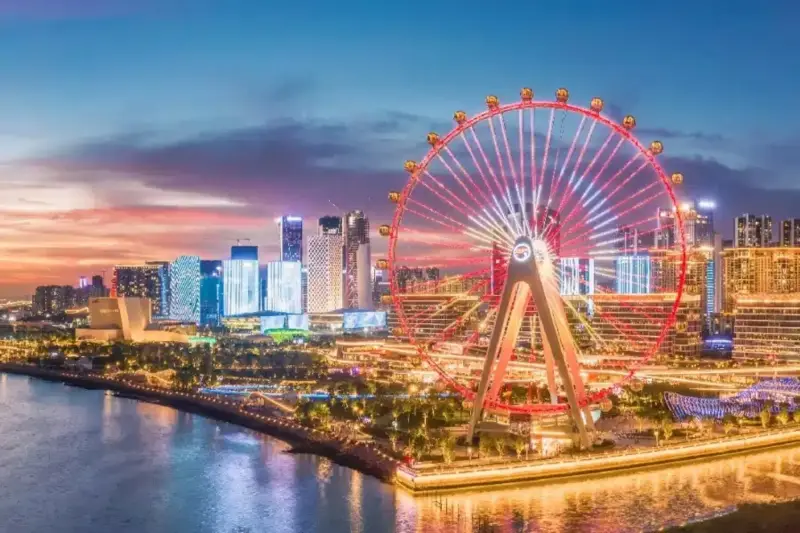 ShenzhenTech city next to Hong Kong
 NanjingJiangsu's former imperial capital on the Yangtze
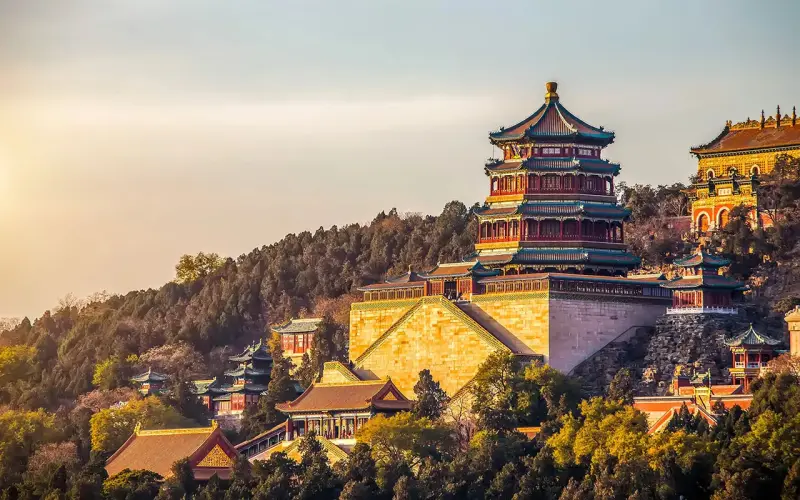 BeijingPalaces and the Great Wall
 TianjinBeijing's old treaty port
 XiamenFujian's island port of temples, pianos and Minnan food
 HangzhouWest Lake and tea hills
 SuzhouClassical gardens and canal streets west of Shanghai
 QingdaoShandong's port city of beer, beaches and red roofs
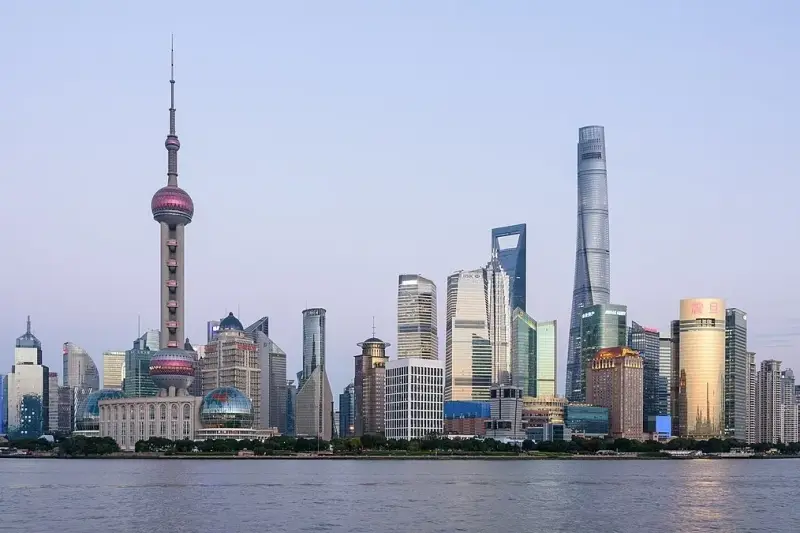 ShanghaiThe Bund and Pudong skyline
DalianLiaoning's port city between two seas
 HarbinChina's ice city on the Songhua
Nothing in that category yet.
Top things to do in Chengdu
Panda breeding grounds, Three Kingdoms shrines, Bronze Age treasures and teahouses on every block.
No things to do in Chengdu are listed yet. Browse all things to do
Best time to visit Chengdu
Month by month, so you can pick the weather and the crowds you want.
Highs climb from 18C to 27C with little rain until May.
Highs near 31C in July and August; July is the wettest month at about 238 mm.
Highs of 17-21C and dry days return.
Highs of 10-13C and lows near 3C, damp and often gray.
Chengdu gets only about 1,006 hours of sunshine a year, among the lowest totals in China, so expect hazy skies in any season.
Plan your trip
Practical answers before you go. Pick a topic.
Getting there
Tianfu or Shuangliu airport, or high-speed rail
Tianfu International opened in June 2021 at Jianyang, about 51 km southeast of downtown, built because Shuangliu had long outgrown its capacity. Shuangliu sits only 16 km southwest of the center and is linked by Metro Line 10. That makes Chengdu the third Chinese city, after Beijing and Shanghai, with two international airports. By rail, the city has four main passenger stations and high-speed lines toward Xi'an, Guiyang, Yibin and, via Wuhan, Shanghai.
- Metro Line 18
- Tianfu airport to Chengdu South station in about 30 minutes by express
- Tianfu Airport Station
- High-speed trains to Chengdu East since December 2023
- Shuangliu (CTU)
- Two runways, 53 million passengers in 2018
- Rail stations
- Chengdu, Chengdu South, Chengdu East and Chengdu West
- Line 18 runs from 5:55 am to 11:30 pm, so late arrivals at Tianfu should plan on a taxi or the airport buses.
- Match the station name on your train ticket before you set out; the four stations are far apart.
Where to stay
Chunxi Road, Kuanzhai or near Wuhou
Stay downtown around Chunxi Road for shopping, restaurants and the most metro lines. Kuanzhai Alleys and the area west toward Du Fu Thatched Cottage are quieter and closer to old Chengdu, while the streets around Wuhou Shrine and Jinli suit visitors who want evening food stalls on the doorstep.
- Chunxi Road
- Shopping street dating from 1924, named after a Tao Te Ching passage
- Du Fu Thatched Cottage area
- Quieter western side of the center
- Kuanzhai Alleys
- Qing-dynasty lanes, rebuilt in 2003 with teahouses and galleries
- Wuhou and Jinli
- Shrine district with a Han-era name and handicraft stores
- Pick a hotel near a metro stop; the city is large and the airports are far apart.
Getting around
Metro, intercity rail and coaches
The metro opened on 1 October 2010 with Line 1 and has grown fast, with Lines 2, 3 and 4 following by 2016. Coaches for Leshan, Mount Emei and other Sichuan destinations leave from Xinnanmen, one of several long-distance bus stations alongside Chadianzi, Wuguiqiao and Jinsha.
- Line 1
- Shengxian Lake to Guangdu
- Line 10
- City center to Shuangliu airport
- Coach stations
- Chadianzi, Xinnanmen, Wuguiqiao, Jinsha
- Taxis and ride-hailing
- Available across the city and at both airports
- Keep the station names written in Chinese on your phone to show drivers.
Know before you go
What makes Chengdu worth the trip, and what catches visitors out.
Why travelers love it
- Jinsha Site Museum, 5 km northwest of downtown, home of the Golden Sun Bird found in 2001 and made of 94.2% pure gold.
- Wenshu Monastery, a Tang-dynasty foundation of about 1,300 years that keeps part of Xuanzang's skull as a relic.
- Qingyang Palace, the city's largest and oldest Taoist temple, dating from the 9th century.
- Anren, a historic town 39 km west with 27 old mansions and museums holding over 8 million relics.
- Luodai, China's largest Hakka community and one of its five major Hakka settlements.
Good to know
- Summer is wet and sticky, with most of the year's rain falling from June to September.
- Spice levels are serious, and the numbing peppercorn takes getting used to.
- Distances are long, and Tianfu airport is close to an hour from the center.
- Winter is gray, with damp air and little sun.
Trip fit
BookingMentor editorial ratings out of 5, based on a first-time visitor's experience.
Weather in Chengdu, month by month
Chengdu has a humid subtropical climate: wet, warm summers and cool, dry, cloudy winters.
Climate figures are 1991 to 2020 normals for the Shuangliu station from the China Meteorological Administration, via Wikipedia.
Packages in Demand
A Journey to Remember
Tours, activities and day trips in and around this destination, with the details you need before booking.
No packages in Chengdu are listed yet. Browse all packages
Create Your Custom-Made Trip to Chengdu
Traveling to Chengdu? Chat with a Local Travel Specialist in Chengdu Who Can Help Organize Your Trip.
START HERE
Our Travel Experts are Recommended by



Where the waterworks and the bronzes are
Out of town, the pull is Dujiangyan with nearby Mount Qingcheng, the Sanxingdui Museum and a handful of old market towns.
Dujiangyan. Over 2,000 years old, it is described as the world's oldest irrigation project still in use, and it is a UNESCO World Heritage Site. The intercity train makes this the simplest excursion.
Mount Qingcheng. The mountain is higher and cooler than the plain, and many visitors combine it with Dujiangyan on a long day since the two lie in the same direction from the city.
Sanxingdui. The museum tells the story of a Bronze Age culture that flourished north of the city. Pair it with Jinsha for the full picture of ancient Shu.
Old towns. Huanglongxi, about 40 km southeast, keeps streets of Qing-dynasty buildings.
Weekends and Chinese public holidays bring large crowds to every one of these places. Go on a weekday where you can and set off early.
A strategist, a king and a poet
Wuhou Shrine was founded in the Western Jin period (265 to 316) to honor the strategist Zhuge Liang, and the complex also holds the Hall of Liu Bei and the Huiling Mausoleum. Jinli, the street of food stalls and craft stores beside it, makes a natural lunch stop.
Du Fu lived at the site of his Thatched Cottage for four years after 760 and wrote more than 240 poems there. The present cottage was built in 1078 in his memory.
Ma la at the table
Chengdu food is Sichuan food at its source, built on two seasonings: dried chilies for heat and Sichuan peppercorns for the tingling, numbing sensation locals call ma la. Eat hot pot at least once, try classic dishes at a family restaurant, and spend an evening grazing on snacks around Jinli or Kuanzhai.
Hot pot is the city's signature meal, cooked at the table and shared by the group. If spice worries you, ask whether the restaurant offers a milder broth before ordering.
Jinli and Kuanzhai are lined with restaurants and food sellers, the easiest places to try many small dishes in one evening. Any teahouse makes a calm break between sights.
Visitors who struggle with heat should order steamed dishes and keep a cold drink or soy milk at hand. The spice builds through a meal, so pace yourself rather than judging by the first bite.
Travelers are asking
No questions yet about Chengdu. Ask the community or our travel team, and the answer will show here once it is published.
Our travel desk answers questions about Chengdu
How we research our Chengdu travel guide
Airport moves, metro lines and museum openings are rechecked when operators change them. Chengdu facts follow Wikipedia's sourced articles and China Meteorological Administration climate normals.
Last updated . Spotted something out of date? Tell us.
We check practical details such as entry rules, seasons and costs against official government and tourism sources.

Before You Go...
Discover Trips & Info
A Travel Network Connection Travelers and locals
Incredible Event & Festival, Don't Miss!
Most Popular Event & Festival of Chengdu
Festivals and events in this destination, with dates, venues and ticket details where available.
No upcoming festivals or events in Chengdu are listed right now. Browse all events
Memorable Experiences
Where to Go (& NOT Go) In Chengdu!
Roaming the World one Adventure at a Time: Travel Tales, Tips, and Inspiration for wanderlusters.

Subscriber
Popular car hire destinations
Explore more options to hire a car for cheap
Frequently Asked Questions (FAQs)
Quick answers to the questions travelers ask most before visiting Chengdu.
Getting there
Check your ticket. Since March 2023 most international routes use Tianfu International (TFU), while Shuangliu (CTU) handles mainly domestic flights. Some Hong Kong, Macau and Taiwan services are due to move back to Shuangliu Terminal 1 from 30 July 2026.
Metro Line 19 runs an express service between Tianfu and Shuangliu in about 30 minutes, with stopping trains taking around 40.
About 70 km from downtown along the Cheng-Guan Expressway. Its peak rises to 1,600 m, so bring a layer even in summer.
General
At the Chengdu Research Base of Giant Panda Breeding, inside the city. The wild animals live in the Sichuan Giant Panda Sanctuaries, a UNESCO site of 9,245 km² some 100 to 200 km from Chengdu that shelters more than 80% of the world's wild giant pandas.
Yes. It lies about 58 km from downtown, and the Chengdu to Dujiangyan intercity line, opened in 2010, covers its 65 km in about 30 minutes at up to 220 km/h.
Some of the larger teahouses stage live Sichuan opera. Face changing, or bian lian, is the part most visitors come for, and fire breathing is another hallmark of the form.
Start with mapo doufu and dan dan noodles, then book a table for hot pot.
Order jasmine, longjing or biluochun tea and stay as long as you like. Locals play mahjong, and many teahouses also offer massages and traditional ear cleaning.
For anyone interested in archaeology, yes. The new Sanxingdui Museum opened in March 2022 with 54,400 m² of space, about five times the old building, and shows more than 2,000 relics.
Mandarin is understood everywhere, but locals speak the Chengdu dialect of Sichuanese Mandarin among themselves. It is popular in Chinese comedy and rap.
The metro opened on 1 October 2010 with Line 1 and has grown fast, with Lines 2, 3 and 4 following by 2016. Coaches for Leshan, Mount Emei and other Sichuan destinations leave from Xinnanmen, one of several long-distance bus stations alongside Chadianzi, Wuguiqiao and Jinsha.
Visa & documents
Entry rules depend on your nationality and change from time to time. Check the National Immigration Administration's official website or your nearest Chinese embassy before booking.
Timing & weather
The best time to visit Chengdu is Apr to May, Oct. Highs of 21-27C before the summer rain.
- Spring: March - May (Highs climb from 18C to 27C with little rain until May)
- Wet summer: June - September (Highs near 31C in July and August; July is the wettest month at about 238 mm)
- Autumn: October - November (Highs of 17-21C and dry days return)
- Winter: December - February (Highs of 10-13C and lows near 3C, damp and often gray)
Booking
Plan three days in the city and add day trips to Qingcheng or Sanxingdui.
Health & safety
Violent crime against visitors is rare, but laws are strictly enforced, and drug use or religious proselytising carry severe penalties. Carry your passport, since hotels and trains require it, avoid political discussions and demonstrations, and watch for tea house and art student scams in tourist areas. Call 110 for police and 120 for an ambulance.
