

Chongqing travel guide
Mountain city on the Yangtze, wartime capital and home of hot pot
Chongqing is a hilly river city at the Yangtze and Jialing confluence, known for its night views, monorails, spicy food and Three Gorges cruises. April, May, October and November are the most comfortable months. Plan two to three days, plus a day for Dazu or Wulong.
Chongqing is a direct-administered municipality in southwest China and the only one of the country's four that lies inland. Its territory covers over 80,000 km², roughly the size of Austria, and held about 32 million people at the 2020 census, though the city most visitors see is the dense urban core on the hills where the Jialing River joins the Yangtze.
The Qin general Zhang Yi gave the early settlement the name Jiangzhou. The present name, meaning double celebration, came in 1189 after Prince Zhao Dun was crowned. In 1891 it became the first inland commercial port opened to foreign trade.
From 1937 to 1946 Chongqing served as China's wartime capital, formally declared the second capital in 1940, which earned it the nickname City of Heroes. It separated from Sichuan to become a municipality on 14 March 1997 and was named one of nine National Central Cities in 2010.
The terrain shapes everything. The Daba, Wuling and Dalou ranges cross the municipality, and the Yuzhong peninsula at the center is hemmed in by Eling Hill and the two rivers. With dozens of bridges over the Yangtze and Jialing, it is called China's Bridge Capital, and thick fog covers the city on about 68 days a year, giving it the name Fog City.
Travelers come for the night views over the rivers, fiery hot pot, the Dazu Rock Carvings and the karst landscapes of Wulong, and as the starting point for Yangtze cruises through the Three Gorges.
Explore Chongqing by theme
Find your kind of trip: 13 travel themes, each with the packages in Chongqing.
Chongqing at a glance
The essentials first-time visitors ask about, in one place.
Explore more of China
Pick a place by travel style: beaches, nature, cities, heritage, islands.
 ChengduSichuan's capital of pandas, tea and spice
 ZhangjiajieHunan's mountain city of sandstone towers
 Xi'anTerracotta Army and Silk Road
 GuilinLimestone peaks along the Li River
KunmingChina's Spring City on Lake Dian
 LijiangYunnan's Naxi old town below the snow peaks
 WuhanHubei's capital where the Han meets the Yangtze
LincangYunnan's tea frontier
 GuangzhouCapital of Cantonese food
 ZhuhaiSeafront, theme parks and the Macau border
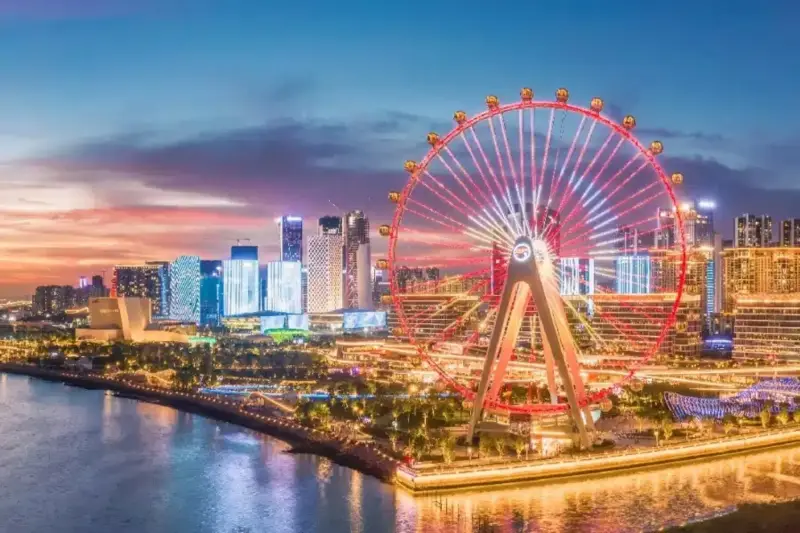 ShenzhenTech city next to Hong Kong
 NanjingJiangsu's former imperial capital on the Yangtze
 XiamenFujian's island port of temples, pianos and Minnan food
 HangzhouWest Lake and tea hills
 SuzhouClassical gardens and canal streets west of Shanghai
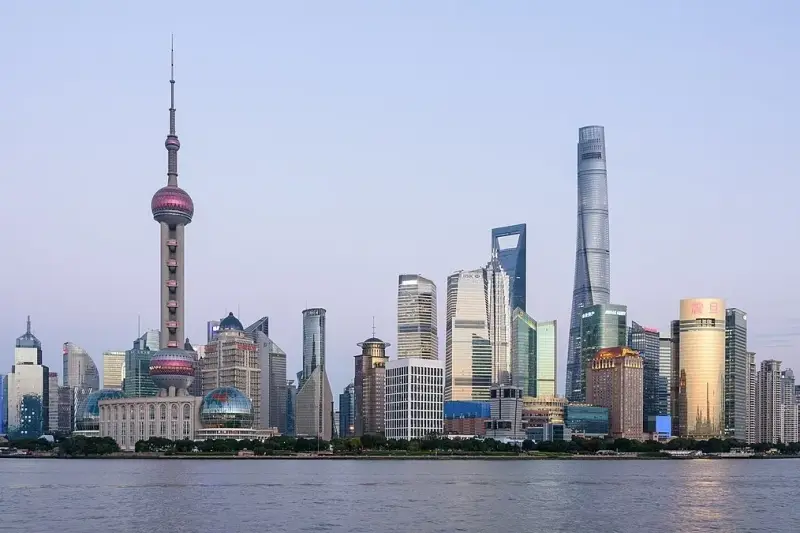 ShanghaiThe Bund and Pudong skyline
 TianjinBeijing's old treaty port
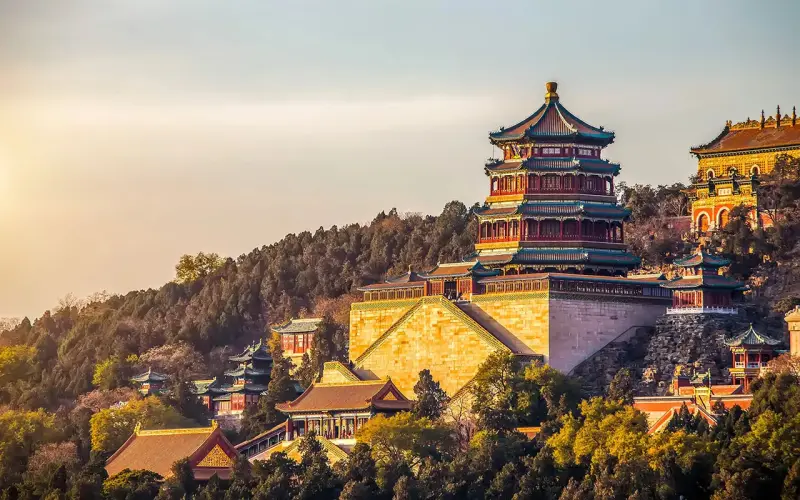 BeijingPalaces and the Great Wall
 QingdaoShandong's port city of beer, beaches and red roofs
 LhasaTibet's palace and temple city at 3,656 m
DalianLiaoning's port city between two seas
 HarbinChina's ice city on the Songhua
Nothing in that category yet.
Top things to do in Chongqing
River views from stilted buildings, an old dock town, Buddhist cliff carvings and some of the spiciest food in China.
No things to do in Chongqing are listed yet. Browse all things to do
Best time to visit Chongqing
Month by month, so you can pick the weather and the crowds you want.
Highs rise from 19C to 27C, with rain increasing in May.
June is the wettest month at about 212 mm, then July and August turn very hot.
Highs fall from 29C to 17C; fog becomes common.
Highs of 10-14C and lows near 6C, mild but gray and damp.
Fog is most frequent in spring and autumn, which can soften the famous river views; evenings after rain are often clearest.
Plan your trip
Practical answers before you go. Pick a topic.
Getting there
Jiangbei airport, or high-speed rail into North or West station
Chongqing Jiangbei International Airport opened in 1990 in Yubei, north of the center. The airport article gives about 19 km and the city article 21 km. It runs four parallel runways and was the fourth-busiest airport in mainland China by passengers in 2021. By rail, Chongqing North handles high-speed services to Chengdu, Beijing and other cities, and Chongqing West, opened in 2018, adds more. The older Chongqing station near Jiefangbei now carries fewer services, and Chongqing East opened in 2025.
- Jiangbei (CKG)
- Hub for Chongqing Airlines, Sichuan Airlines, China Southern and others
- Chongqing North
- Opened 2006, metro-connected
- Chongqing West
- High-speed station in Shapingba, opened 2018
- Chongqing East
- Newest main station, opened 2025
- Check which station your train uses; they are far apart and connected only by metro or taxi.
- Allow extra time at the airport if you need the people mover to Terminal 3B.
Where to stay
Jiefangbei, Hongyadong or Shapingba
Most visitors stay on the Yuzhong peninsula around Jiefangbei, within walking distance of Hongyadong and the river viewpoints. Jiangbei, across the Jialing, faces the peninsula and has the newer high-rise hotels, while Shapingba suits those visiting Ciqikou and catching trains from the West station.
- Jiefangbei
- Central business district near the old Chongqing rail station
- Hongyadong
- Riverside landmark beside the Jiefangbei business district
- Yuzhong peninsula
- Bounded by Eling Hill and the two rivers
- Shapingba
- Ciqikou and Shapingba rail station
- Streets climb steeply; ask how many stairs lie between a hotel and the nearest metro station.
Getting around
Metro, monorail, cable car and taxis
Chongqing Rail Transit mixes conventional metro lines with heavy monorails, which suit the steep terrain. The monorail network has 70 stations. Lines 3 and 10 serve the airport, and Line 6 runs from Beibei in the far north to downtown. On the river, the cable car is the one surviving link of the old crossing tramways.
- Line 1
- Conventional subway through Shapingba and the center
- Lines 2 and 3
- Heavy monorails; Line 3 links the airport and the southern districts
- Line 6
- Beibei to downtown
- Yangtze River aerial tramway
- North to south bank over the Yangtze
- Station exits can be on very different levels; check the exit number before you leave the platform.
Know before you go
What makes Chongqing worth the trip, and what catches visitors out.
Why travelers love it
- Hongyadong at night, a stilted riverside complex lit up after dark.
- Ciqikou, a riverside town of about 1,000 years, nicknamed Little Chongqing, that thrived as a dock in the Ming and Qing dynasties.
- The Three Gorges Museum, a domed building on the history and landscape of the region.
- Xueyu Cave, a white karst cave described as the only pure white, jade-like example of its kind.
- Chongqing Zoo, home to giant pandas and South China tigers.
Good to know
- Summer heat is extreme, and the city rarely cools at night in July and August.
- Maps mislead, because two points close together may sit on different levels of a hillside.
- Distances between stations are long, so allow time when connecting to trains.
- Holiday crowds are huge at Hongyadong and the cable car.
Trip fit
BookingMentor editorial ratings out of 5, based on a first-time visitor's experience.
Weather in Chongqing, month by month
Chongqing has hot, humid summers and mild, overcast winters, with frequent fog in the transitional seasons.
Climate figures are 1991 to 2020 normals for the Shapingba station from the China Meteorological Administration, via Wikipedia.
Packages in Demand
A Journey to Remember
Tours, activities and day trips in and around this destination, with the details you need before booking.
No packages in Chongqing are listed yet. Browse all packages
Create Your Custom-Made Trip to Chongqing
Traveling to Chongqing? Chat with a Local Travel Specialist in Chongqing Who Can Help Organize Your Trip.
START HERE
Our Travel Experts are Recommended by



Offal, noodles and a plate of chilies
Chongqing cooking is a branch of Sichuan cuisine, defined by chili heat and the tingling numbness of Sichuan pepper. Order hot pot for one big meal, eat xiao mian for breakfast, and look for laziji, suan la fen and Jialing River fish.
Hot pot. A central pot of spicy broth is set on the table and diners cook their own ingredients in it. Local favorites include beef, pork, tripe, kidney slices, pork aorta and goose intestine, which surprise many visitors. Order sliced beef and vegetables if offal is not for you.
Laziji. Marinated chicken is deep-fried, then stir-fried with heaps of dried chilies and Sichuan peppercorns. The dish originated near Geleshan. Much of the plate is chilies; pick out the chicken.
Suan la fen. Thick, chewy sweet potato noodles come in a sour and spicy vinegar soup, a good snack between sights.
Jiangtuan fish. Bighead carp from the Jialing River is steamed or baked, and fish with pickled mustard greens is another classic. Look also for spring water chicken, pork leg braised with rock sugar, and qianzhang, a sheet made from skimmed soy cream.
Carved cliffs, sinkholes and the gorges
A river cruise takes several days; each of the two inland sights fills one.
The carvings in Dazu District date back to the 7th century and cover 75 protected sites with about 50,000 statues and more than 100,000 characters of inscriptions. They are a UNESCO World Heritage Site and the most important cultural excursion from the city.
Wulong Karst was inscribed by UNESCO in 2007 as part of the South China Karst site. It includes the Qingkou giant doline, a huge sinkhole, the Three Natural Bridges, which are natural rock arches, and Furong Cave, known for its cave formations.
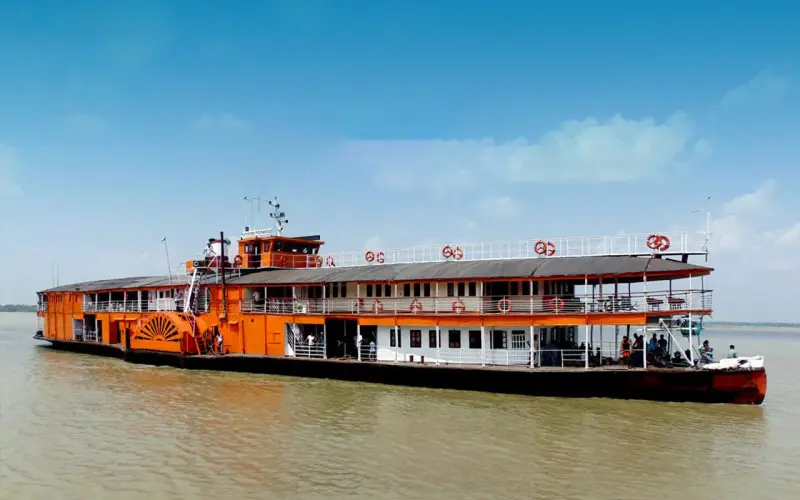
The Yangtze runs about 665 km through the municipality and forms the Qutang, Wu and Xiling gorges downstream. Since the Three Gorges Dam, larger ships can reach Chongqing, and the river is also one of China's most important inland cargo routes. Book cruises well ahead in peak months, and check conditions before Wulong, since rain affects walking paths there.
Travelers are asking
No questions yet about Chongqing. Ask the community or our travel team, and the answer will show here once it is published.
Our travel desk answers questions about Chongqing
How we research our Chongqing travel guide
Airport terminals, rail stations and transit lines are rechecked when operators change them. Chongqing facts follow Wikipedia's sourced articles and China Meteorological Administration climate normals.
Last updated . Spotted something out of date? Tell us.
We check practical details such as entry rules, seasons and costs against official government and tourism sources.
Before You Go...
Discover Trips & Info
A Travel Network Connection Travelers and locals
Incredible Event & Festival, Don't Miss!
Most Popular Event & Festival of Chongqing
Festivals and events in this destination, with dates, venues and ticket details where available.
No upcoming festivals or events in Chongqing are listed right now. Browse all events
Memorable Experiences
Where to Go (& NOT Go) In Chongqing!
Roaming the World one Adventure at a Time: Travel Tales, Tips, and Inspiration for wanderlusters.

Subscriber
Popular car hire destinations
Explore more options to hire a car for cheap
Frequently Asked Questions (FAQs)
Quick answers to the questions travelers ask most before visiting Chongqing.
Getting there
Take Chongqing Rail Transit. Line 10 serves both Terminal 2 and Terminal 3A, and Line 3 also stops at Terminal 2. A free shuttle bus links the two terminals.
Terminal 2 (2A and 2B) is domestic only. Terminal 3A handles domestic and international flights, and the 3B satellite, opened in April 2025, is domestic only and reached from 3A by an underground people mover.
General
Yes. Chongqing's monorail is described as the longest and busiest in the world, and it reaches many central sights.
Yes, for the view. The 1,160 m aerial tramway crosses between the north and south banks and carries around 10,000 people a day, so expect queues at busy times. It is the last of three former city tramways still in service.
Cruise ships begin or end in Chongqing and sail downstream toward Yichang, with some continuing to Wuhan, Nanjing or Shanghai.
Very hot. July and August average highs near 34C with lows around 25C, and the record is 43.7C, set in August 2022. Chongqing is counted with Wuhan and Nanjing among the Three Furnaces of the Yangtze.
Lamian-style noodles tossed with chili oil and spices, an easy, quick meal at any small noodle shop.
Yes. Restaurants in the city center often serve portions small enough for one person, so eating alone is easy.
Yes, at Chongqing Zoo, which also keeps South China tigers.
Mandarin is understood, and most people speak Sichuanese, a Southwestern Mandarin dialect shared with Chengdu. Miao and Tujia are spoken in parts of the southeast.
Chongqing Rail Transit mixes conventional metro lines with heavy monorails, which suit the steep terrain. The monorail network has 70 stations. Lines 3 and 10 serve the airport, and Line 6 runs from Beibei in the far north to downtown.
Visa & documents
Entry rules depend on your nationality and change from time to time. Check the National Immigration Administration's official website or your nearest Chinese embassy before booking.
Timing & weather
The best time to visit Chongqing is Apr to May, Oct to Nov. Highs of 17-27C between the hot summer and damp winter.
- Spring: March - May (Highs rise from 19C to 27C, with rain increasing in May)
- Hot summer: June - August (June is the wettest month at about 212 mm, then July and August turn very hot)
- Autumn: September - November (Highs fall from 29C to 17C; fog becomes common)
- Winter: December - February (Highs of 10-14C and lows near 6C, mild but gray and damp)
Booking
Plan two to three days, plus a day for Dazu or Wulong.
Health & safety
Violent crime against visitors is rare, but laws are strictly enforced, and drug use or religious proselytising carry severe penalties. Carry your passport, since hotels and trains require it, avoid political discussions and demonstrations, and watch for tea house and art student scams in tourist areas. Call 110 for police and 120 for an ambulance.
