
Venue
Old Town, Edinburgh, Scotland, United Kingdom
Edinburgh Fringe Festival guide
The Fringe suits theatregoers and comedy fans happy to gamble on unknown acts as well as famous names. It usually fills the first three and a half weeks of August, with shows in theatres, pub rooms and church halls. Secure a bed first, then buy tickets through the official site, app or box office, aiming for two or three shows a day.
Anyone can perform at the Edinburgh Festival Fringe, and that open door is the whole idea. Every August thousands of acts, from famous stand-ups to student theatre companies, take over theatres, pub back rooms and church halls across the Scottish capital, with no panel deciding who gets in and who does not.
The result is the largest arts festival you are likely to see, and the most uneven. For every polished hour by a household name there is a show in a room above a pub that nobody has reviewed yet, and part of the pleasure is gambling on those. Comedy dominates, but theatre, dance, cabaret, music and children's shows all fill the programme.
Old Town, Edinburgh, Scotland, United Kingdom
Hotels near the venue fill up around the event dates.
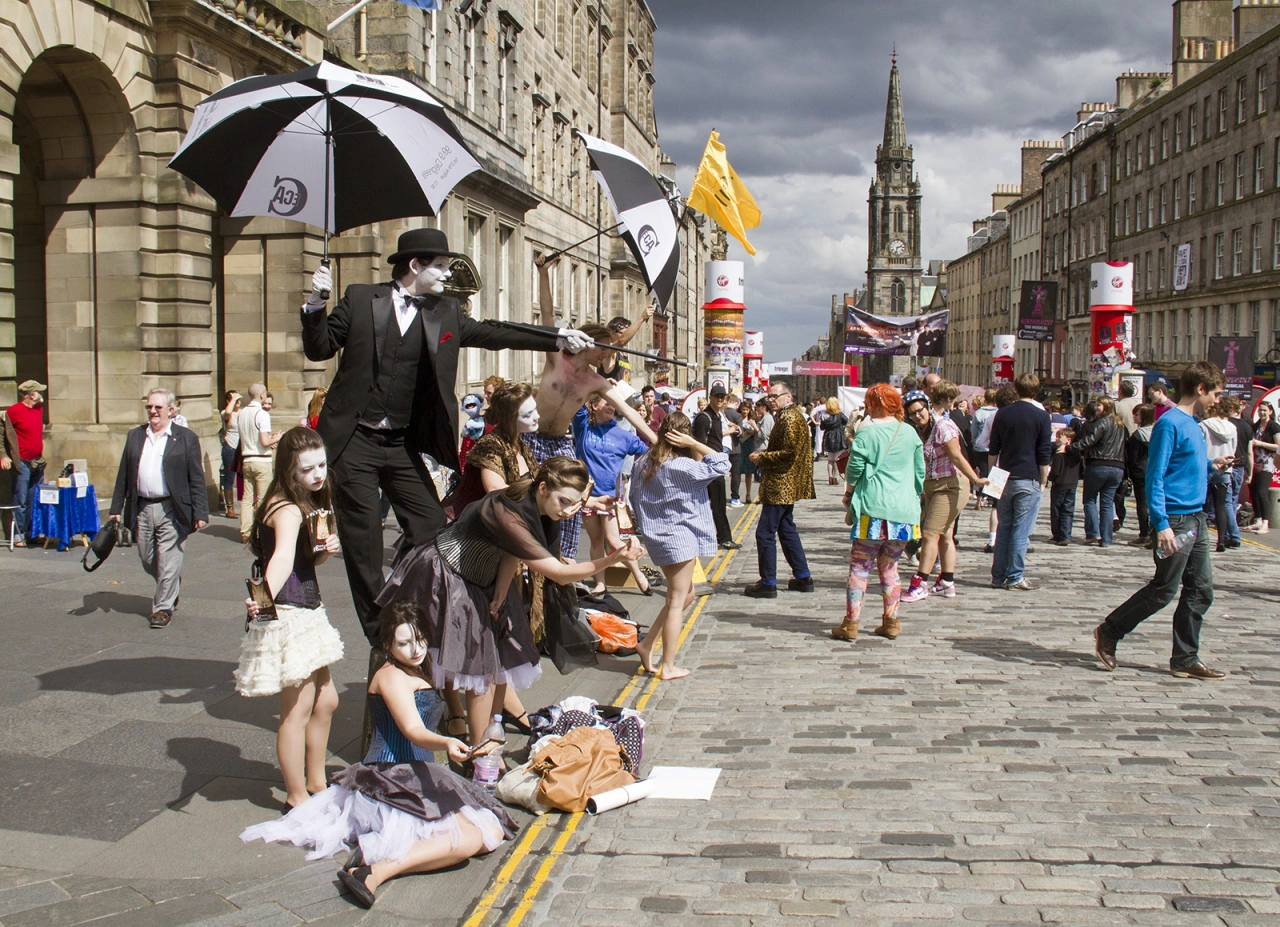
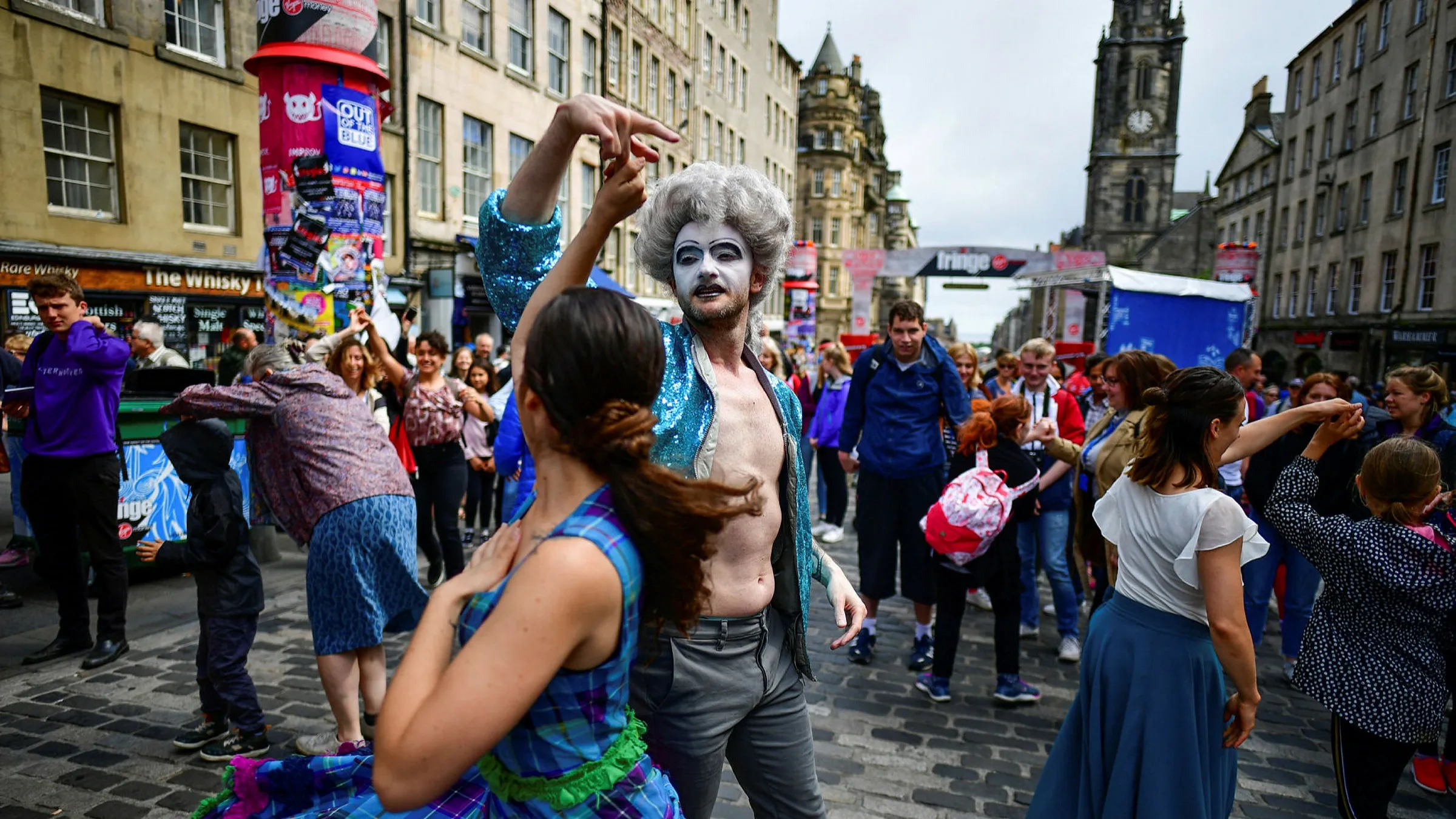
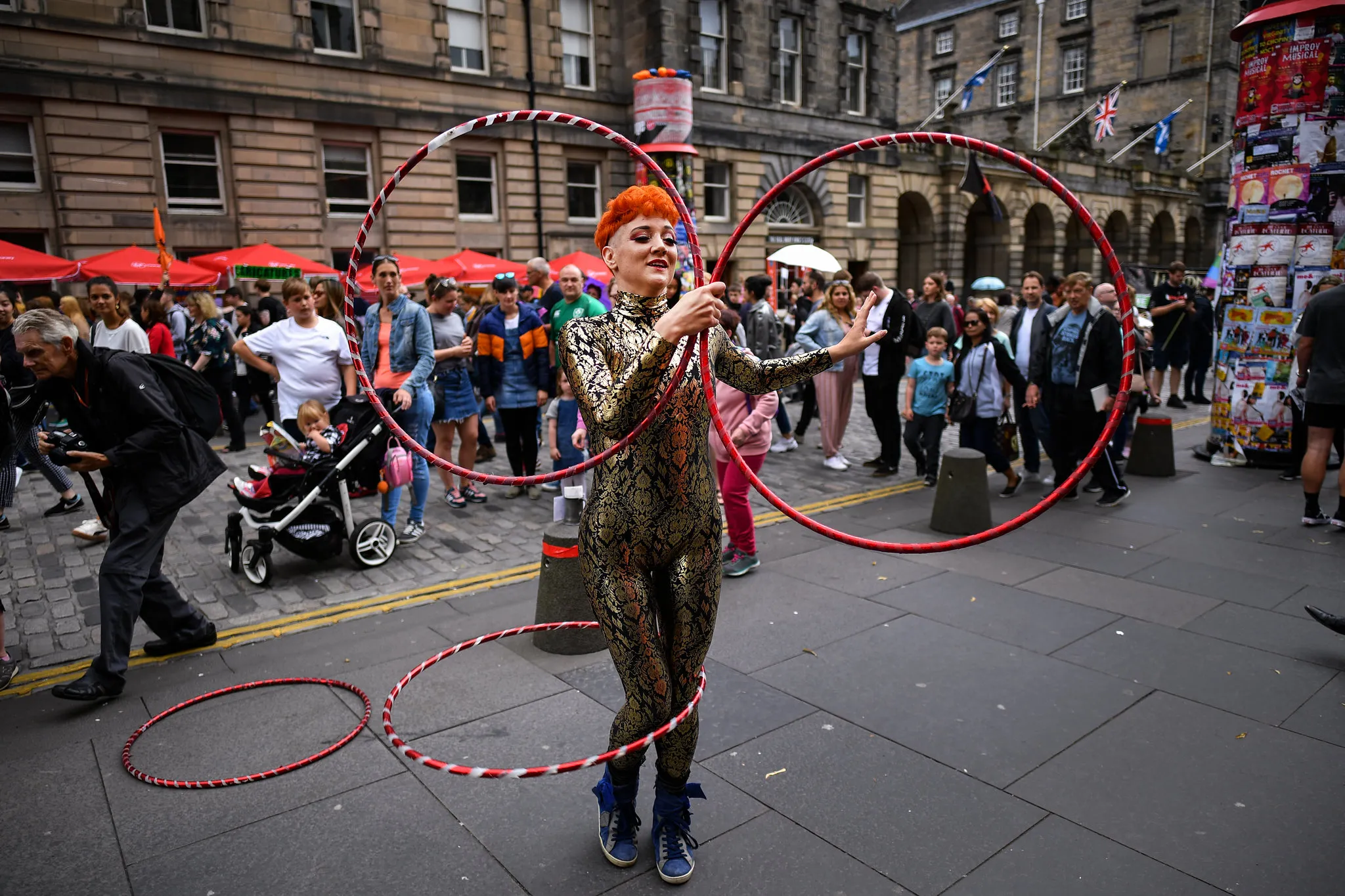
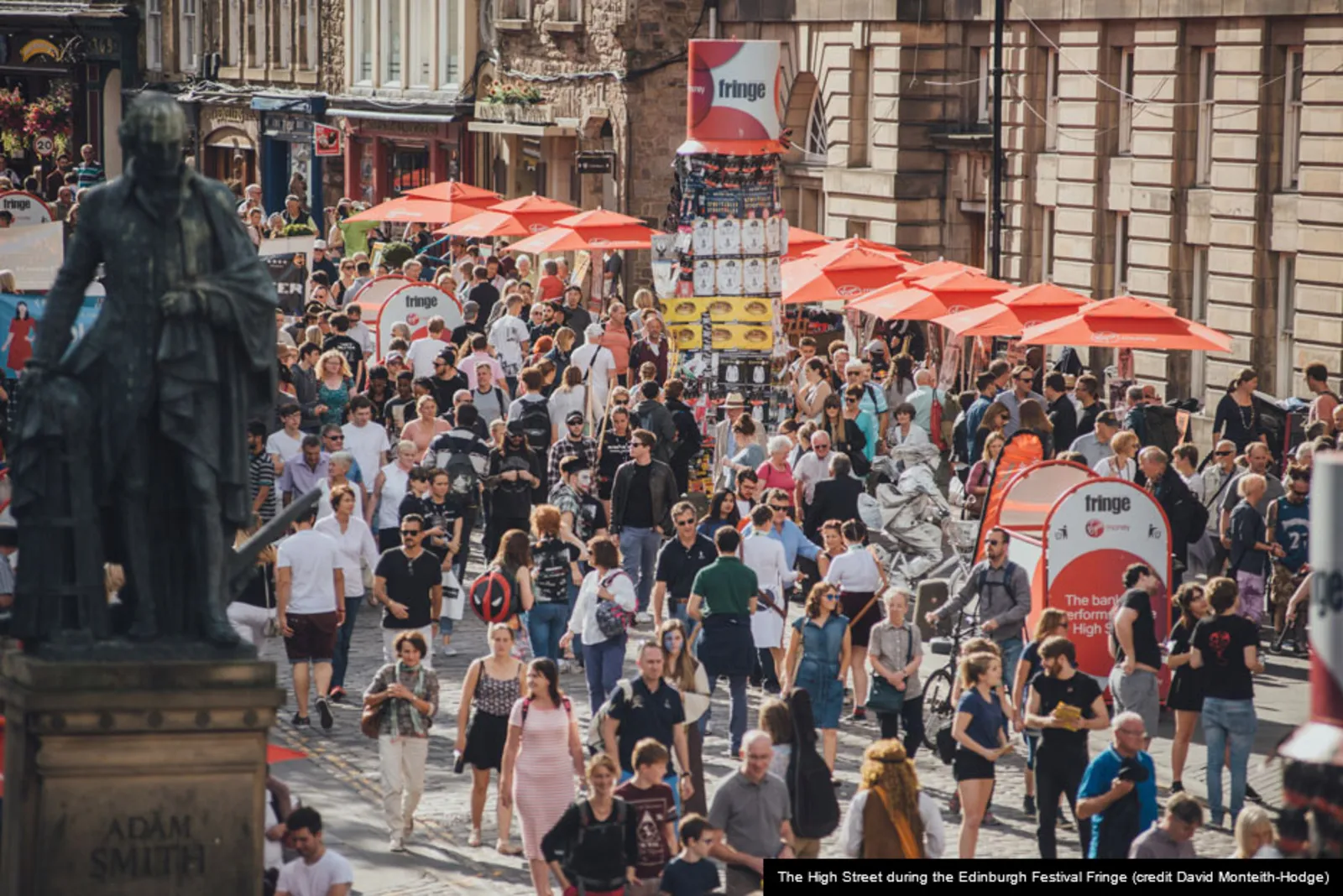
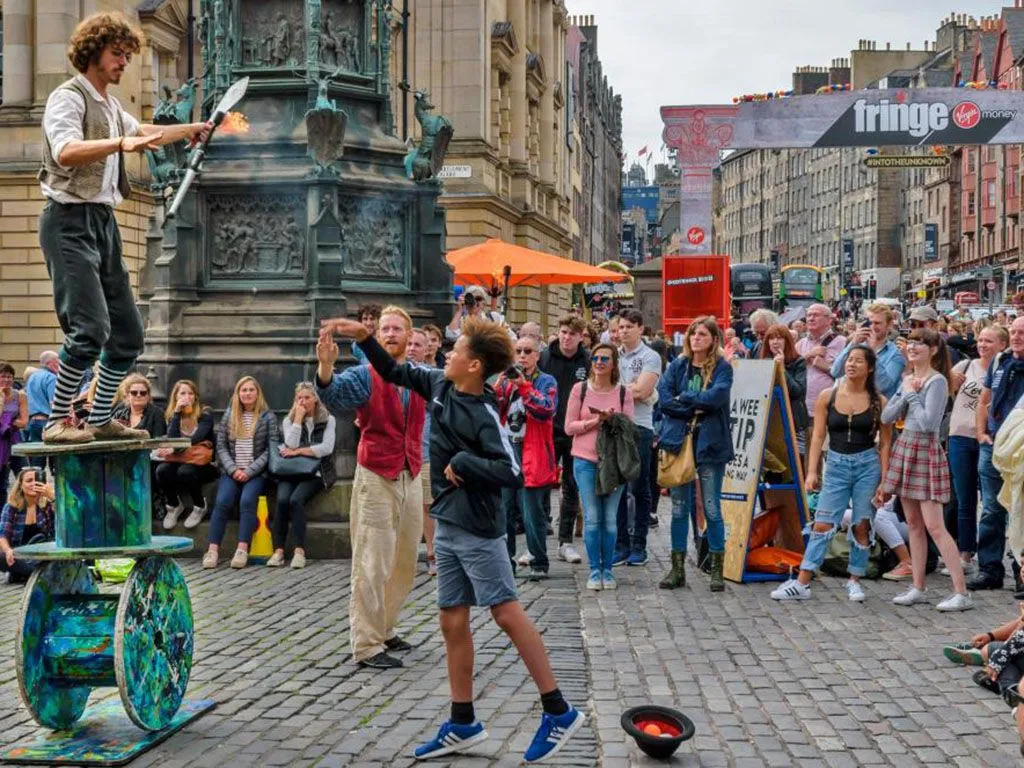
The pedestrianised High Street is where performers hand out flyers, and you will be offered dozens in an hour. A polite 'no thanks' is perfectly acceptable; so is taking one and asking the performer what the show is like.
Venues are spread across the city and the Old Town is all steep streets and worn cobbles. Flat, comfortable shoes are essential if you are walking between three shows in a day.
Carry a light waterproof whatever the morning looks like, because the weather turns quickly even in August, and a sunny afternoon can end in a cold, wet queue outside a venue. A small bag is easier in packed rooms, many of which have no space for coats or luggage. Some smaller venues are up narrow stairs or down in cellars, so check access details in advance if steps are a problem.
Free and pay-what-you-want shows ask for nothing at the door. Instead, a bucket appears at the end, and the performer relies on what goes in it. Put in what you think the hour was worth; for many of these acts it is their only income from the run.
Some free shows are ticketed in advance through the Fringe box office to manage numbers, so booking a free seat can still be worth it for popular acts. Arrive early for the unticketed ones. Rooms are small, and when they are full the door closes.
Tickets are sold through the official Fringe website, its app and its own box office in town. The big comedy names sell out early, so buy those first and leave the rest of the diary loose. Booking more than three shows a day rarely works. Fill the gaps with free or pay-what-you-want acts, which are the cheapest way to take a chance on someone you have never heard of.
Quality swings wildly, because nobody vets the line-up. Treat a few shows as wild cards. Follow a flyer pushed into your hand on the street, or ask the people in the queue what they saw yesterday. Some of the best hours of a Fringe trip come from shows you had not planned to see.
Aim for the middle of the run if you can. By then shows have found their feet, reviews and word of mouth have had time to spread, and the opening rush has calmed.
August is festival month across the whole city, not only on the Fringe's stages. Several other festivals share the calendar, so the pressure on rooms and restaurants is felt across the whole city. Book dinner on busy evenings, especially at weekends. Allow for the crowds on the Royal Mile too, which can slow a quick walk to a crawl in the evening, and give yourself a quiet morning now and then. Fringe days are long, and tiredness creeps up by the second week.
The Fringe began as gatecrashing. In 1947 eight theatre companies arrived without an invitation to the first Edinburgh International Festival and, with the big halls already taken, found smaller rooms of their own. By 1951 students at the University of Edinburgh were running a drop-in centre offering performers cheap meals and a bed for the night.
Formal organisation came in 1959 with the Festival Fringe Society, pushed along by Michael Imison of an Oxford theatre group, and the following year it printed the first guide to the shows. The founding rule still holds. There is no jury and no selection panel, and the society, a charity, coordinates without choosing. That is why a famous stand-up trying out a new hour can play next door to a student company doing its first play.
The unofficial venues are part of the story. Shows have turned up in taxis, swimming pools and underground tunnels, and pub back rooms and church halls are as much a part of the Fringe as any theatre. Seeing something in a room that is usually a bar or a lecture hall is half the fun.
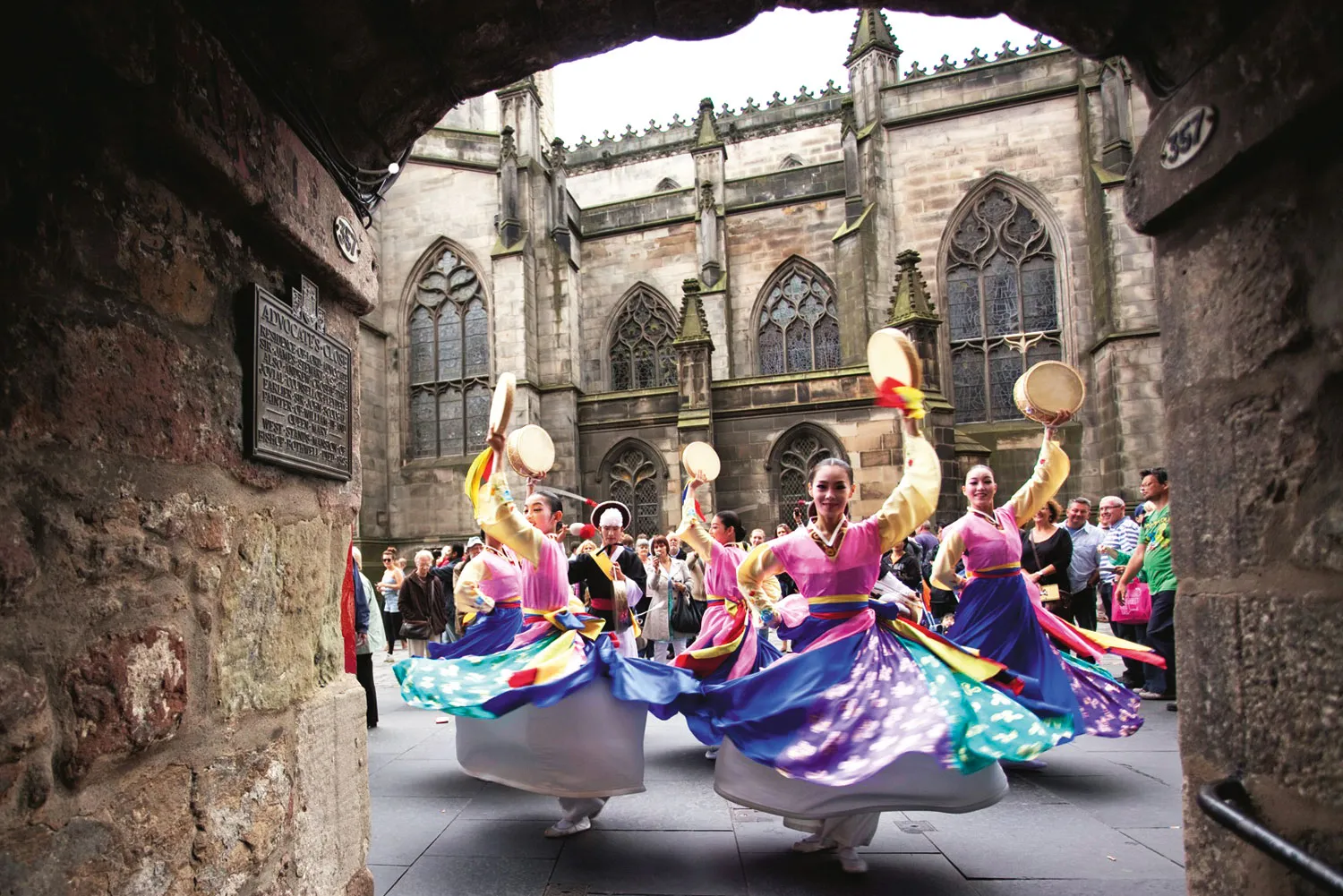
The pedestrianised part of the High Street is the Fringe's free stage, packed with buskers, street acts and actors pressing flyers on everyone who passes. Most comedy lives with the big four operators, Underbelly, the Pleasance, Assembly and Gilded Balloon, whose hubs of several rooms each sit in the Old Town and around the university quarter. Hundreds of smaller venues, more than 300 in all, are scattered across the city.
Walking is the best way around, but leave slack in the schedule. The Old Town is steep, and short distances on the map stretch in the crush. Allow longer than you think between shows in different hubs. Beyond the Scottish capital, our United Kingdom page is a starting point for the rest of the trip.
Trams run to Princes Street and St Andrew Square in roughly half an hour; the Airlink bus takes about as long when traffic allows.
LNER trains from London King's Cross reach Edinburgh Waverley in around four and a half hours, arriving directly beneath the Royal Mile.
Most travellers connect through London or a Gulf hub: see Bangkok to London and Bangkok to Dubai flights, then a domestic hop or the train north.
Many visitors who do not need a visa now need an Electronic Travel Authorisation before they fly. Check the UK government's rules for your passport.
Room prices in Edinburgh climb steeply in August and the decent options vanish months ahead, so book the moment your dates are settled.
When the city is full or too dear, a smaller town on a commuter rail line is a fair compromise: Linlithgow, Dunfermline and North Berwick are all a short train ride from Waverley.
Edinburgh
August is Edinburgh's warmest month, but that is a relative term: Met Office averages put daytime highs at about 19°C, and showers are common. Evenings cool quickly, especially in the queues outside late shows.
Met at arrivals at Edinburgh Airport (EDI) and driven door to door to Royal Mile.
Places to eat in United Kingdom before or after the celebrations.
14 Pier Road, Whitby YO21 3PU, United Kingdom
Cuisine:SeafoodFish and chips
12 Ashton Lane, Glasgow G12 8SJ, United Kingdom
Cuisine:ScottishModern British
78 Commercial Quay, Leith, Edinburgh EH6 6LX, United Kingdom
Cuisine:Modern ScottishSeasonal
12 Upper St Martin's Lane, London WC2H 9FB, United Kingdom
Cuisine:IndianBombay café
Others of this kind you opened on this device, so you can get back to them quickly.
No questions yet about Edinburgh Fringe Festival. Ask the community or our travel team, and the answer will show here once it is published.
Our team answers questions here
Festivals held in the same weeks, if you want to plan more than one.
Party Events, Cultural Events, Winter Festivals
Edinburgh, United Kingdom
From $700.00
Cultural Events, Arts Festivals
Hay-on-Wye, United Kingdom
1 photo
Live Events, Cultural Events, Arts Festivals
Montreal, Canada
12 photos
Musical Events, Carnivals, Parade
London, United Kingdom
6 photos
Festivals and events across United Kingdom, with dates, venues and ticket details where available.
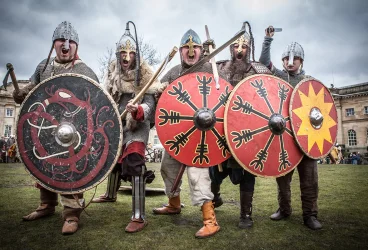
Cultural Events, Community Events, Parade
York, United Kingdom
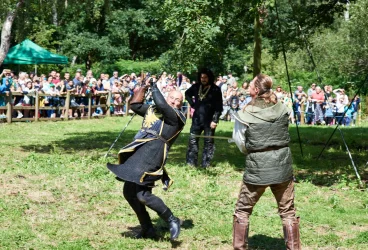
Leisure Events, Cultural Events, Community Events
Newark and Sherwood, United Kingdom
1 photo
Tell us where and when you want to go, and local travel experts send you offers for your trip.
General
In 1948 the journalist and playwright Robert Kemp described the uninvited shows as being on the fringe of the official festival, and the word stuck. The founding groups had called themselves Festival Adjuncts, and the name spread from Edinburgh to open festivals everywhere.
No. The International Festival is curated and invites its performers. The Fringe began alongside it in 1947 as the uninvited alternative, and the two still run at the same time each August.
In September 2026 some performers asked for the festival to move a week earlier, because the 2026 run had overlapped with Scottish school holidays for just five days. The Fringe Society kept the 2027 dates, saying they would give a more normal overlap of about 12 days.
The Edinburgh International Festival, the Royal Edinburgh Military Tattoo, the Edinburgh International Book Festival and the Edinburgh Art Festival all fall in the same month, which is why the whole city is busy.
No. COVID-19 forced the first cancellation in the festival's history. It had run every August from 1947 until then, and it returned once restrictions eased.
Yes, that is the founding principle. There is no selection panel: performers find a venue and register their show with the Fringe Society, which lists it in the programme alongside everyone else.
Prices & payment
Prices vary enormously. Plenty of shows are free or pay-what-you-want, most ticketed shows are modestly priced, and the big comedy names cost the most and sell out first. Same-day discounts help keep costs down.
A booth selling reduced-price tickets for shows on the same day, running since 2006. It suits a flexible day: check what is on offer in the morning and build your afternoon around it.
Booking
The 2026 festival issued more than 2.8 million tickets for 61,277 performances, 14% more performances than in 2025. No one could see more than a sliver, which is why choosing well matters.
Families & accessibility
There is plenty for them. Children's shows are a full category of the programme, alongside comedy and theatre. Check age guidance on each listing, because plenty of late-night comedy is strictly for adults.
Timing & weather
The Festival d'Avignon in France has an open fringe of its own each July, which makes it a natural next step for theatre lovers who have done Edinburgh.
We use necessary cookies to make this site work. With your permission we would also like to remember your preferences, measure how the site is used, and show relevant ads and partner offers. You can change your mind at any time under "Cookie settings" on our Privacy policy page.

 Umrah packages from Dhaka