
In short: On a first trip to Bali, most people do best with two bases rather than one. Spend a few nights in Ubud for temples, rice terraces and cooler evenings. Then move to the coast: Seminyak for restaurants and shopping, Sanur or Nusa Dua for calm water and families, Canggu for surf and cafés, or Uluwatu for cliffs and quieter beaches. Kuta is the cheapest coastal option and the closest to the airport.
Bali has no railway and few useful buses, so where you sleep decides how much of your holiday you spend in a car. Roads in the south are narrow and jam at the same hours every day. This guide compares seven areas by drive time to the island's best-known sights and the airport, by what a stay costs once the extras are added, and by who each area really suits. Facts were checked on 20 November 2026.
Beach, jungle or cliff: seven bases compared
| Area | Character | Beach | Price level | Best for |
|---|---|---|---|---|
| Seminyak | Restaurants, boutiques, beach clubs | Long, wide sand with strong surf | Mid-range to luxury villas | First-timers, couples, food lovers |
| Canggu | Cafés, surf, co-working, young crowd | Black sand, surf breaks | Budget to mid-range, many villas | Surfers, digital nomads, long stays |
| Ubud | Inland, temples, crafts, yoga | None | Budget homestays to jungle resorts | Culture, nature, wellness |
| Uluwatu | Clifftops, surf, sunset views | Small coves below cliffs | Mid-range to luxury | Couples, surfers, views |
| Nusa Dua | Gated resort enclave | Calm, reef-protected | Upscale resorts | Families, resort holidays |
| Sanur | Low-key, older crowd, beach path | Calm, shallow, reef-protected | Budget to upscale | Families, slow travelers, island hops |
| Kuta and Legian | Busy, budget, nightlife | Long surf beach | Budget to mid-range | Short stays, budgets, late flights |
Two points sit behind the table. First, "Bali" in booking searches mostly means the south: Seminyak, Canggu, Kuta, Uluwatu, Nusa Dua and Sanur all sit within about 30 kilometers of the airport, yet the drives between them can take an hour or more. Second, the beaches differ a lot. The west coast from Kuta to Canggu faces open ocean, with big waves, red-flag days and strong currents. Sanur and Nusa Dua sit behind reefs on the east side, with water that suits small children.
Seminyak
Seminyak runs north from Legian along the west coast. Its main streets, Jalan Kayu Aya (Oberoi Street) and Jalan Petitenget, are lined with restaurants, design shops and spas, and the beach is backed by some of Bali's biggest beach clubs. Accommodation is mostly villas with private pools and boutique hotels, with a few large resorts on the sand.
Where to eat in Seminyak: this is the island's dining strip, from tasting menus to wood-fired pizza. For cheaper meals, look for warungs (small family-run eateries) on the side lanes off Jalan Raya Seminyak, where nasi campur, a plate of rice with small portions of several dishes, costs a fraction of a beach-club lunch. Our guide to things to do in Bali at night covers the evening side of the area.
The catch: traffic. Seminyak's streets are narrow and one-way in places, and from late afternoon a short car trip can crawl. Walking is pleasant only on the side lanes, as pavements are uneven or missing.
 Get the bookingMentor app
Canggu for surf and long stays
 Canggu, northwest of Seminyak, grew from rice fields into Bali's café and co-working hub within a decade. It is spread out, with Batu Bolong, Echo Beach, Berawa and Pererenan each forming its own cluster. Small hotels, guesthouses and rental villas dominate, and many visitors stay a month. Surf schools line Batu Bolong beach, and the black-sand shore has small shrines like the one in the picture.
Where to eat in Canggu: smoothie bowls, specialty coffee and plant-based menus fill the main roads. The best value is still the warungs that serve Indonesian food to workers, and the weekend markets in Berawa.
The catch: getting anywhere. Canggu's main roads, including the "shortcut" between Batu Bolong and Berawa, are often gridlocked with scooters. Most people rent a scooter or use ride-hailing bikes, and sightseeing elsewhere means long drives.
Why stay inland in Ubud?
 Ubud sits in the hills of Gianyar regency, about an hour or more inland from the airport. It is Bali's cultural center, known for dance performances, painters' villages, and crafts sold at the Ubud Art Market. The Sacred Monkey Forest Sanctuary is at the south end of town. According to its official site, it opens 9 am to 6 pm with last entry at 5 pm. The Tegallalang rice terraces are a short drive north.
Where you stay within Ubud matters. The center around the palace and Monkey Forest Road is walkable, with guesthouses and homestays in family compounds. The valley resorts along the Ayung River, such as Four Seasons Resort Bali at Sayan, give jungle views and quiet but need a car for every meal out. Our list of the best attractions in Ubud helps plan the days.
Where to eat in Ubud: babi guling (spit-roast pork) and bebek betutu (slow-cooked spiced duck) are the local dishes to try. Vegetarian and vegan cafés are everywhere, and cooking classes often start with a market visit.
The catch: no beach, and the center is crowded with day-trip traffic in the middle of the day. Evenings are quiet, as most places close by 11 pm.
Uluwatu and the Bukit
The Bukit Peninsula is the limestone tableland at Bali's southern tip. Uluwatu is the name used for its west side, from Bingin and Padang Padang to the temple itself. Hotels and villas sit on the clifftops, and the beaches are reached by steps down the cliff, which is part of the charm and a problem for anyone with small children or limited mobility. Pura Luhur Uluwatu, the sea temple on the cliff edge, holds the Kecak fire dance at sunset.
Where to eat in Uluwatu: clifftop restaurants and bars along the coast road, and simple warungs near the surf breaks. Jimbaran Bay, on the peninsula's northern edge, is known for grilled seafood dinners on the sand.
The catch: distances. Places on the Bukit are spread out over hilly roads with little shade, so you need transport for nearly everything, and Ubud is a long day trip away.
 Exclusive holiday package offers
Is Nusa Dua too isolated?
Nusa Dua is a planned resort area on the Bukit's east coast, built behind gates with security checks at the entrances. Large international resorts, including Mulia Resort Nusa Dua, line a manicured beach with calm water and a paved beachfront path. There is a convention center and the Bali Collection shopping area.
Where to eat in Nusa Dua: mostly in the resorts. For local food at local prices, eat in Bualu village just outside the gates, or take the short drive to Jimbaran for seafood.
The catch: it can feel removed from Bali itself. You will rarely see daily village life inside the enclave, and most sights are an hour or more away.
Sanur
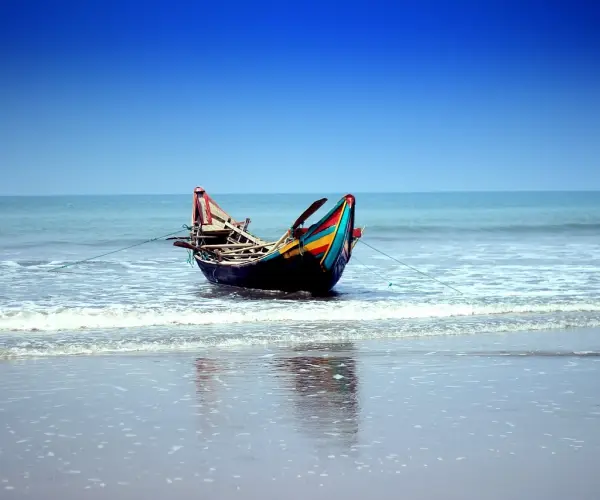
 Sanur was one of Bali's first resort areas, and it still feels slower than the west coast. A paved path runs for several kilometers along the beach past hotels, warungs and fishing boats, and the reef keeps the water shallow and calm, as in the picture. Sanur is also the departure point for fast boats to Nusa Penida and Nusa Lembongan, which makes it a practical base for island day trips.
Where to eat in Sanur: the beach path has simple seafood places with tables on the sand. The Sindhu night market, a short walk inland, is the cheapest dinner in the area.
The catch: low tide exposes wide areas of seagrass and coral, so swimming is better at some times of day than others. Nightlife is limited.
Kuta and Legian near the airport
Kuta was where Bali's beach tourism started. Today it is the busiest and cheapest part of the coast, with surf schools, shopping malls, chain hotels and a nightlife strip. Legian, to the north, is a slightly calmer version of the same. Kuta's main draw for many travelers is practical: it is the closest beach area to the airport, which helps on the first or last night.
Where to eat in Kuta: food courts in the beachfront malls, street-food carts in the evening, and the warungs on the lanes (gangs) between the main roads.
The catch: crowds and noise, plus hawkers on the beach and some pushy street sellers. The sand can collect washed-up plastic during the wet season.
Drive times from each area to the main sights and the airport
Bali has no rail, so every figure below is by road. We measured distances and drive times on 20 November 2026 with OpenStreetMap free-flow routing, from the center of each area to each sight. They assume empty roads, which Bali rarely has: in the south, expect afternoon and evening trips to take one and a half to two times as long, and more on holiday weekends or ceremony days.
| From | Airport (DPS) | Ubud Monkey Forest | Tanah Lot | Uluwatu Temple | Tegallalang |
|---|---|---|---|---|---|
| Seminyak | 11 km, 18 min | 32 km, 34 min | 19 km, 28 min | 28 km, 34 min | 44 km, 42 min |
| Canggu | 21 km, 27 min | 32 km, 33 min | 12 km, 18 min | 38 km, 42 min | 44 km, 41 min |
| Ubud | 37 km, 36 min | 4 km, 6 min | 35 km, 39 min | 54 km, 52 min | 10 km, 10 min |
| Uluwatu | 20 km, 26 min | 51 km, 49 min | 43 km, 48 min | 4 km, 5 min | 63 km, 57 min |
| Nusa Dua | 13 km, 16 min | 41 km, 38 min | 36 km, 38 min | 21 km, 25 min | 53 km, 46 min |
| Sanur | 17 km, 18 min | 22 km, 21 min | 28 km, 31 min | 33 km, 34 min | 34 km, 29 min |
| Kuta | 10 km, 15 min | 32 km, 31 min | 23 km, 29 min | 26 km, 30 min | 44 km, 39 min |
Two patterns stand out. Sanur is the best-placed coastal base for Ubud, because the bypass road north from Sanur avoids the worst of the Kuta and Seminyak traffic. Canggu is closest to Tanah Lot, which is best at sunset, but the drive back to the airport is the longest of the coastal areas. Uluwatu Temple's sunset Kecak show draws heavy traffic onto the single road down the peninsula, so leave early from anywhere other than the Bukit.
How people actually get around
Most visitors use a mix of three things. Ride-hailing apps (Grab and Gojek) offer cars and motorbike taxis at app-set prices, though some villages and the airport area have rules on where app drivers may pick up. Private drivers hired by the day are common for sightseeing loops to Ubud, Tegallalang and the temples. Scooter rental is cheap but needs a valid license with a motorcycle endorsement, and traffic is chaotic for beginners.
Public transport is limited. The Trans Metro Dewata bus network serves parts of Denpasar and neighboring regencies. According to its Wikipedia entry, it was suspended at the end of 2024, restarted in April 2025 and charges Rp 4,400 per ride, paid by QRIS code. Its routes are built for commuters more than visitors. Ngurah Rai International Airport sits on the narrow neck of land between Kuta and Jimbaran, which is why the south feels close on the map and slow on the road.
Budgeting for your stay: rooms, levy and transport
Bali has rooms at every price, from homestays in family compounds to villas with staff. Rates follow the seasons: the dry months from about April to October, and the Christmas and New Year weeks, are the busiest and most expensive. Beyond the room rate, expect these costs:
- Tourist levy: international visitors pay IDR 150,000 per person, once per visit. The provincial government's Love Bali levy site takes payment by bank transfer, virtual account or QRIS and emails a voucher. Pay before you fly to skip queues on arrival.
- Tax and service: many hotels and restaurants add tax and a service charge to the listed price, often shown as "++" on menus. Check whether a rate is "nett" before you compare.
- Airport transfer: fixed-price taxi counters operate in arrivals, and many hotels offer pickups for a set fee. Ride-hailing pickups at the airport use a designated area.
- Daily transport: a driver for a full day of sightseeing usually costs less than two separate long taxi rides, and splits well between four people.
- Villa extras: some villas charge separately for breakfast, airport pickup and a refundable deposit, and private chefs are billed on top of groceries.
Comparing areas, Kuta and the center of Ubud have the cheapest rooms, Canggu has the most mid-priced villas for long stays, and Nusa Dua and the Uluwatu clifftops are where rates start highest. Seminyak covers the widest range.
Choosing by trip type
For a first visit of a week, split the nights: three in Ubud, then four in Seminyak or Sanur. Moving once costs half a day but saves daily two-hour round trips.
Families with young children should look first at Sanur and Nusa Dua for the calm water, easy beach paths and larger resorts with kids' clubs. Couples looking for a romantic stay often pair Ubud's valley resorts with an Uluwatu clifftop; our Bali honeymoon guide covers that trip in detail, with an itinerary and costs, so this page does not repeat it.
Surfers belong in Canggu or Uluwatu, depending on level. Canggu's beach breaks suit learners and intermediates, while the reef breaks below the Uluwatu cliffs are for experienced surfers. Budget travelers do well in Kuta for the coast or in a central Ubud homestay. Digital nomads and month-long visitors mostly choose Canggu or Ubud for the café and co-working networks.
If you want to combine Bali with Lombok, the Gilis or Java, our trip planner can build the route, the stays and the transfers into one plan within your budget.
Traffic, rain, ceremonies and other practical risks
Traffic is the biggest daily cost. The roads around Kuta, Seminyak and Canggu are narrow and carry heavy scooter and car traffic, especially from late afternoon to evening. Plan one area per day and travel early.
Wet season. From about November to March, heavy tropical downpours are common, usually in the afternoon or overnight. Some roads flood briefly, and west-coast seas are rougher. It is still a good time for Ubud, with fewer visitors and green terraces.
Ocean safety. Swim between the flags on the west coast, where rip currents are strong. Lifeguards patrol the main stretches of Kuta, Legian and Seminyak.
Ceremonies and Nyepi. Temple ceremonies can close roads for a few hours, especially around full moons and major festivals. On Nyepi, the Balinese Day of Silence, the whole island shuts down for 24 hours, including the airport, and guests must stay inside their hotels. The date moves each year with the Balinese calendar, so check it before booking flights in March or April.
Temple dress. Visitors to temples wear a sarong and sash, usually lent or rented at the entrance. Shoulders should be covered.
Monkeys. At the Monkey Forest and Uluwatu Temple, monkeys grab sunglasses, phones and food. Keep loose items in a closed bag.
Where to book
Our Bali destination page gathers the island's hotels, sights and travel pages, and you can filter hotels in Bali by the area you chose above. For sightseeing ideas, read our list of places to visit in Bali. Indonesia's official tourism site, Wonderful Indonesia, carries festival calendars and entry information for international visitors.
How we checked drive times and prices
On 20 November 2026 we read the top-ranking search results for "where to stay in Bali" and its first-time and budget variants. They agreed on the main areas but gave no drive-time comparison or levy details, and several were sponsored by hotels. We then checked the tourist levy amount and payment methods on the Bali provincial government's Love Bali site, the Monkey Forest's opening hours on the sanctuary's own site, and the status and fare of the Trans Metro Dewata bus on its Wikipedia entry, all on the same day. Distances and drive times were measured the same day with OpenStreetMap free-flow routing and are minimums, because Bali traffic changes with the hour, the season and the ceremony calendar. We will revisit the figures when the levy or transport rules change.
Bali stays: more questions
Q. Is it better to stay in Seminyak or Canggu?
Seminyak is more polished, with better restaurants and walkable side lanes. Canggu is more casual and spread out, built around surf, cafés and long stays. If you are not surfing or working remotely, Seminyak is usually easier.
Q. How many nights should I spend in Ubud?
Two to four nights covers the town, the Monkey Forest, a rice terrace walk and a dance performance. Stay longer if you plan yoga, cooking classes or hikes such as Mount Batur.
Q. Which part of Bali has the calmest water for children?
Sanur and Nusa Dua, both on the reef-protected east side. Check tide times in Sanur, as low tide leaves little water near the shore.
Q. Where should I stay for my first and last night?
Somewhere close to the airport: Kuta, Jimbaran, Nusa Dua or Sanur. It avoids a long drive after a late arrival or before an early flight.
Q. Do I need a car or driver in Bali?
For sightseeing, yes, since there is no rail and buses are limited. Many visitors use ride-hailing for short trips and hire a driver for full-day tours.
Q. Can I walk around Ubud without transport?
The center can be walked, including the palace, the market and the Monkey Forest. Resorts in the valleys outside town need transport, though many run free shuttles to the center.
Q. Is Uluwatu good for non-surfers?
Yes, if you like views, sunsets and quiet clifftop stays. Beach access by steep steps can be hard work, so families with small children often prefer Nusa Dua.
Q. Is the Bali tourist levy paid every time I visit?
Yes, it is paid once per entry to Bali. Keep the email voucher, as it can be checked on arrival.
Q. Which area is best for day trips to Nusa Penida?
Sanur, where most fast boats to Nusa Penida and Nusa Lembongan leave from the beach. Book a boat with hotel pickup if you stay elsewhere.
Q. Is Kuta still worth staying in?
For budget travelers, surf learners and short airport stays, yes. If you want quiet or a cleaner beach, Legian, Seminyak or Sanur are better choices.
Q. Is the north of Bali a good base?
Lovina and the north coast are quieter, with dolphin trips and black-sand beaches, but they are about three hours from the airport. They work as a second or third stop rather than a first base.










{{item.get_author.first_name}} {{item.get_author.last_name}}
{{item.comment_txt}}
{{item_reply.get_author.first_name}} {{item_reply.get_author.last_name}}
@ {{item_reply.reply_to}}, {{item_reply.reply_txt}}