


Egypt travel guide
Seven thousand years of wonders.
Egypt suits history lovers, divers and winter-sun seekers. Visit from October to April, when temperatures are comfortable. Allow 10 days for Cairo, a Nile cruise and the Red Sea; many visitors can get an e-Visa or visa on arrival. It remains one of the cheaper winter-sun destinations.
Egypt sits at the north-east corner of Africa, where the Nile flows through the desert to the Mediterranean. Cairo, Africa's largest city, is the gateway to the Pyramids of Giza and the Sphinx, and the new Grand Egyptian Museum near Giza displays treasures including those of Tutankhamun.
Upriver, Luxor holds the temples of Karnak and Luxor and the Valley of the Kings, and Aswan offers felucca sailing and the temples of Philae and Abu Simbel. Nile cruises link the two. On the Red Sea, Hurghada, Sharm El Sheikh, Dahab and Marsa Alam are known for diving and snorkelling, and Alexandria and the oases of the Western Desert complete the picture.
Best experiences in Egypt
Find your kind of trip: 24 travel themes, each with the packages in Egypt.
Egypt at a glance
Money, language, time zone and plugs, plus the habits that make a first visit run smoothly.
Top destinations in Egypt
Pick a place by travel style: beaches, cities, heritage, desert.
 AlexandriaEgypt's Mediterranean port
 Siwa OasisEgypt's remote Amazigh oasis
HurghadaEgypt's Red Sea reef resort
Sharm El SheikhRed Sea reefs
Nothing in that category yet.
Regions of Egypt
Pick a region on the map to see what it is known for, then open its guide.
Explore
Mediterranean Coast
Egypt's Mediterranean port 1 place in our guide Open the guide
Explore
Upper Egypt
Temples and royal tombs 2 places in our guide Open the guide
Explore
Red Sea & Sinai
Egypt's Red Sea reef resort 2 places in our guide Open the guide
Explore
Western Desert
Egypt's remote Amazigh oasis 1 place in our guide Open the guide
Top things to do in Egypt
Things to do across Egypt, from the Pyramids and Nile temples to Red Sea diving.
 Most Visited
Egypt
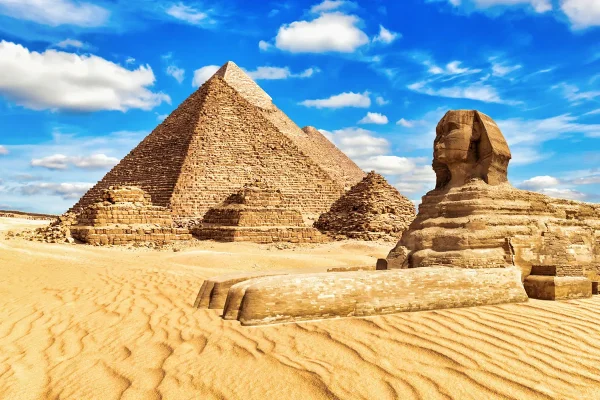
Pyramids of Giza
The Pyramids of Giza are the tombs of the pharaohs Khufu, Khafre and Menkaure on the Giza Plateau, at the western edge of Greater Cairo in Egypt, with the Great...
Cairo
Al-Muizz Street
Al-Muizz Street is a one-kilometre medieval street in the walled historic city of Cairo, Egypt, running from Bab al-Futuh to Bab Zuwayla and lined with 29 monum...
Cairo
National Museum of Egyptian Civilization
The National Museum of Egyptian Civilization (NMEC) is Egypt's museum of the whole sweep of the country's history, from prehistory to the present, on Al-Fustat...

Giza
Saqqara and the Step Pyramid of Djoser
Saqqara lies on the desert edge west of the Nile, about 30 kilometres south of central Cairo in Giza Governorate. It was the main burial ground of Memphis, the...

Egypt
White Desert
The White Desert, Sahara el Beyda in Arabic, lies in the Farafra depression of Egypt's Western Desert, about 45 kilometres north of the town of Qasr al-Farafra...
Cairo
Mosque of Muhammad Ali
The Mosque of Muhammad Ali stands at the highest point of the Citadel of Saladin in Cairo, and its domes and slender minarets are visible across much of the cit...
Luxor
Valley of the Kings
The Valley of the Kings lies in the desert hills on the west bank of the Nile, opposite the city of Luxor in southern Egypt. For nearly 500 years, from about th...
Giza
Great Sphinx of Giza
The Great Sphinx lies on the Giza Plateau on the west bank of the Nile, below the pyramids of Khafre and Khufu, on the edge of greater Cairo. It is part of the...

Giza
Grand Egyptian Museum
The Grand Egyptian Museum, known as the GEM, stands on the edge of the Giza plateau, about two kilometres from the Pyramids of Giza. It is the largest museum in...
Cairo
Mosque of Ibn Tulun
The Mosque of Ibn Tulun stands in the Sayeda Zeinab district of Cairo, below the Citadel and close to the Gayer-Anderson Museum. It is part of Historic Cairo, a...

Luxor
Karnak Temple
The Karnak Temple Complex lies on the east bank of the Nile at the northern edge of Luxor, the site of ancient Thebes. It forms part of the Ancient Thebes with...

Cairo
Egyptian Museum (Tahrir)
The Museum of Egyptian Antiquities, known as the Egyptian Museum or Cairo Museum, stands on the north side of Tahrir Square in downtown Cairo. It is run by Egyp...
Where to stay in Egypt
Hotels and resorts in Egypt with guest scores, nightly prices and free cancellation.
Best time to visit Egypt
Winter suits temples and tombs, spring brings dusty winds and summer belongs to the beaches.
Warm, sunny days ideal for sightseeing; peak season December to February.
Getting hotter; occasional dusty khamsin winds.
Extremely hot in Upper Egypt (often above 40°C); best for Red Sea diving and the Mediterranean coast.
Visit Luxor's Valley of the Kings and Karnak early in the morning to avoid heat and tour groups.
Egypt travel tips
Quick answers on entry, money, health, safety, SIM cards, transport and where to stay.
Visas and entry
e-Visa or on arrival
Most visitors need a visa. Many nationalities can apply online for an e-Visa before travel or buy a visa on arrival at major airports; since August 2026 Cairo airport also offers digital visas on arrival.
- Passport validity
- At least 6 months of validity and one blank page
- e-Visa
- Official site: visa2egypt.gov.eg
- Visa on arrival
- At major airports for eligible nationalities
- Sinai stamp
- Free for short South Sinai resort stays
- Confirm with
- visa2egypt.gov.eg or an Egyptian embassy
Getting there
Cairo and Red Sea airports
Cairo International is the main gateway, with the Sphinx International Airport near Giza for some flights.
- Main airport
- Cairo International (CAI)
- Giza
- Sphinx International (SPX)
- Red Sea
- Hurghada (HRG), Sharm El Sheikh (SSH)
- Upper Egypt
- Luxor (LXR), Aswan (ASW)
Money and costs
Low cost destination
Egypt is very good value. Cash is used for most small purchases and tips; cards work in hotels and larger shops.
- Tipping
- Baksheesh is expected for many small services
- Carry small notes for tips.
- Agree prices before rides or services.
Health and vaccines
Heat, food, water
No special vaccines are required for most visitors; hepatitis A and typhoid are often advised. Stomach upsets are common.
- Drinking water
- Bottled only
- Heat
- Extreme in summer
- Hospitals
- Good private hospitals in Cairo
- Buy travel insurance that covers medical evacuation.
- Carry prescription medicines in their original packaging.
Staying safe
Touts and restricted areas
Persistent touts and scams are the most common problem. Governments advise against travel to North Sinai and areas near the Libyan border.
- Emergency number
- Call 122 (police) (police); 123 ambulance; 126 tourist police
- Areas to avoid
- North Sinai and the Libyan border (UK advice)
- Before you go
- Read your government's current travel advisory for Egypt
- Use official guides and Uber in Cairo.
- Say a firm 'no thank you' to touts.
Where to stay
Best areas to stay
- Cairo
- Zamalek or Giza near the pyramids
- Luxor
- East Bank near the temples
- Aswan
- Nile-side hotels
- Red Sea
- Hurghada, El Gouna, Sharm, Dahab
Getting around
Flights, trains, Nile cruises
Fly, take the sleeper train or cruise the Nile.
- Domestic flights
- EgyptAir
- Sleeper train
- Cairo to Luxor and Aswan
- Cairo
- Metro and Uber
- Nile cruise
- Luxor to Aswan
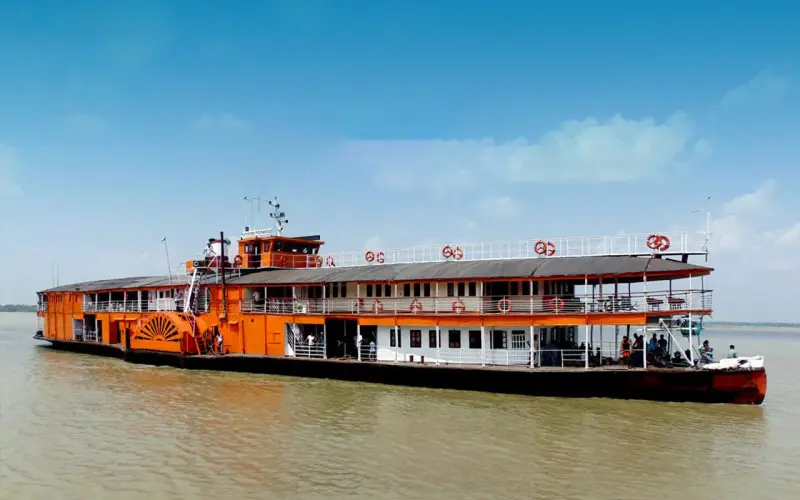
- Most visitors cruise Luxor to Aswan in three or four nights, stopping at Edfu, where Horus's temple of 237 BC is Egypt's best preserved, and Kom Ombo; dahabiyas are quieter and feluccas suit a sunset sail.
- Cruise stops at Edfu last two to two and a half hours, so make sure a calèche driver will wait; the station is on the east bank about 4 km from the temple.
- EgyptAir flies from Cairo to every major city except Alexandria several times a day, and Aswan to Sharm flies direct; check its own site, as some booking sites miss domestic flights.
- Nile Air and Al Masria cover a few routes.
- Trains run Aswan to Alexandria via Luxor and Cairo with branches to Suez, Port Said and Marsa Matruh, but none reach the Red Sea resorts or Siwa; foreigners must buy foreigner tickets.
- Express trains have AC1 and AC2 classes and often run up to an hour late between Cairo and Luxor.
- Go Bus, Super Jet, East Delta and Upper Egypt Bus Co. run long-distance buses; buy at the company office, never from touts.
- Keep your passport handy for checkpoints; hire firms require drivers aged 21 or over, and local driving is erratic.
- A high-speed rail network linking Ain Sokhna with Alexandria and Marsa Matruh was launched in 2021.
SIM and internet
Local SIM or eSIM
Tourist SIMs are sold at the airport.
- Networks
- Vodafone, Orange, Etisalat (e&), WE
- You need
- Passport
Culture and etiquette
Customs and etiquette
Egypt is a Muslim-majority country with a large Coptic Christian minority.
- Mosques
- Women cover their hair; shoes off
- Take shoes off before entering a mosque and never walk in front of someone praying.
- Dress modestly outside resorts
- Use your right hand
- Photographing military or security sites
- Public displays of affection
- Drones without a permit
Things to know before visiting Egypt
The honest picture: what makes Egypt special, and what catches visitors out.
Why travelers love it
- The Pyramids of Giza and the Grand Egyptian Museum.
- Luxor's temples and Valley of the Kings.
- Nile cruises and Aswan.
- Red Sea diving.
- Great value.
Good to know
- Summer heat is extreme.
- Some areas of Sinai carry warnings.
Trip fit
BookingMentor editorial ratings out of 5, based on a first-time visitor's experience.
Cairo weather by month
Cairo gets almost no rain, so heat is the planning factor: about 19°C highs in January against 35°C from June to August. Tap a month for the averages.
Monthly averages for Cairo from the climate table of its Wikipedia article (Cairo (Cairo International Airport), 1991–2020 normals), compiled from the national weather service. Luxor and Aswan are hotter; the coast is milder.
Packages in Demand
A Journey to Remember
Tours, activities and day trips in and around this destination, with the details you need before booking.
No packages in Egypt are listed yet. Browse all packages
Create Your Custom-Made Trip to Egypt
Traveling to Egypt? Chat with a Local Travel Specialist in Egypt Who Can Help Organize Your Trip.
START HERE
Our Travel Experts are Recommended by



The Nile valley from Cairo to Aswan, plus one Red Sea coast
Plan Egypt around the Nile valley, where Cairo, Luxor and Aswan hold nearly every ancient site, then add one Red Sea coast: Hurghada on the mainland, or Sharm El Sheikh and Dahab on Sinai. No ferry links the two shores. A week covers Cairo, Giza, Aswan and Luxor by train, river or air.
The Red Sea resorts lie in two separate worlds: Hurghada on the mainland coast, and Sharm El Sheikh and Dahab on Sinai.
- One week: three nights for Cairo and Giza, then the night train or a flight south to Aswan. Work back north to Luxor by river or rail and fly out of Luxor.
- Ten to twelve days: from Luxor, buses reach Hurghada in four to five hours, so the Red Sea needs no detour through the capital. Sinai suits divers who want Ras Mohammed or a night climb of Mount Sinai, but getting there means a flight.
- Two weeks or more: Alexandria is an easy rail hop from Cairo. A bus from Marsa Matruh reaches Siwa oasis in about four hours, and a direct night bus leaves Cairo around 8PM and takes 12 hours.
Run the valley south to north if you can, traveling with the current from Aswan, where the Abu Simbel day trip fits. The Cairo sleeper train needs reserving ahead through its own operator, and in the December to February peak book your Nile boat before you fly. Hotels are often cheaper on arrival than online.
Edfu is 100 km south of Luxor, and Kom Ombo another 65 km upriver; boats moor beside both. For flights to and from Cairo, book early in the winter peak.
A practical first-visit split is a short cruise from Aswan to Luxor and the night train north; on a tighter budget, base yourself in each city, take the train between them and see the river temples by hired car.
November to March sightseeing and Upper Egypt's summer heat
November to March is the season for sightseeing in Egypt. Cairo peaks near 19°C in January and holds at 35°C from June to August, and Upper Egypt runs several degrees hotter. South of the capital rain averages only 2 to 5 mm a year. In spring the Khamaseen wind brings dust and temperatures above 40°C.
A thin strip of the Mediterranean shore gets up to 410 mm of rain, mostly between October and March. The Khamaseen, a hot dry wind out of the southern deserts, can push inland temperatures past 50°C and drop humidity to 5%, turning the sky brown.
The Red Sea stays swimmable all year: around Hurghada the water ranges from about 21°C in February and March to 28°C in August, and a wetsuit helps in late March. Siwa nears 40°C in summer and can fall to around 5°C in winter, so the Western Desert suits spring and autumn. Snow sometimes dusts the Sinai mountains.
During Ramadan public transport runs less often, shops shut early before sunset, many restaurants open only after dark and alcohol is often limited to Western-style hotels and bars. Eid al-Fitr follows, usually lasting three days. Like Eid al-Adha it moves about eleven days earlier each year; expected dates depend on moon sighting, so check them before you book. Coptic Christmas on 7 January is a national holiday.
Koshari, ta'meya and Egypt's meat-free staples
Egyptian food is cheap, filling and often meat-free, partly because Coptic Christians keep many vegan fast days. Look for koshari, fūl medammes, ta'meya made from fava beans, mahshi, molokhiya, hawawshi and feteer. Bread does the work of cutlery, and the round wholewheat eish baladi appears on almost every table.
Koshari layers rice, lentils and macaroni under tomato sauce with fried onions, and fūl medammes is fava beans cooked slowly in a copper pot. Mahshi is vegetables and vine leaves stuffed with rice, molokhiya a green jute-leaf stew, hawawshi spiced mince baked in a loaf and feteer a flaky layered pie. Pigeon is a favourite main and Domiati the everyday white cheese. On the coasts, fish markets have stalls where you choose a fish to be cooked.
Juice bars sell sugarcane (asab), liquorice, sobya and iced hibiscus (karkadē), a Luxor speciality. Stella and Sakkara lagers are found mainly in hotels and tourist restaurants.
Restaurants rarely expect a tip, while small cash tips oil almost every other service. Greet people with es-salāmu 'alēkum; ma'a s-salāma is goodbye. A straight face reads as rude. Criticise gently and in private. Long shorts or trousers are the norm even on hot days.
Travelers are asking
Most visitors do. Many nationalities can apply for an e-Visa online at visa2egypt.gov.eg or buy one on arrival.
Our travel desk answers questions about Egypt
How We Research This Guide
Visa rules here match Egypt's official e-Visa portal, sites and seasons match Experience Egypt, and regional warnings match UK Foreign Office advice.
Last updated . Spotted something out of date? Tell us.
Checked against trusted sources:
Egypt e-Visa portalExperience EgyptUK Foreign Office travel advice
Before You Go...
Discover Trips & Info
A Travel Network Connection Travelers and locals
Incredible Event & Festival, Don't Miss!
Most Popular Event & Festival of Egypt
Festivals and events in this destination, with dates, venues and ticket details where available.

Jan, 2027
Cultural Events, Exhibition, Fair
Cairo, Egypt

Memorable Experiences
Where to Go (& NOT Go) In Egypt!
Roaming the World one Adventure at a Time: Travel Tales, Tips, and Inspiration for wanderlusters.

Subscriber
Popular car hire destinations
Explore more options to hire a car for cheap
Frequently Asked Questions (FAQs)
Quick answers to the questions travelers ask most before a trip to Egypt.
Timing & weather
October to April is the best time to visit Egypt.
June is the warmest month in Egypt, with average highs of 35°C, and January the coolest, with lows of 10°C. March is the wettest month, at about 6 mm of rain; May is the driest. Cairo gets almost no rain, so heat is the planning factor: about 19°C highs in January against 35°C from June to August.
Health & safety
Tourist areas are well policed, but touts are persistent and some areas, including North Sinai, carry warnings. Call 122 for police, 123 for an ambulance or 126 for the tourist police.
No. Drink bottled water.
Call 122 (police) in an emergency (123 ambulance, 180 fire; 126 tourist police).
Visa & documents
Most visitors need a visa. Many nationalities can apply online for an e-Visa or buy a visa on arrival.
Booking
Allow 7 to 10 days for Cairo, a Nile cruise and Abu Simbel, and 14 days to add the Red Sea.
General
Top places include the Pyramids of Giza, the Grand Egyptian Museum, Luxor, the Valley of the Kings, Aswan, Abu Simbel, the Red Sea, Alexandria and the White Desert.
Arabic is the official language. English is common in tourism.
Egypt uses 220 V, 50 Hz. Plugs C and F.
bookingMentor lists 5 places to stay in Egypt. Prices start from $148.00 per night. Types: Hotels and Resorts.
Fly, take the sleeper train or cruise the Nile.
Prices & payment
Egypt uses the Egyptian pound. Cash is needed for tips and small purchases.
Daily travel costs in Egypt are low cost. One of the cheaper destinations to travel in.
Getting there
Cairo International is the main gateway, with the Sphinx International Airport near Giza for some flights.
