

Venue
Nara Park, Nara, Nara Prefecture, Japan
Wakakusa Yamayaki guide
Wakakusa Yamayaki suits travellers interested in a temple-linked winter rite. It is usually held on the fourth Saturday of January, with the official programme published that month. Nara is small and fills for the burn, so book a room near Nara Park and keep the evening flexible.
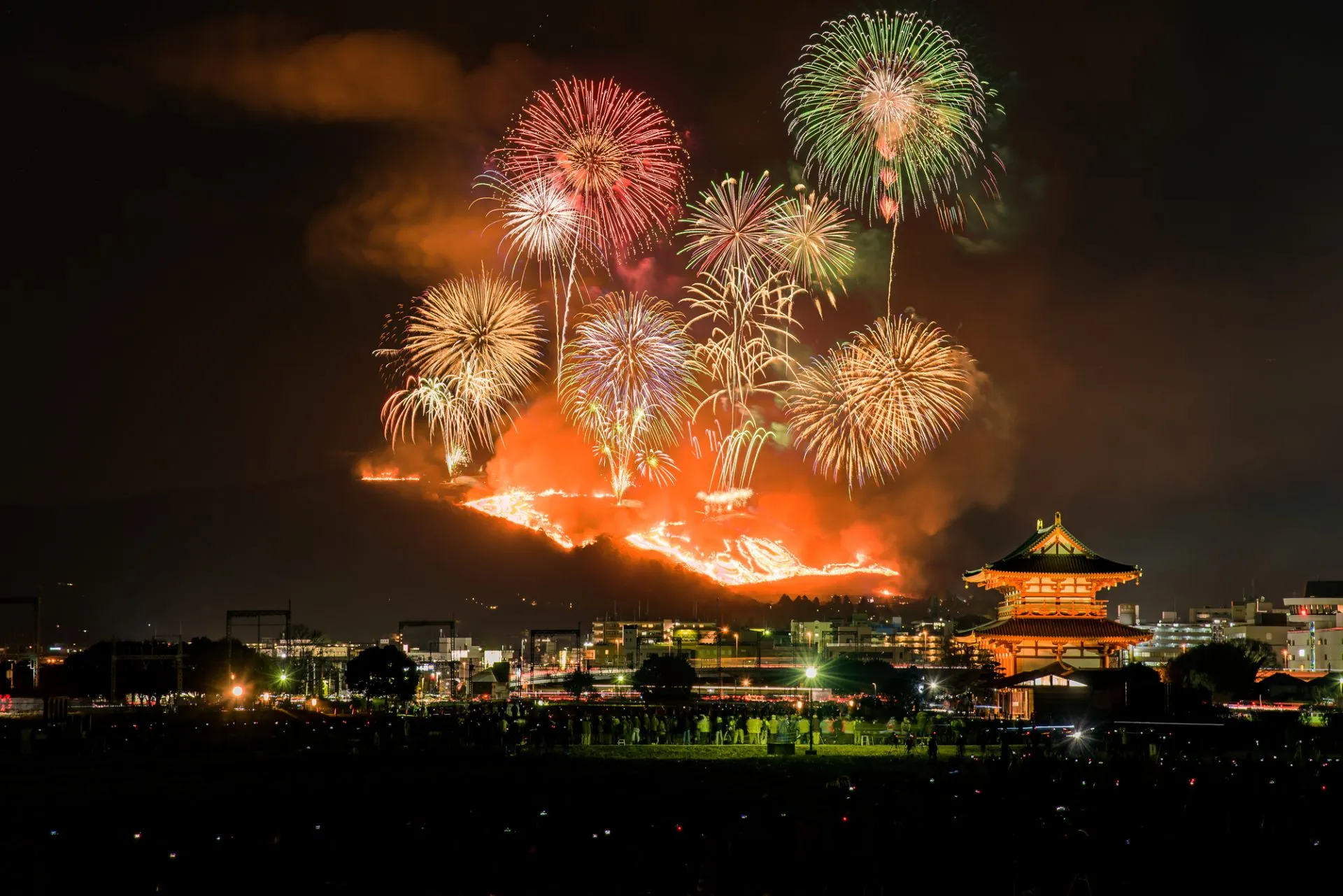
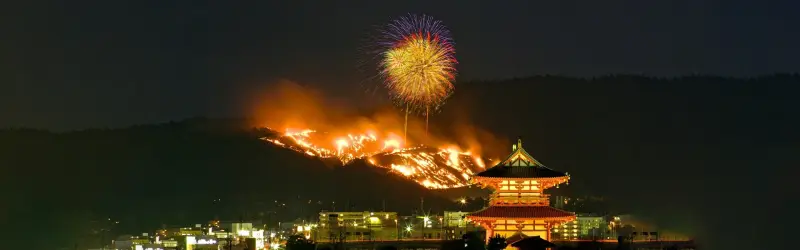
Wakakusa Yamayaki is the winter night when Nara deliberately sets fire to Mount Wakakusa, the grassy hill above Nara Park. The whole slope burns after a torch procession and a burst of fireworks, in a rite tied to the city's great temples and shrine and watched from right across the city.
It is a ceremony as much as a show. Representatives of Nara's temples still take part in the lighting, and the flame reaches the hill carried by people dressed as old government officials and mountain monks.
Nara Park, Nara, Nara Prefecture, Japan
Hotels near the venue fill up around the event dates.
You will be outdoors for a long time after sunset in late January, and the cold catches people out.
Crowds are thick at the base, so keep bags closed and wallets out of back pockets.
The deer of Nara Park wander through the crowds all day. Feeding them is popular, but be careful: a deer that expects food can be pushy, and a crowd leaves little room to step back.
Take every bit of rubbish away with you. The deer get sick from eating litter dropped on the ground, and festival nights leave plenty of it.
Mount Wakakusa is sacred to Buddhists and Shinto followers, and the lighting is a religious rite. Keep noise down during the procession and the ceremony at the bonfire, and follow any instructions from the officials marshalling the crowd.
Minor events begin at the base of Mount Wakakusa.
A rice cracker throwing contest takes place on the lower slope.
The flame sets off from the Tobino area near Kasuga Taisha, carried in procession.
The procession reaches the base of the hill and lights a large bonfire. Be in place by now.
About 15 minutes of fireworks over the hill.
The grass is lit and the flames take 30 minutes to an hour to spread across the slope.
The stations jam. A slow dinner near the park beats a fight for the first train.
Book your hotel first. Nara is a small city and it fills up for the burn, so a room within walking distance of Nara Park is worth reserving as soon as you know your dates. Anywhere between the old town and the park works well, because the walk back after dark is then short and you skip the crush on the trains.
Treat the published schedule as a plan that can change. The official programme appears in January, and times can move from one year to the next. Look at it again on the morning of the burn, and keep the following day free if you can, so a postponement does not wreck the trip.
The burn happens after dark, which leaves a full day to fill. Spend the morning at Todai-ji or Kofuku-ji, take lunch near the park and decide by early afternoon if you want to queue at the base or watch from further away; that choice sets the rest of your timetable. If Nara is one stop on a longer route, our Japan travel guide can help with the rest of the itinerary.
Nobody agrees how it started. The best-known story ties it to a boundary quarrel between Todai-ji and Kofuku-ji, Nara's two great temples, a dispute that, so the story goes, was settled in 1760 by burning the entire hill. A second version is practical: burning the grass drove off wild boars and other pests that troubled the temples and shrines nearby. A third is darker. People living around the hill believed that if it went unburned, the spirits in the old tombs on its slopes would return and bring misfortune.
Fire on a hill above a city of wooden temples was always a risk. In the Edo period (1603 to 1868) the authorities set a rule that the burning should take place only in the first month of the year, and January it has stayed. The custom has outlived interruptions, wartime among them.
The hill is only 342 metres high, which is why the burn reads so clearly from the city below. Its open, grassy slope is what lets the fire spread evenly. For the city below, the burn has become the marker of midwinter, the night when the temples, the shrine and the townspeople all look at the same hill.
Fly into Kansai International Airport; the limousine bus takes about 90 minutes to Kintetsu Nara and JR Nara stations.
Kintetsu limited express trains reach Kintetsu Nara in about 35 minutes.
Walk about 35 minutes from Kintetsu Nara or 50 from JR Nara through Nara Park. Buses run from both stations to Kasuga Taisha (about 250 yen in 2026), then it is 10 to 15 minutes on foot.
The base of the hill is closest to the bonfire and fireworks but fills early. The Ukigumo area of Nara Park has more room, and the Heijo Palace grounds across the city show the whole hillside glowing at once.
Osaka is under an hour from Nara by Kintetsu train and has far more hotels if Nara sells out. Allow for crowded trains back after the burn.
Osaka
Nara's 1991 to 2020 normals give January an average high of 9.0 °C and a low of 0.1 °C, with 52 mm of precipitation and occasional light snow.
By the time the hill is lit the temperature is close to freezing, and you will be standing still for an hour or more.
Met at arrivals at Kansai International Airport (KIX) and driven door to door to Mount Wakakusa.
Places to eat in Japan before or after the celebrations.
1F, 1-7-19 Otemachi, Naka-ku, Hiroshima, Japan
Cuisine:Hiroshima okonomiyaki
1-4-15 Dotonbori, Chuo-ku, Osaka 542-0071, Japan
Cuisine:OkonomiyakiOsaka
459 Shimokawara-cho, Higashiyama-ku, Kyoto 605-0825, Japan
Cuisine:Kyoto kaisekiJapanese
Minamiaoyama Garden Court, 2-6-15 Minami-Aoyama, Minato-ku, Tokyo 107-0062, Japan
Cuisine:InnovativeJapanese
Others of this kind you opened on this device, so you can get back to them quickly.
No questions yet about Wakakusa Yamayaki. Ask the community or our travel team, and the answer will show here once it is published.
Our team answers questions here
Festivals held in the same weeks, if you want to plan more than one.
Cultural Events, Folk Festival, Social Festivals
Dhaka, Bangladesh
1 photo
Arts Festivals, Film Festivals
Boulder, United States
3 photos

Food Festivals, Cultural Events, Fair
Dhaka, Bangladesh
1 photo
Cultural Events, Arts Festivals, Winter Festivals
Sapporo, Japan
Festivals and events across Japan, with dates, venues and ticket details where available.
Cultural Events, Religious Festivals, Parade
Takayama, Japan
Cultural Events, Religious Festivals, Parade
Kyoto, Japan
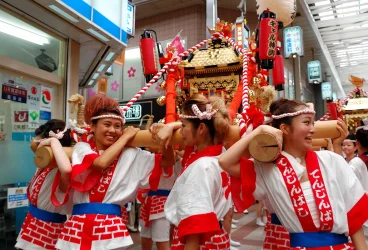
Cultural Events, Religious Festivals, Parade
Osaka, Japan
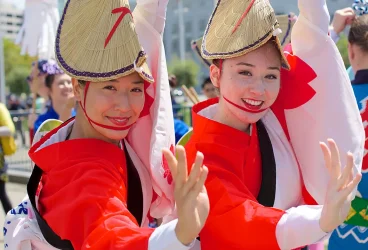
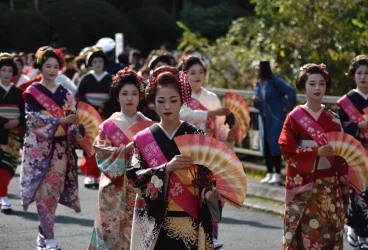
Tell us where and when you want to go, and local travel experts send you offers for your trip.
Timing & weather
Rain or strong wind can push the burn back or call it off altogether. Check the official announcement on the morning of the burn, since the January schedule can change.
In 1900. Before then the hill was set alight at midday, and the evening burn has been the custom ever since.
Prices & payment
Entry to the area at the base of the hill has cost 150 yen. Watching from Nara Park, the city streets or the Heijo Palace site is free.
General
Yes, Mikasa-yama is its other name. Wakakusa itself translates as young grass, a name that suits its open grassy slope.
Both. The hill is sacred to Buddhists and Shinto followers, the procession leaves from near the Kasuga Taisha shrine, and the temples of Todai-ji and Kofuku-ji are part of its story.
It was established in 1880, which makes it one of the oldest public parks in Japan. Nara Prefecture runs it, and Mount Wakakusa rises on its eastern edge.
The listing covers Nara's historic temples and shrine, not the fire ceremony itself. Several of the listed sites sit within a short walk of the hill, so the burn fits naturally into a day of temple visits.
Isuien Garden, a small garden with an art museum, makes a calm morning. The Manyo Botanical Garden grows more than 150 kinds of flowers. Both are close to the park and to the hill.
Yes, if you have a spare day. It is among the oldest temples in Japan and admired for its architecture. Give it a separate day before or after the burn.
Yes. Kyoto is close enough by train to make a day trip of it. Expect packed carriages straight after the fire, and if you are heading back that night, wait for the first rush to clear.
We use necessary cookies to make this site work. With your permission we would also like to remember your preferences, measure how the site is used, and show relevant ads and partner offers. You can change your mind at any time under "Cookie settings" on our Privacy policy page.
