


Austria travel guide
Imperial cities and Alpine peaks.
Classical music, imperial history, Alpine scenery and skiing are Austria's strengths. Visit from May to September for the mountains and lakes, December for Christmas markets, and January to March for skiing. Trains link the main cities easily. Costs are above the European average, and Schengen rules give many passports 90 visa-free days.
Austria is a landlocked Alpine country in central Europe, once the heart of the Habsburg empire. Vienna, its capital, is a city of palaces, coffee houses and concert halls, with Schönbrunn and the Hofburg, the Belvedere's Klimt collection and the State Opera. Salzburg, Mozart's birthplace, has a baroque old town beneath its hilltop fortress.
About two-thirds of the country is mountainous. Innsbruck and Tyrol, the lakes of the Salzkammergut around Hallstatt, the Grossglockner High Alpine Road and the Wachau Valley's vineyards along the Danube draw visitors in summer, while resorts such as St Anton, Kitzbühel and Ischgl make Austria one of Europe's top ski destinations in winter.
Best experiences in Austria
Find your kind of trip: 15 travel themes, each with the packages in Austria.
Austria at a glance
Austria is in Schengen and pays in euros; shops close on Sundays, and the motorways need a vignette.
Top destinations in Austria
Pick a place by travel style: cities, heritage, hills.
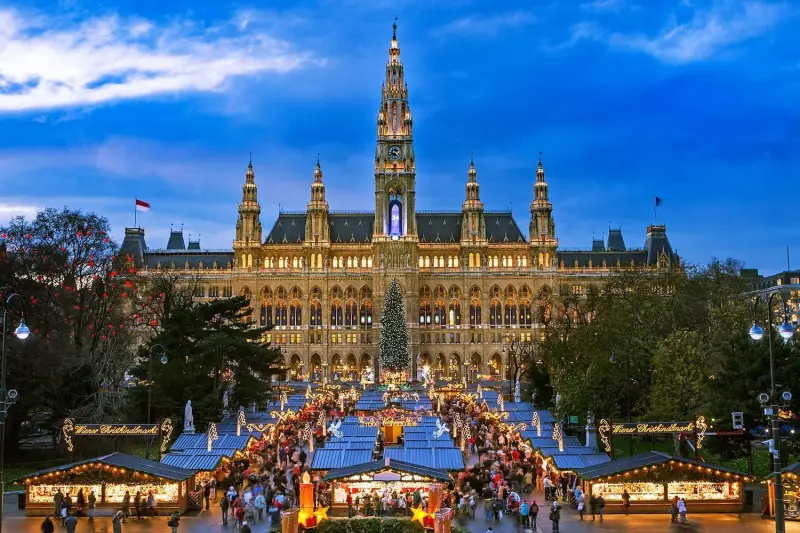 ViennaImperial capital on the Danube
MayrhofenZillertal ski and hiking base
 HallstattSalzkammergut lake village
 InnsbruckAlpine capital of Tyrol
 SalzburgBaroque city below the Alps
 Zell am SeeLake town under the Schmittenhöhe
Bad GasteinOld spa town in a gorge
Bad IschlThe emperor's summer town
BregenzLake Constance festival town
DürnsteinWachau wine town
EisenstadtBurgenland's Esterházy capital
GrazStyria's student capital
KitzbühelTyrol's classic ski town
KlagenfurtCarinthia's lakeside capital
LinzDanube city of media art
MelkGateway to the Wachau
St. Anton am ArlbergBig-mountain ski village
SöldenGlacier resort of the Ötztal
VillachCarinthia's lake-country base
Nothing in that category yet.
Regions of Austria
Pick a region on the map to see what it is known for, then open its guide.
Explore
Tyrol
Alpine capital of Tyrol 5 places in our guide Open the guide
Explore
Salzburg
Baroque city below the Alps 3 places in our guide Open the guide
Explore
Upper Austria
Danube city of media art 3 places in our guide Open the guide
Explore
Carinthia
Carinthia's lakeside capital 2 places in our guide Open the guide
Explore
Styria
Styria's student capital 1 place in our guide Open the guide
Explore
Lower Austria
Wachau wine town 2 places in our guide Open the guide
Explore
Vienna
Imperial capital on the Danube 1 place in our guide Open the guide
Explore
Burgenland
Burgenland's Esterházy capital 1 place in our guide Open the guide
Top things to do in Austria
Vienna's palaces and concerts, Salzburg, Alpine lakes and the ski slopes.
Vienna
Schönbrunn Palace
Schönbrunn stands in Hietzing, Vienna's 13th district. The estate began as a hunting ground with a mill and a manor, which Emperor Maximilian II acquired for th...
Best time to visit Austria
May to September for hiking and the Salzburg Festival, December for markets, January to March for skiing.
Warm days for hiking, lakes and festivals such as the Salzburg Festival.
Christmas markets in December and excellent skiing until about April.
Quieter cities and autumn colours; some mountain lifts close.
Hallstatt gets very crowded in summer; arrive early morning or stay overnight to see it quietly.
Austria travel tips
Entry, airports, money, health, safety, where to stay, trains, SIM cards and Austrian manners, box by box.
Visas and entry
Schengen area rules
Austria is a Schengen country. Citizens of the EU and of many other countries, including the US, UK, Canada and Australia, can visit visa-free for up to 90 days in any 180-day period; other nationalities need a Schengen visa. The EU's Entry/Exit System (EES) records non-EU travelers' fingerprints and a photo at the border.
- Passport
- Issued in the last 10 years, valid 3 months beyond departure
- ETIAS
- Planned online travel authorisation; not yet required
- Confirm with
- travel-europe.europa.eu or an embassy of Austria
Getting there
Vienna and good rail links
Vienna International Airport is the main hub, home to Austrian Airlines. Salzburg and Innsbruck airports are busy in ski season, and fast trains link Austria with Germany, Switzerland, Italy and Hungary. The City Airport Train reaches central Vienna in about 16 minutes, and ÖBB Nightjet sleepers run to many European cities.
- Main airport
- Vienna International (VIE)
- Other airports
- Salzburg (SZG), Innsbruck (INN), Graz (GRZ)
Money and costs
High destination
Expect moderate prices in Austria, rising sharply in ski resorts in peak season. Cards are widely accepted, but some cafés, huts and markets prefer cash. Tipping means rounding up or adding 5 to 10%. Lunch menus (Mittagsmenü) are good value, and a Vienna City Card or Vienna Pass pays off if you plan many sights.
- Tipping
- Round up or add 5 to 10%
- Book ski passes online in advance.
Health and vaccines
Insurance, pharmacies
Routine vaccines are enough for Austria. Health care is of a high standard. EU travelers should carry a European Health Insurance Card (EHIC); everyone else needs travel insurance with medical cover. Tap water is safe to drink, and pharmacies are marked with a green cross.
- Pharmacies
- Marked with a green cross; one on duty at night in most towns
- Ambulance
- Call 112
- Carry prescription medicines in original packaging with a copy of the prescription.
Staying safe
Very safe
Crime rates in Austria are very low. The main risks are in the mountains: changeable weather, avalanches and hiking accidents. Check avalanche warnings before skiing off-piste, start hikes early after checking the forecast, carry insurance that covers mountain rescue, and call 112 in any emergency.
- Emergency number
- Call 112 (all emergencies)
- Before you go
- Read your government's current travel advisory for Austria
- Mountain weather changes fast in every season.
Where to stay
Best areas to stay
Stay central in the cities and in a village base in the mountains. In Vienna that means the Innere Stadt or near the Ringstrasse, and in Salzburg the Altstadt. In Tyrol, choose Innsbruck or a village such as Mayrhofen; in the Salzkammergut, Hallstatt, Gosau or St Wolfgang.
- Vienna
- Innere Stadt or near the Ringstrasse
- Salzburg
- Altstadt
Getting around
ÖBB trains and buses
ÖBB trains connect Vienna, Salzburg, Innsbruck and Graz quickly and comfortably, and Postbus services reach mountain villages. A car is useful in the Alps; motorways require a vignette. Vienna to Salzburg takes about 2.5 hours by train, and the Klimaticket covers all public transport for a year.
- Vienna transport
- U-Bahn, trams and buses
- Driving
- Digital or sticker vignette for motorways
- Buy regional train tickets before boarding where the station sells them; long-distance conductors charge more on board, and SparSchiene fares reward early booking.
- On the western main line, private WestBahn trains from Wien Westbahnhof and Hütteldorf are often a little cheaper than ÖBB.
- The ÖBB Scotty app plans door to door across every train, bus and tram in the country.
- Some Railjets split at Wien Hauptbahnhof, with only half continuing to the airport and the other half to Budapest.
- Regional networks such as VVT in Tyrol add to the Postbus, many resorts run free local buses, and trams serve Graz, Linz and Innsbruck.
- Vignettes are sold online through ASFiNAG or at petrol stations and border crossings, and some Alpine roads and tunnels charge an extra toll.
- Winter tyres are compulsory in wintry conditions from 1 November to 15 April.
SIM and internet
Local SIM or eSIM
Roaming on an EU SIM costs the same in Austria as at home. Others can buy prepaid SIMs or eSIMs in shops and supermarkets from A1, Magenta or Drei, showing ID for registration. Coverage is good across the country, even in many mountain areas, so a local plan works well for hikers too.
- Networks
- A1, Magenta, Drei
Culture and etiquette
Customs and etiquette
Austrians are polite and somewhat formal. Coffee house culture, classical music and good manners are part of everyday life. Greet people with 'Grüss Gott' or 'Servus' when entering shops, dress up a little for the opera, and linger as long as you like in a coffee house. Never call an Austrian German.
- Coffee houses
- Linger as long as you like
- Use titles when introduced formally
- Crossing on a red pedestrian light
- Making noise on Sundays in residential areas
Things to know before visiting Austria
Shops in Austria close on Sundays, and a few other habits are worth knowing.
Why travelers love it
- Vienna: palaces, museums, coffee houses and concerts.
- Salzburg and the music of Mozart.
- Alpine scenery, from Tyrol to the Grossglockner.
- Skiing at world-class resorts.
- Hallstatt and the Salzkammergut lakes.
Good to know
- Shops close on Sundays.
- Motorways need a vignette.
- Hallstatt is very crowded in peak season.
- Mountain weather can change fast.
Trip fit
BookingMentor editorial ratings out of 5, based on a first-time visitor's experience.
Vienna weather by month
Vienna is warm in summer and cold in winter, while the Alps get snow from about December into spring.
Monthly averages for Vienna from the climate table of its Wikipedia article (Vienna (Innere Stadt), 1991–2020 normals, extremes 1775–present), compiled from the national weather service. The Alps are colder and snowier; Innsbruck and Salzburg are wetter.
Packages in Demand
A Journey to Remember
Tours, activities and day trips in and around this destination, with the details you need before booking.
No packages in Austria are listed yet. Browse all packages
Create Your Custom-Made Trip to Austria
Traveling to Austria? Chat with a Local Travel Specialist in Austria Who Can Help Organize Your Trip.
START HERE
Our Travel Experts are Recommended by



Following the railway from Vienna to Salzburg and Tyrol
Austria is shaped like a stretched-out tadpole, wide in the east and narrow in the west. Nearly every good itinerary simply follows the main railway out of Vienna toward Linz and Salzburg, then on through Tyrol to Bregenz on Lake Constance. Trains between Vienna and Salzburg leave every 30 minutes or more often.
- Vienna and Salzburg in a week: give the capital three or four nights for Schönbrunn, the Hofburg, the Klimt paintings in the Belvedere and an evening at the State Opera. Spend the rest in Salzburg, with a day at the Salzkammergut lakes.
- Ten days along the Danube and into Tyrol: add a day in the Wachau wine valley. Melk abbey and the village of Dürnstein are the usual stops. After Salzburg, continue to Innsbruck for two or three nights of cable cars and mountain walks.
- A fortnight with the south: leave Vienna on the Semmering line to Graz, then cross to Klagenfurt and the warm Wörthersee before swinging north to Salzburg. With a car, the Grossglockner High Alpine Road climbs toward the country's highest peak.
- A ski week: pick one resort and stay put. St Anton, Kitzbühel, Sölden and Mayrhofen all work from a single base.
Hallstatt needs special handling. Day-trippers overrun it in summer, so arrive first thing or book one of its few rooms and see it after the coaches leave.
Salzburg Festival tickets sell well in advance. Reserve long-distance train seats at weekends. Shops close on Sundays.
If you rent a car in Germany or Italy, check that a vignette is included before you cross the border.
Mountain summers, lake swimming and western ski resorts
Two peaks shape the Austrian calendar: summer in the mountains and on the lakes, and the snow months in the western resorts. Midwinter days in Vienna barely reach 4°C, with nights near zero. Innsbruck and Salzburg get more rain.
May to September is hiking and swimming time. Mountain huts and lifts open and lakes such as the Wörthersee warm up enough to swim. The Salzburg Festival runs for five weeks from late July, while Bregenz stages its own summer festival on the lake. Expect higher prices and crowds in Salzburg and the Salzkammergut.
December is Christmas market month. It also opens the ski season, which in most resorts runs until about April.
The quiet weeks are April and late October to November. Cities are calmer and hotels cheaper, though some mountain lifts shut between seasons. Early autumn brings the cloudy young wine called Sturm.
Wiener Schnitzel, Sunday Tafelspitz and Austrian court cooking
Austrian cooking descends from the old imperial court kitchen and is built for cold days. Wiener Schnitzel, the breaded veal escalope, is the national plate. Viennese families traditionally eat Tafelspitz on Sundays: boiled beef with horseradish and potatoes, preceded by its own clear broth.
Regional food rewards detours. In Carinthia look for Kasnudeln, dough pockets of curd cheese with mint, served with a butter sauce. Styria dresses its salads with dark green pumpkin seed oil called Kernöl. A Gasthaus set lunch of soup plus a main is the bargain of the day.
In Vienna's coffee houses, order Sachertorte or Apfelstrudel with your coffee. On the city's edge the Heurigen wine taverns pour local white wine, often mixed with sparkling water as a Spritzer. Grüner Veltliner is the white grape to know; Zweigelt and Blaufränkisch are the reds. Almdudler, a herbal lemonade, is the national soft drink.
Paying has its own ritual. Ask for the bill with "zahlen, bitte" and then tell the server the total you want to pay, rounded up by about 5 to 10%. Saying "danke" as you hand over the money means keep the change.
Say "Wiedersehen" when leaving a shop. When toasting, say "Prost" and hold eye contact.
Travelers are asking
Yes. A vignette is required for motorways and expressways. Buy the digital version online or a sticker at petrol stations near the border.
The City Airport Train reaches Wien Mitte in about 16 minutes, and regular S-Bahn trains are cheaper. You can also pre-book a car with driver on bookingMentor.
Our travel desk answers questions about Austria
How We Research This Guide
Austria.info, ÖBB's rail pages and UK Foreign Office advice are our checks, and Vienna's 1991–2020 normals feed the climate table.
Last updated . Spotted something out of date? Tell us.
Checked against trusted sources:
Austria.infoÖBB Austrian Federal RailwaysUK Foreign Office travel advice

Before You Go...
Discover Trips & Info
A Travel Network Connection Travelers and locals
Incredible Event & Festival, Don't Miss!
Most Popular Event & Festival of Austria
Festivals and events in this destination, with dates, venues and ticket details where available.

Apr, 2027
Party Events, Musical Events, Winter Festivals
Mayrhofen, Austria
Memorable Experiences
Where to Go (& NOT Go) In Austria!
Roaming the World one Adventure at a Time: Travel Tales, Tips, and Inspiration for wanderlusters.

Subscriber
Popular car hire destinations
Explore more options to hire a car for cheap

Frequently Asked Questions (FAQs)
Rail tickets, ski seasons, Christmas markets and splitting time between Vienna and the Alps are our most common Austria questions.
Timing & weather
May to September is best for the Alps and lakes, December for Christmas markets, and January to March for skiing.
July is the warmest month in Austria, with average highs of 27°C, and January the coolest, with lows of 0°C. June is the wettest month, at about 82 mm of rain; February is the driest. Vienna is warm in summer and cold in winter, while the Alps get snow from about December into spring.
Health & safety
Austria is very safe. Mountain weather and avalanches are the main risks. Call 112 in an emergency.
Visa & documents
As part of Schengen, Austria admits many nationalities without a visa for up to 90 days in 180. Other passports need a Schengen visa.
Booking
A week covers Vienna, Salzburg and either Innsbruck or Hallstatt. A ski holiday is usually another week.
The KlimaTicket Ö covers scheduled rail, city and regional public transport nationwide for a year from a start date you choose. It costs €1,400, or €1,050 for travelers aged 25 or under, 65 and over, or with a disability. Tourist railways such as the Schafbergbahn are excluded.
Wiener Linien sells 24-hour and 7-day tickets for the Vienna core zone, and you choose when they start. Trips to or from Vienna Airport cross the core zone boundary at Schwechat and are not covered.
General
Top places include Vienna, Salzburg, Hallstatt, Innsbruck, the Wachau Valley, the Grossglockner High Alpine Road, Zell am See, Graz and the ski resorts of Tyrol.
On weekends and public holidays the underground runs through the night. On other nights, more than 20 night bus lines operate between 0:30 and 5:00.
Separate section tolls apply on the Bosruck and Gleinalm tunnels of the A9, parts of the A10 Tauern and A11 Karawanken motorways, the whole A13 Brenner motorway and the S16 Arlberg tunnel stretch. You pay at the toll booth or online before the trip, and no vignette is needed on those sections. Austria's tourist board puts the cost at €7 to €15 per journey.
Austria is best known for:
- Vienna: palaces, museums, coffee houses and concerts
- Salzburg and the music of Mozart
- Alpine scenery, from Tyrol to the Grossglockner
- Skiing at world-class resorts
- Hallstatt and the Salzkammergut lakes
Stay central in the cities and in a village base in the mountains. In Vienna that means the Innere Stadt or near the Ringstrasse, and in Salzburg the Altstadt. In Tyrol, choose Innsbruck or a village such as Mayrhofen; in the Salzkammergut, Hallstatt, Gosau or St Wolfgang.
- Shops close on Sundays
- Motorways need a vignette
- Hallstatt is very crowded in peak season
- Mountain weather can change fast
Getting there
Between 1 November and 15 April, cars may only be driven in wintry conditions such as snow, slush or ice if all wheels have winter tires. Snow chains on at least two driven wheels are an accepted alternative when the road is covered in snow or ice.
Prices & payment
Daily travel costs in Austria are high. Expect higher prices than average.
