


Jaipur travel guide
Rajasthan's Pink City of forts, palaces and bazaars.
Jaipur, the capital of Rajasthan, is known as the Pink City for the terracotta-pink walls of its old town, a UNESCO World Heritage Site. Come for Amer Fort, the Hawa Mahal, the City Palace, the Jantar Mantar observatory and colourful bazaars. Visit from October to March, allow 2 to 3 days, and combine it with Delhi and Agra on the Golden Triangle. It is very good value, and India's e-Visa is applied for online.
Jaipur is the capital of Rajasthan and one of the largest historical cities in northern India. This cultural center was founded in 1727 by Maharaja Sawai Jai Singh II. The city is famous for its excellent urban planning, its royal palaces, forts, and traditional markets. Jaipur is also a part of the Golden Triangle tourist circuit which includes Delhi and Agra.
The City Palace, with its courtyards, museums, and royal buildings, is a great place to learn about the history of Jaipur. About 11 km from the city center is the Amber Fort with its impressive courtyard, gates, and Rajput architecture. Another popular historic monument is Hawa Mahal (the Palace of Winds), an iconic 18th-century structure of five stories fronting the city’s streets.
Jantar Mantar is a set of ancient architectural structures of the 18th century with large-scale astronomical instruments. Jaipur’s markets are worth visiting too, as they offer a variety of jewelry, textiles, handicrafts, block-printed fabrics, lace, and traditional footwear.
Nahargarh Fort, Jal Mahal, Albert Hall Museum, and local Rajasthani restaurants are also good examples of the region’s cultural heritage. Moreover, Jaipur is easily accessible and has well-developed infrastructure for transportation, making it a perfect destination to discover Rajasthan.
Best experiences in Jaipur
Find your kind of trip: 24 travel themes, each with the packages in Jaipur.
 Wildlife
Hill Station
 Ayurveda Tours
 Seasonal/Event
 Adventure
 Wildlife & Safaris
Pilgrimage
Eco/Nature
Culture & History
 Honeymoon
 Romantic Getaway
 Cruise
 Water Activities
 Backpacking
 Luxury
 Photography
City Slickers
 Heritage
 Beach & Relaxation
 Sports & Recreation
 Food & Wine
Train & River Journeys
Skiing
 Overland
Jaipur at a glance
Season, costs, visa, currency and language basics for Rajasthan's capital.
Top destinations in Jaipur
Pick a place by travel style: beaches, nature, cities, heritage.
 DelhiMughal monuments and bazaars
 RajasthanForts, palaces and desert
 AgraHome of the Taj Mahal
MumbaiIndia's maximum city
 GoaBeaches and Portuguese heritage
 KeralaBackwaters and tea hills
MaduraiTamil Nadu's temple city
MysuruKarnataka's palace city
PuriOdisha's temple-and-sea town
VaranasiIndia's holiest river city
 KolkataCity of Joy
BhujGateway to Kutch
HyderabadQutb Shahi monuments and Nizam palaces
NashikKumbh city and wine country
PanajiGoa's Latin-quarter capital
ThrissurKerala's festival capital
ChennaiTemple towers and the Bay of Bengal
MargaoSouth Goa's market town
Nothing in that category yet.
Top things to do in Jaipur
Forts, palaces, observatories and bazaars in Jaipur.

Jaipur
Amber Fort (Amer Fort)
Amber Fort stands on a ridge above Maota Lake in the town of Amer, about 11 km north-east of central Jaipur in Rajasthan. Raja Man Singh I of the Kachwaha dynas...
Where to stay in Jaipur
Hotels and resorts in Jaipur with guest scores, nightly prices and free cancellation.
Best time to visit Jaipur
October to March brings warm days and cool nights; May and June often pass 40°C.
Warm, sunny days and cool nights, ideal for forts and bazaars.
Very hot, with highs above 40°C in May and June.
Humid with heavy showers; the countryside turns green.
The Jaipur Literature Festival in January and wedding season fill hotels; book early.
Jaipur travel tips
Short answers on arriving, money, safety, where to stay and moving around the old city.
Visas and entry
e-Visa for most visitors
Flying into Jaipur? Unless you hold an exempt passport, you will need India's e-Visa, applied for online at indianvisaonline.gov.in (tourist, business or medical). It is valid for entry at designated airports and seaports, and your passport must have six months' validity and two blank pages.
- Apply online
- indianvisaonline.gov.in (official)
- Passport validity
- At least 6 months, with two blank pages
Getting there
Airport, train or road
Fly into Jaipur International (JAI) at Sanganer, about 13 km south of the old city, with domestic and some Gulf flights. Fast trains from Delhi reach Jaipur Junction, the busiest station in Rajasthan, in about 4 to 5 hours, and the road takes about the same. In winter, Delhi fog sometimes diverts flights to Jaipur.
- Airport
- Jaipur International (JAI)
- By train
- Jaipur Junction; fast trains from Delhi in about 4–5 hours
- By road
- About 4–5 hours from Delhi
- From Delhi by bus
- RSRTC Volvo from Bikaner House, about 6 hours
- RSRTC Volvo buses from Delhi can be booked up to 6 days ahead.
Money and costs
Rupees, UPI, cash
Pay in rupees: cash or UPI in bazaars and small shops, cards in hotels and malls. Everything in Jaipur's shops is negotiable, even where they call themselves government-approved, so compare prices in several before buying. For a full-day auto-rickshaw, agree one all-in price covering fuel, parking and lunch.
- Carry small notes for auto-rickshaws, tips and street food.
- Use bank ATMs in daylight.
- Agree auto-rickshaw fares or use the meter or an app.
Health and vaccines
Water, food, heat
Jaipur's heat is the main health risk: May and June often pass 40°C, so sightsee at dawn. Use repellent at Amer's evening sound and light show, drink bottled or filtered water and eat freshly cooked food. Air quality worsens in late autumn and winter; private hospitals are good.
- Hospitals
- Good private hospitals in major cities
- Air quality
- Very poor in northern cities in late autumn and winter
Staying safe
Scams, traffic, harassment
Most visits are trouble-free; commission is the common catch. Drivers and guides who steer you to particular shops or restaurants are usually paid by them, so carry your own list of places. Buy tickets at official counters, and ask the police officers stationed at major sights for help in a dispute. Dial 112.
- Emergency
- 112
- Women travelers should dress modestly and use registered taxis or app cabs at night.
- Book tickets and tours only through official counters or reputable agents.
Where to stay
Best areas
Stay in or near the walled Pink City for the Hawa Mahal and City Palace, or in C-Scheme and along MI Road for restaurants and shops. Converted palaces and havelis offer the classic Jaipur stay. Book early in the cool months, when wedding season and the Jaipur Literature Festival fill rooms.
- Old City
- Close to the Hawa Mahal and City Palace
- C-Scheme / MI Road
- Central, with restaurants and shops
- Heritage hotels
- Converted palaces and havelis
Getting around
Auto-rickshaws and app cabs
Use auto-rickshaws, Uber or Ola in the city, and hire an auto or a car with driver for Amer and the outer forts, where app cabs are hard to find for the return. The Pink Line metro runs from Mansarovar to Badi Chaupar, and city bus No. 5 runs to Amer every 10 minutes until 9PM.
- Composite ticket
- Covers several monuments over two days
- Metro
- Jaipur Metro Pink Line
- From Delhi by train
- Shatabdi Express, about 4.5 hours
- Autos for Amer
- Agree one all-in day price
SIM and internet
Jio, Airtel, Vi
Pick up a Jio, Airtel or Vi prepaid SIM at the counter in Jaipur's arrivals hall. You will need your passport, visa and a photo, and the line can take a few hours to go live, so buy it before relying on app cabs or the metro map.
- Networks
- Jio, Airtel, Vi
Culture and etiquette
Temples and etiquette
At Jaipur's temples, Galtaji included, dress modestly and remove your shoes before entering. Hindi is understood everywhere and English is spoken in tourist areas; older people often speak Rajasthani dialects. Sitting with a shopkeeper over masala chai is normal and carries no obligation to buy, since hospitality is a point of pride here.
- Remove shoes at temples, mosques and homes
- Cover your head at gurdwaras and some mosques
- Use your right hand to eat and pass things
- Public displays of affection
- Photographing people or rituals without asking
- Pointing your feet at people or shrines
Things to know before visiting Jaipur
What makes Jaipur worth the trip, from rooftop sunsets over the old city, and what catches visitors out, especially in the shops.
Why travelers love it
- Amer Fort, a hilltop palace-fortress above Maota Lake.
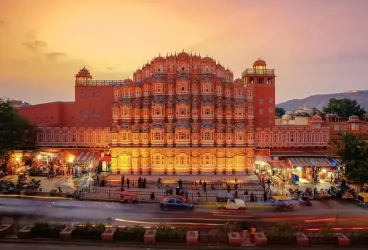
- The Hawa Mahal, the 'Palace of Winds' facade.
- The City Palace and the Jantar Mantar observatory.
- Nahargarh Fort sunsets over the city.
- Bazaars for textiles, gems and block prints.
Good to know
- Touts push gem and shopping scams; never buy gems for 'resale'.
- Elephant rides at Amer raise welfare concerns; walk or take a jeep instead.
- Summer heat is extreme from April to June.
Trip fit
BookingMentor editorial ratings out of 5, based on a first-time visitor's experience.
Jaipur weather by month
At Jaipur Airport, May highs average about 41°C. The monsoon peaks in August with around 203 mm, and November gets only about 2 mm.
Climate figures are approximate long-term averages for Jaipur Airport (India Meteorological Department 1991–2020 normals, via Wikipedia).
Packages in Demand
A Journey to Remember
Tours, activities and day trips in and around this destination, with the details you need before booking.
No packages in Jaipur are listed yet. Browse all packages
Create Your Custom-Made Trip to Jaipur
Traveling to Jaipur? Chat with a Local Travel Specialist in Jaipur Who Can Help Organize Your Trip.
START HERE
Our Travel Experts are Recommended by



Amer Fort, the Pink City and a day out to Abhaneri or Sambhar
Plan three days for Jaipur, a city laid out in 1727 on a grid that still makes it easy to read. Spend day one at Amer Fort, about 11 km north, and Jaigarh; day two in the walled Pink City at the City Palace, Jantar Mantar and the Hawa Mahal; and day three at Abhaneri or Sambhar Lake.
- Day one: reach Amer early, since many sights close around 4:30PM and the fort alone takes hours, then walk the uphill kilometre to Jaigarh. Come back via the Jal Mahal and spend late afternoon in the bazaars of Johari and Bapu.
- Day two: the City Palace, Jantar Mantar with its 19 astronomical instruments, and the 953-window front of the Hawa Mahal in the morning; the Albert Hall Museum after lunch.
- Day three: drive out to Abhaneri for its stepwell and 9th-century temple, or go west to Sambhar Lake, about 56 km away.
The composite ticket covers Amer, Jantar Mantar, the Hawa Mahal, the Albert Hall, Nahargarh and three smaller sites over two days, so buy it at the first monument you visit. Pushkar is about 3 hours away by bus and is best treated as the next stop on your route. The sound and light show at the lower fort in Amer runs from 7 to 8PM; bring mosquito repellent.
For the wider loop through Rajasthan, a car with driver saves days.
Cool winters, brutal May heat and the Jaipur monsoon
Visit Jaipur from late October to February, when afternoons are warm and nights cool, sometimes close to freezing on the outskirts (the record low is −2.2 °C); pack a fleece for early starts at Amer. May and June are brutal, with a record 49.0 °C set on 23 May 1994, and July and August bring most of the year's rain.
In May and June, sightseeing has to be squeezed into the first hours after dawn. The monsoon brings frequent heavy showers and thunderstorms in July and August, which hold most of the year's 625-plus millimetres, but flooding is rare and the hills around the forts turn green.
Two events shape the calendar. The Jaipur Literature Festival, five days of talks, readings and music in January or early February, has been held at the Hotel Clarks Amer since 2022 and adds to the pressure on rooms. Gangaur begins the day after Holi in March or April and runs for 18 days; it is celebrated with ghevar, which then appears in every sweet shop.
Dal baati churma, ker sangri and Rajasthani home cooking
Rajasthani home cooking was built for a dry land where fresh vegetables were scarce. Dal baati churma is the signature plate: crisp baked wheat baati with lentils and sweet churma. Gatte ki sabzi and ker sangri show the same thrift, and missi roti with lahsun ki chutney (garlic chutney) rounds out a meal.
For meat, order laal maas, a fiery red mutton curry; Handi on MI Road (opposite the GPO) specialises in it, alongside kebabs from the tandoor. Breakfast is a street affair. Rawat Mishthan Bhandar near the railway station is the place for pyaz kachori (a spicy onion pastry) and mawa kachori. LMB at 100 Johari Bazaar is best known for aloo tikki and paneer ghevar. Shrinath Lassiwala on Mirza Ismail Road claims to be the oldest lassi shop in town.
Shopping and eating overlap with etiquette. Everything is negotiable, even in shops calling themselves government-approved, and prices for the same item vary from shop to shop, so ask in several before you buy.
Travelers are asking
Yes. A composite ticket covers Amer Fort, the Hawa Mahal, Jantar Mantar, Nahargarh and several other sites for two days.
Our travel desk answers questions about Jaipur
How We Research This Guide
Jaipur's entry rules follow the official Indian e-Visa portal; monument tickets and festivals were checked with Incredible India, and the climate table uses IMD normals for Jaipur Airport.
Last updated . Spotted something out of date? Tell us.
Checked against trusted sources:
Incredible IndiaIndian e-Visa official portalIndia Meteorological Department climate normals
See all 3 sources
- Incredible India (Ministry of Tourism)
- Indian e-Visa official portal
- India Meteorological Department climate normals

Before You Go...
Discover Trips & Info
A Travel Network Connection Travelers and locals
Incredible Event & Festival, Don't Miss!
Most Popular Event & Festival of Jaipur
Festivals and events in this destination, with dates, venues and ticket details where available.
Mar, 2027
Cultural Events, Religious Festivals
Jaipur, India
13 photos
Memorable Experiences
Where to Go (& NOT Go) In Jaipur!
Roaming the World one Adventure at a Time: Travel Tales, Tips, and Inspiration for wanderlusters.


Subscriber
Popular car hire destinations
Explore more options to hire a car for cheap

Frequently Asked Questions (FAQs)
Quick answers to the questions travelers ask most before visiting Jaipur.
Timing & weather
October to March, with sunny days and cool nights. April to June is very hot.
It runs for five days in January or early February and has been held at the Hotel Clarks Amer since 2022. Book rooms early, as it fills the city.
May is the warmest month in Jaipur, with average highs of 41°C, and January the coolest, with lows of 8°C. August is the wettest month, at about 203 mm of rain; November is the driest. At Jaipur Airport, May highs average about 41°C.
Booking
Two to three days covers Amer Fort, the City Palace, Hawa Mahal, Jantar Mantar and the bazaars.
It covers Amer, Jantar Mantar, the Hawa Mahal, the Albert Hall, Nahargarh and three smaller sites over two days. Buy it at the first monument you visit.
General
By train in about 4–5 hours, by road along the expressway, or by a short flight.
The old city was painted terracotta pink in 1876 to welcome the Prince of Wales, and the colour is still maintained.
Yes, for reaching the old town. The Pink Line runs from Mansarovar in the west to Badi Chaupar in the middle of the walled city.
bookingMentor lists 1 thing to do in Jaipur, with its category, rating and a short description. Open one for the full details, such as opening hours and how to get there.
bookingMentor lists 1 place to stay in Jaipur. Prices start from $827.00 per night. Types: Hotels.
Use auto-rickshaws, Uber or Ola in the city, and hire an auto or a car with driver for Amer and the outer forts, where app cabs are hard to find for the return. The Pink Line metro runs from Mansarovar to Badi Chaupar, and city bus No. 5 runs to Amer every 10 minutes until 9PM.
Visa & documents
Almost certainly. Most foreigners enter India on an e-Visa from indianvisaonline.gov.in, which is accepted at Jaipur International; passports need six months' validity and two blank pages.
Prices & payment
Take city bus No. 5 from near the Hawa Mahal and New Gate; it runs every 10 minutes until 9PM. Auto-rickshaws are the practical alternative.
No. Everything is negotiable, even in shops calling themselves government-approved, and prices for the same item vary, so ask in several shops before buying.
Health & safety
Most visits are trouble-free; commission is the common catch. Drivers and guides who steer you to particular shops or restaurants are usually paid by them, so carry your own list of places. Buy tickets at official counters, and ask the police officers stationed at major sights for help in a dispute.

 Umrah packages from Dhaka