


Siem Reap
Siem Reap travel guide
The gateway to Angkor Wat and the temples of the Khmer Empire.
Siem Reap is the riverside town in northwest Cambodia that serves the Angkor Archaeological Park, a UNESCO World Heritage Site with Angkor Wat, the Bayon and Ta Prohm. Come for sunrise at Angkor Wat, cycling between temples and the lively Pub Street and night markets. Visit from November to February and allow three days with a multi-day temple pass. It is very good value, and the Cambodian visa is available online or on arrival.
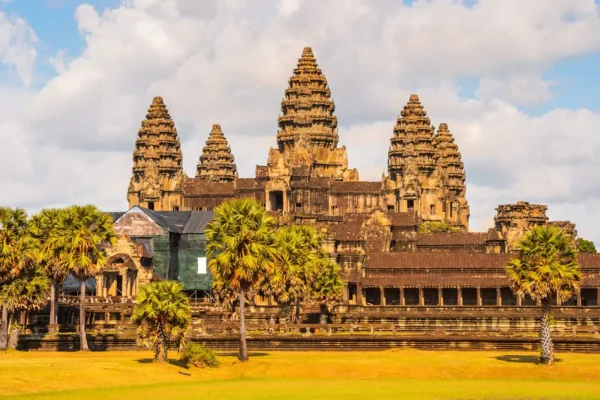
Siem Reap is a riverside town in northwest Cambodia and the base for visiting the Angkor Archaeological Park, which preserves the remains of the Khmer Empire's capitals from the 9th to the 15th centuries. The park, a UNESCO World Heritage Site since 1992, covers about 400 km² and holds Angkor Wat, the walled city of Angkor Thom with the Bayon, and Ta Prohm; Angkor Wat itself is about 6 km north of the town center. Entry is by an Angkor pass carrying your photo, sold for one, three or seven days.
The town grew up around the Siem Reap River and the Old Market (Psar Chaa), where most restaurants, guesthouses and Pub Street are now found. Phare, The Cambodian Circus, stages its contemporary circus shows in a big top in town, and the Tonlé Sap, the largest freshwater lake in Southeast Asia, lies about 15 km to the south. Flights land at Siem Reap–Angkor International Airport (SAI), about 50 km east of town.
Best experiences in Siem Reap
Find your kind of trip: 14 travel themes, each with the packages in Siem Reap.
Siem Reap at a glance
Money, language, visas and time zone for the town that serves Angkor.
Top destinations near Siem Reap
Pick a place by travel style: beaches, nature, cities, heritage, islands.
 Phnom PenhCambodia's river capital
Kampong ChamQuiet stop on the Mekong
KratiéCambodia's dolphin river town
Koh RongCambodia's big beach island
 SihanoukvilleGateway to Cambodia's islands
 KampotCambodia's pepper country
Kep provinceCambodia's crab coast
BanlungGateway to Ratanakiri
Nothing in that category yet.
Top things to do in Siem Reap
Temples, villages and lake trips around Siem Reap.
 Most Visited
Siem Reap
Angkor Wat
Angkor Wat stands inside the Angkor Archaeological Park, about 6 km north of Siem Reap town. Unusually for Khmer temples, it faces west, the direction associate...
Best time to visit Siem Reap
November to February is dry and busy; the rains from May to October turn the countryside green.
Dry and slightly cooler; peak season at the temples.
Very hot, with highs around 35–36°C; visit temples at dawn.
Green landscapes, full moats and fewer visitors; afternoon downpours.
Buy Angkor passes only from the official Angkor Enterprise ticket center or website; passes are checked at every temple.
Siem Reap travel tips
Visas, the new airport, money, health and where to stay, before your temple days.
Visas and entry
e-Visa or visa on arrival
Most visitors need a visa for Cambodia: apply for a tourist e-Visa at evisa.gov.kh before travel, or buy a visa on arrival at international airports and main land borders. ASEAN citizens are visa-exempt for short stays. Your passport needs six months' validity, and the Cambodia e-Arrival card is filed online before you land.
- Apply online
- evisa.gov.kh (official)
- Passport validity
- At least 6 months
- Arrival card
- Cambodia e-Arrival card online before arrival
Getting there
New airport, long transfer
Siem Reap-Angkor International Airport (SAI) opened in October 2023 about 50 km east of town, and the old airport has closed to passengers. Allow about an hour into town by airport shuttle bus, taxi or pre-booked car. Buses also arrive from Phnom Penh and from Bangkok via the Poipet border.
- Airport
- Siem Reap–Angkor International (SAI)
- Into town
- Airport shuttle bus, taxi or pre-booked car, about 1 hour
- By bus
- Buses from Phnom Penh and Bangkok via Poipet
Money and costs
Dollars and riel
Siem Reap runs on two currencies: US dollars for most prices and riel for small change. Bring clean, untorn dollar notes, because damaged ones are refused. Budget for an Angkor pass, sold for 1, 3 or 7 days by Angkor Enterprise, and agree tuk-tuk day rates before you set off.
- ATMs dispense dollars; fees are charged per withdrawal.
- Agree tuk-tuk prices in advance or use an app.
Health and vaccines
Heat, water, mosquitoes
Drink bottled water and use repellent, since dengue is common in the rainy season. Start temple days early to avoid the worst heat, especially in April, and carry water inside the ruins. Siem Reap and Phnom Penh have international clinics, but serious cases are often evacuated to Bangkok.
- Hospitals
- International clinics in Phnom Penh and Siem Reap
Staying safe
Bag snatching and landmines
Cambodia is generally safe for visitors. Watch for bag snatching from passing motorbikes, keep phones away from the roadside and stick to marked paths at rural sites, where landmines remain. Book tuk-tuks through PassApp or Grab if you prefer a fixed price. The police number is 117.
- Police
- 117
Where to stay
Best areas
Most hotels sit a short tuk-tuk ride from the town center and the road to Angkor. Stay near the Old Market and Pub Street for restaurants, bars and night markets, along the riverside for quieter boutique hotels, or on the road to Angkor for large resorts closest to the park.
- Old Market / Pub Street
- Restaurants, bars and night markets
- Riverside
- Quieter boutique hotels
- Road to Angkor
- Large resorts, closest to the park
Getting around
Tuk-tuk, bike, guide
Hire a tuk-tuk or car with driver by the day for the temples, or cycle the flat loops around the park; e-bikes can be rented for the Small Circuit. In town, PassApp and Grab call tuk-tuks at fixed prices. Buy your temple pass for 1, 3 or 7 days from Angkor Enterprise before the first visit.
- Temple pass
- 1, 3 or 7 day passes from Angkor Enterprise
- Apps
- PassApp and Grab for tuk-tuks in town
- E-bikes
- Rentable for the Small Circuit
- Siem Reap–Angkor International Airport (SAI), opened in October 2023, is about 50 km from town; take a shared minibus seat or a private van.
- Many buses end at a station east of town full of touts, so if arriving on National Road 6 ask to get off at the river bridge.
- From Bangkok via Poipet takes six to ten hours, and the hydrofoil from Battambang about five hours across the Tonlé Sap.
- Choose a four-seat remorque or a smaller tuk-tuk, hailed in the street or through Grab, PassApp or TADA for electric ones; fix the total fare first.
- Cycle the flat center and the shaded river lane north from the Hard Rock Cafe, but collect bikes the evening before a sunrise ride; they are banned on the Angkor Wat island.
- Motorbike and e-scooter rental is legal, and police fine riders without helmets.
- Hired drivers know the routes but usually speak little English and are not guides.
SIM and internet
Smart, Cellcard, Metfone
Buy a cheap tourist SIM with data at the airport, showing your passport; the networks are Smart, Cellcard and Metfone. Mobile data is useful in Siem Reap for PassApp and Grab tuk-tuks and for maps of the spread-out temple park.
- Networks
- Smart, Cellcard, Metfone
Culture and etiquette
Temple etiquette
Cambodians are gentle and polite, and the Angkor temples remain active places of worship, so dress modestly and keep your voice down around worshippers. Spend where it helps: the Heritage Friendly logo marks businesses that support Cambodian arts, and Artisans d'Angkor runs free workshop tours.
- Cover shoulders and knees at temples, including Angkor Wat's upper level
- Remove shoes before entering pagodas and homes
- Greet with the sampeah (palms together)
- Touching people's heads
- Climbing on fragile ruins
- Giving money to children selling goods at sites
Things to know before visiting Siem Reap
What makes Siem Reap worth the trip, and what catches visitors out.
Why travelers love it
- Sunrise at Angkor Wat, the largest religious monument in the world.
- The Bayon, with its giant carved stone faces.
- Ta Prohm, where tree roots grip the temple walls.
- Banteay Srei, a small temple of fine pink sandstone carving.
- Tonlé Sap floating villages and Khmer cooking.
Good to know
- Heat: start at dawn and rest at midday.
- Passes are photo IDs; keep yours with you.
- Tonlé Sap boat trips vary in quality; choose a reputable operator.
Trip fit
BookingMentor editorial ratings out of 5, based on a first-time visitor's experience.
Siem Reap weather by month
Siem Reap is rainless in January, about 4 mm, and hottest in April near 36°C. September brings the most rain, around 288 mm.
Climate figures are approximate long-term averages for Siem Reap (Deutscher Wetterdienst averages, via Wikipedia).
Packages in Demand
A Journey to Remember
Tours, activities and day trips in and around this destination, with the details you need before booking.
No packages in Siem Reap are listed yet. Browse all packages
Create Your Custom-Made Trip to Siem Reap
Traveling to Siem Reap? Chat with a Local Travel Specialist in Siem Reap Who Can Help Organize Your Trip.
START HERE
Our Travel Experts are Recommended by



Dry, busy winters and the September rain peak
December to February are the driest, most comfortable months in Siem Reap, with 4 to 7 mm of rain and January nights near 20°C, which also makes them the busiest. Rains start in May and peak in September at about 288 mm, turning the countryside green.
May brings the first rains, and the peak comes in September at about 288 mm. The annual total is a modest 1,406 mm, and average highs never fall below 30°C in any month. In the dry season Kampong Phluk stands on stilts above mud; once the water rises, the boat trip makes sense. Phnom Krom becomes a sunset viewpoint over flooded plains.
Three events move crowds. Khmer New Year in mid-April lands in the hottest weeks of the year. The Water Festival runs for three days from the last full moon of October or early November, and Angkor Wat holds its own celebration alongside the boat races in Phnom Penh. In the last week of November, the Angkor Photography Festival projects work outdoors over seven evenings.
If you can choose, November is a good compromise. Rainfall drops to about 51 mm, and the January peak has not yet begun.
Num banh chok breakfasts and the morning market
Breakfast means num banh chok: lightly fermented rice noodles under a fish broth made with snakehead and prahok. The Siem Reap version is often made without coconut. The morning market near the Noni Tree House runs until noon, but go before eleven for the best choice.
Around the Old Market (Phsar Chas), restaurants share near-identical menus of fried rice and Westernized versions of Khmer dishes. Walk a few blocks for better cooking. Taphul Road has dependable Khmer kitchens at low prices, and My Little Cafe there is always full. Kandal Village, the arts quarter north of Pub Street, is calmer. On Wat Bo Road, Viroth's serves Khmer food at modest prices. At dusk the corner of Streets 8 and 11, by the kindergarten, fills with smoky phnom pleurng barbecue stalls, the cheapest in town.
A cooking class is the quickest way to learn amok and the sour soups properly. Beyond Unique runs half-day classes. Pub Street (officially Street 8) is loud after dark and easy to avoid.
Artisans d'Angkor runs free guided tours of its carving and lacquer workshops. Be wary of street collectors for orphanages, and of children who lead you to a shop to buy baby milk that is later sold back.
Travelers are asking
Yes for most visitors, though it is crowded. Arrive early to find a spot by the reflecting pools, then explore the temple once the crowds leave for breakfast.
Not required, but a licensed guide explains the history and carvings and helps you avoid crowds.
Our travel desk answers questions about Siem Reap
How We Research This Guide
Cambodia's e-Visa portal is our source for entry rules, and the Ministry of Tourism for temple and festival details around Siem Reap.
Last updated . Spotted something out of date? Tell us.
Checked against trusted sources:
Ministry of Tourism, CambodiaCambodia e-Visa
See all 2 sources

Before You Go...
Discover Trips & Info
A Travel Network Connection Travelers and locals
Incredible Event & Festival, Don't Miss!
Most Popular Event & Festival of Siem Reap
Festivals and events in this destination, with dates, venues and ticket details where available.
No upcoming festivals or events in Siem Reap are listed right now. Browse all events
Memorable Experiences
Where to Go (& NOT Go) In Siem Reap!
Roaming the World one Adventure at a Time: Travel Tales, Tips, and Inspiration for wanderlusters.

Subscriber
Popular car hire destinations
Explore more options to hire a car for cheap

Frequently Asked Questions (FAQs)
Quick answers to the questions travelers ask most before visiting Siem Reap.
General
The air-conditioned Angkor National Museum explains the Khmer Empire in a couple of hours (no photography). At the APOPO visitor center, a 45-minute tour shows how trained rats sniff out landmines.
Clothes that cover your shoulders and knees. Visitors in shorts or sleeveless tops can be refused entry to the upper level.
Yes. The temple lies 80 km out, about 1½ hours by car, and the regular Angkor pass gets you in.
Hire a tuk-tuk or car with driver by the day, cycle the flat loops, or rent an e-bike for the Small Circuit.
bookingMentor lists 1 thing to do in Siem Reap, with its category, rating and a short description. Open one for the full details, such as opening hours and how to get there.
Siem Reap is best known for:
- Sunrise at Angkor Wat, the largest religious monument in the world
- The Bayon, with its giant carved stone faces
- Ta Prohm, where tree roots grip the temple walls
- Banteay Srei, a small temple of fine pink sandstone carving
- Tonlé Sap floating villages and Khmer cooking
Booking
Three days with a three-day pass covers Angkor Wat, Angkor Thom and Ta Prohm, plus the drive 37 km north to Banteay Srei and the riverbed sculptures of Kbal Spean, 8 km beyond it.
From the official Angkor Enterprise ticket center or its website. Passes carry your photo and are checked at the temples.
Getting there
Siem Reap–Angkor International Airport (SAI) is about 50 km east of town; allow about an hour by shuttle bus or car.
Visa & documents
Most visitors do. Apply for an e-Visa at evisa.gov.kh or buy a visa on arrival at international airports and main land borders; ASEAN citizens are exempt for short stays.
Prices & payment
Yes. Dollars are used alongside the riel, with change in riel. Bring clean, untorn notes, as damaged ones are refused.
Daily travel costs in Siem Reap are very good value. Temple passes are the biggest single cost.
Families & accessibility
Children under 12 enter free with a passport.
Timing & weather
The best time to visit Siem Reap is Nov to Feb. Dry and least hot, highs 31–34°C.
- Best overall: November – February (Dry and slightly cooler; peak season at the temples)
- Hot season: March – May (Very hot, with highs around 35–36°C; visit temples at dawn)
- Rainy season: June – October (Green landscapes, full moats and fewer visitors; afternoon downpours)
Health & safety
Cambodia is generally safe for visitors. Watch for bag snatching from passing motorbikes, keep phones away from the roadside and stick to marked paths at rural sites, where landmines remain. Book tuk-tuks through PassApp or Grab if you prefer a fixed price.
