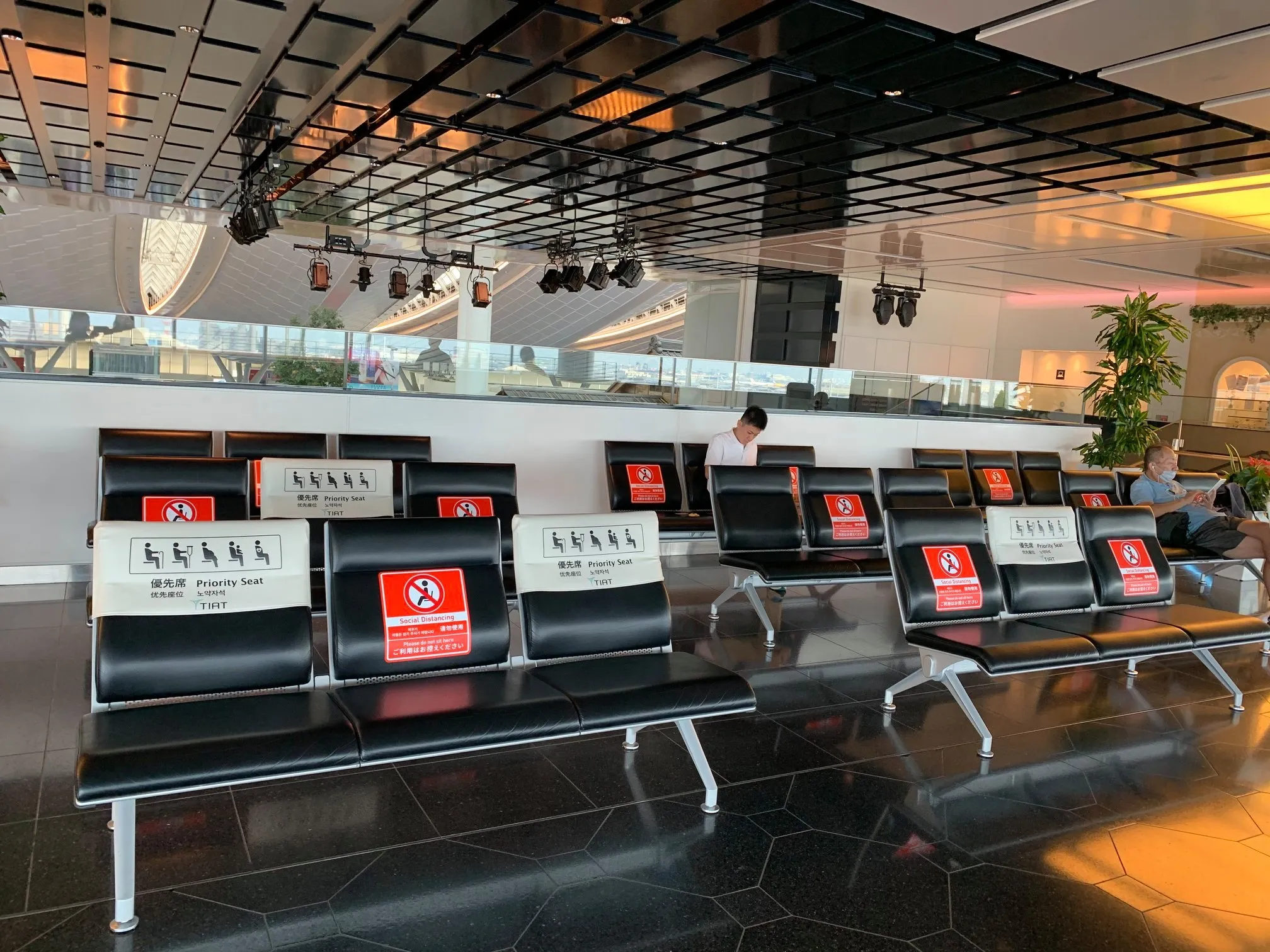
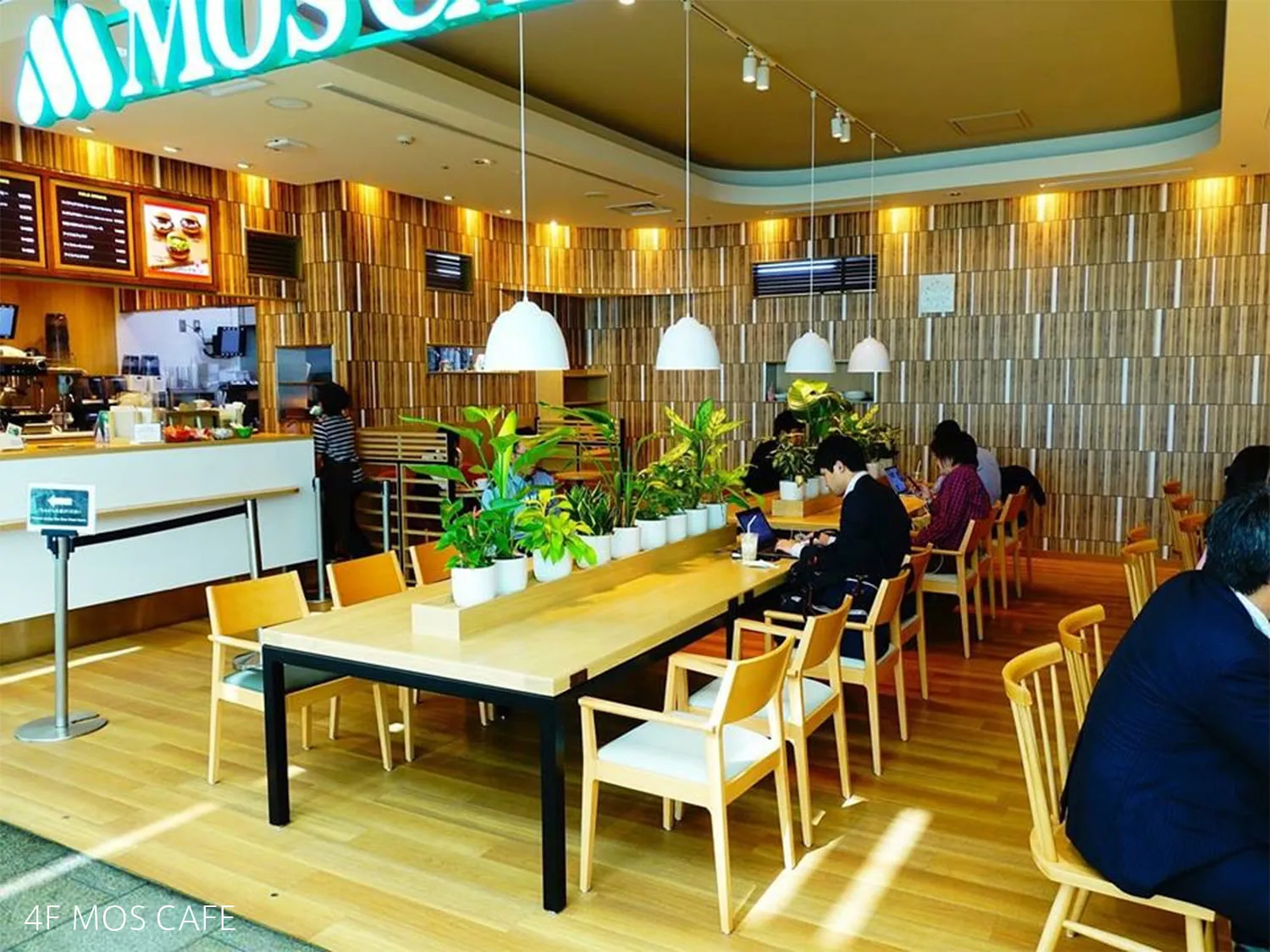
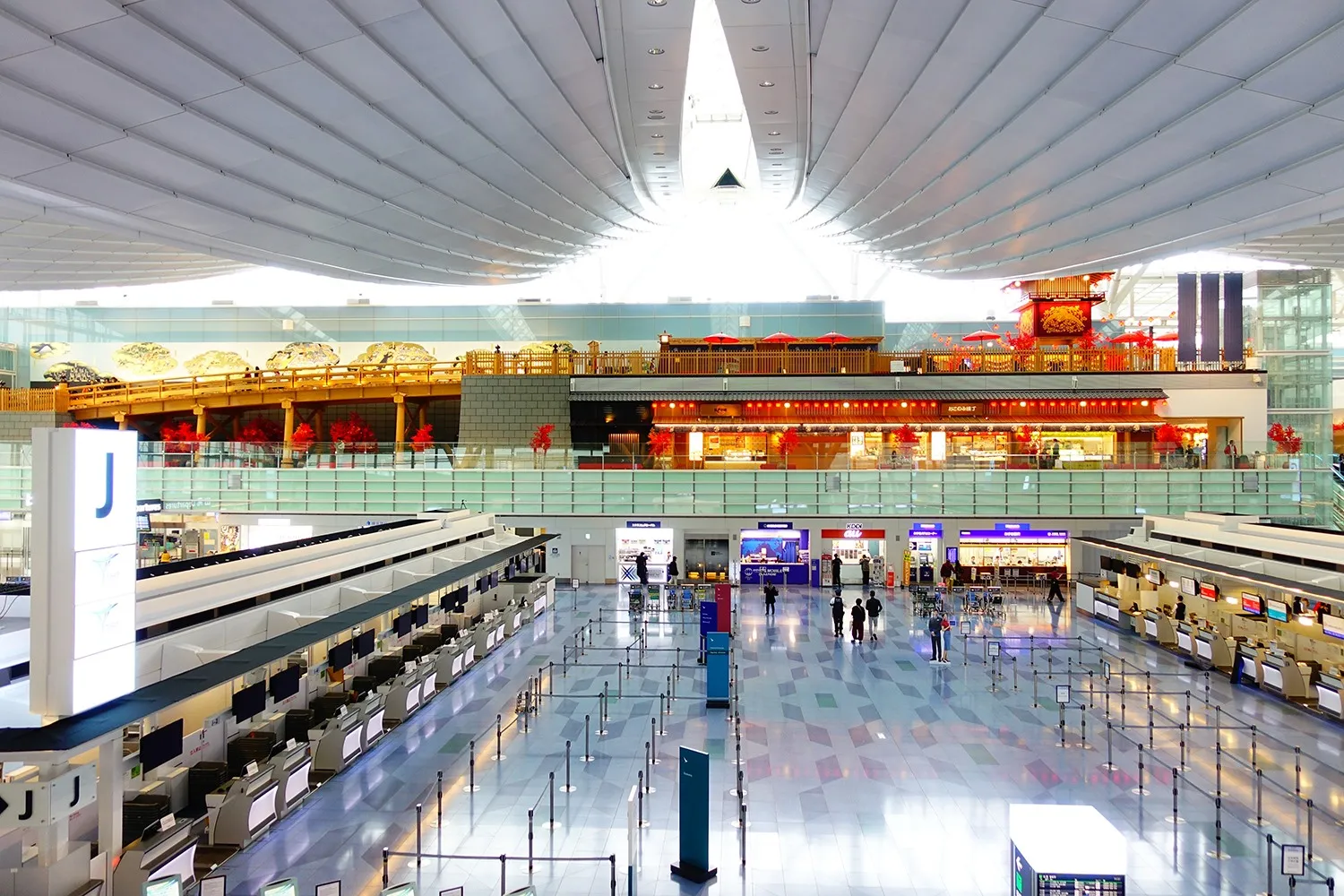
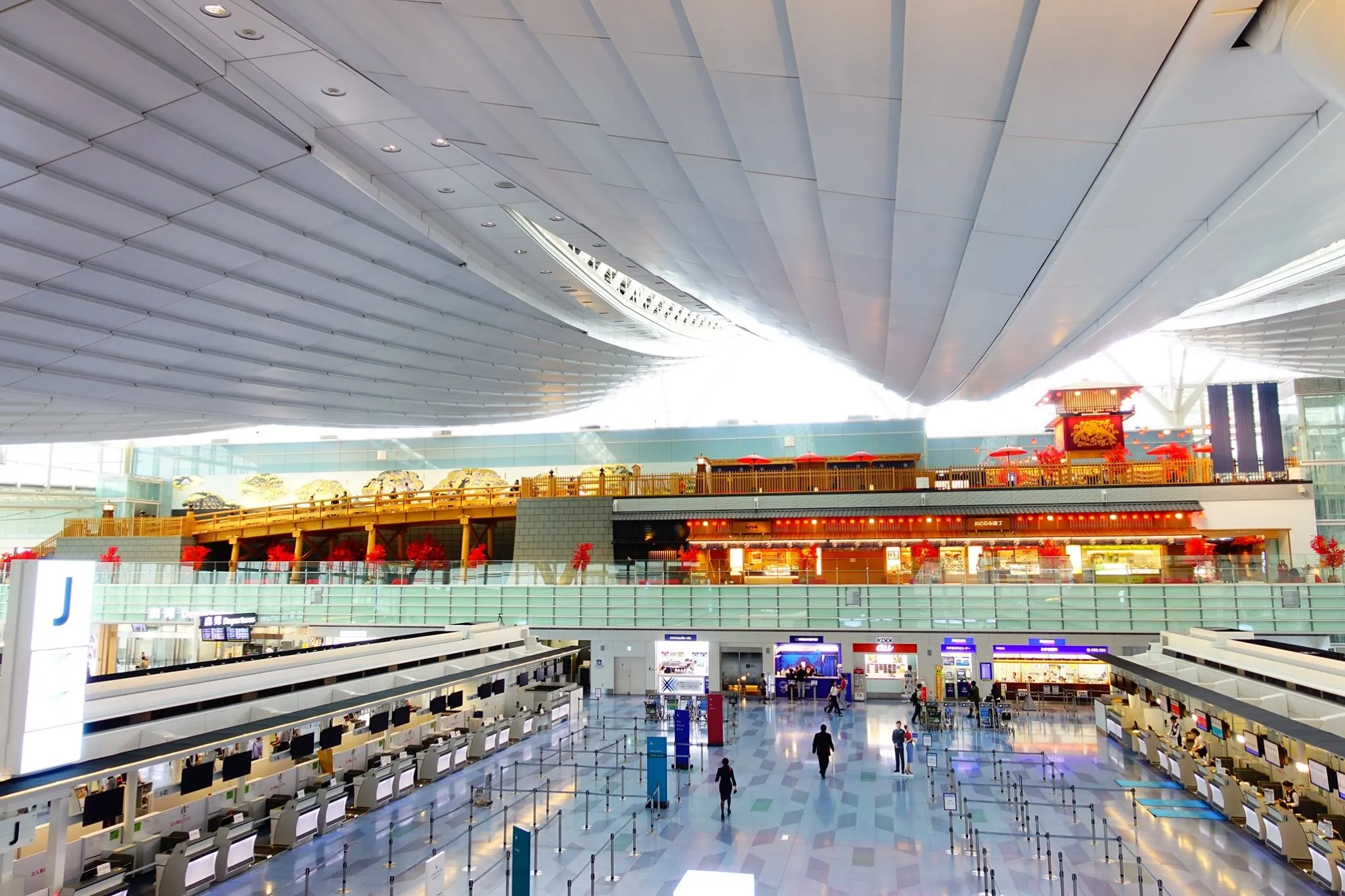
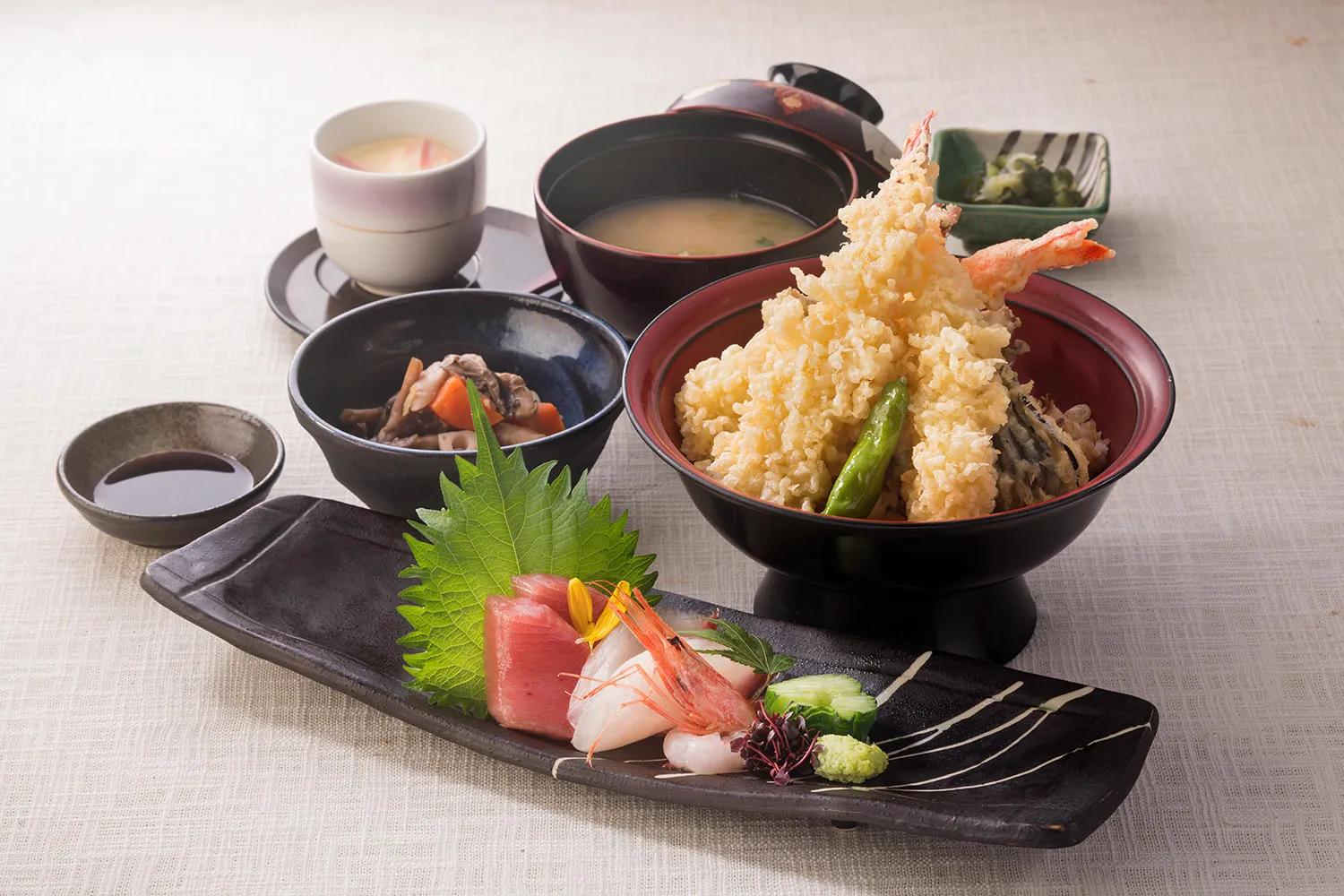
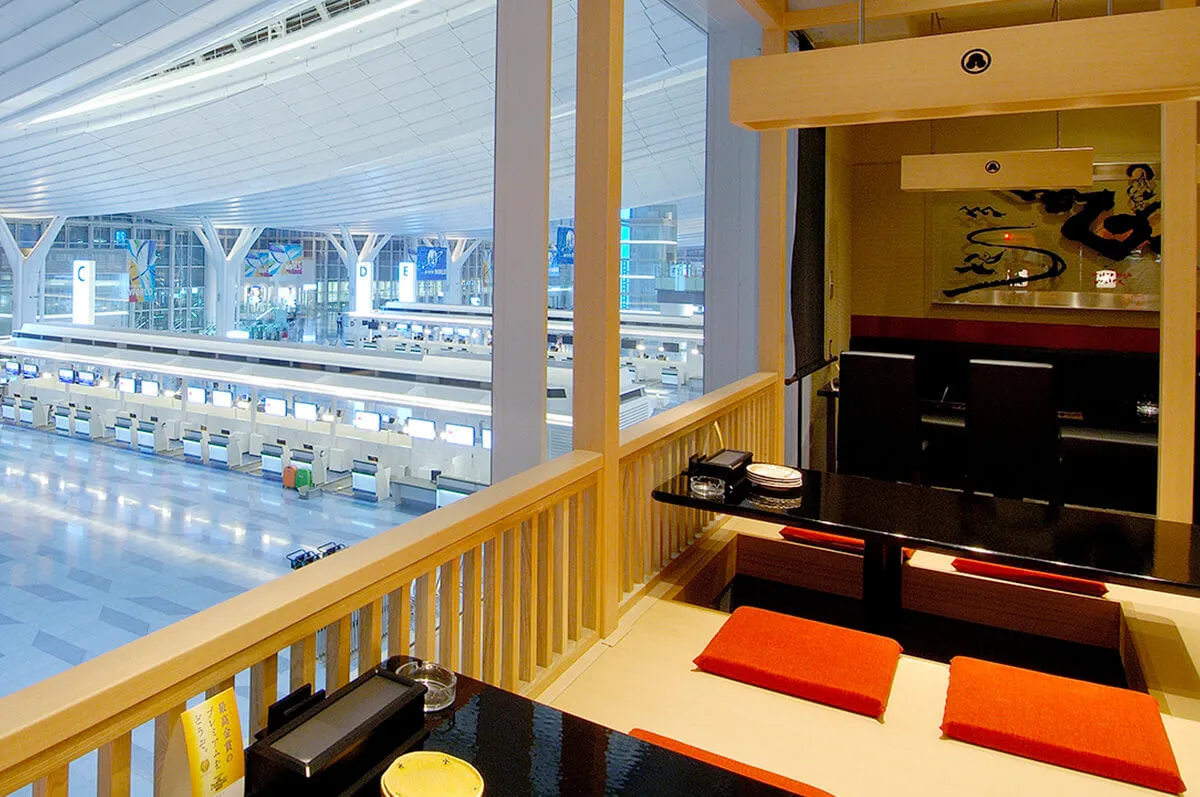
TIAT Lounge
T3, 4F · 24 hours
Pay at the doorShowers24 hours
Access: Walk-in ¥4,400 (ages 4–12 ¥2,200)
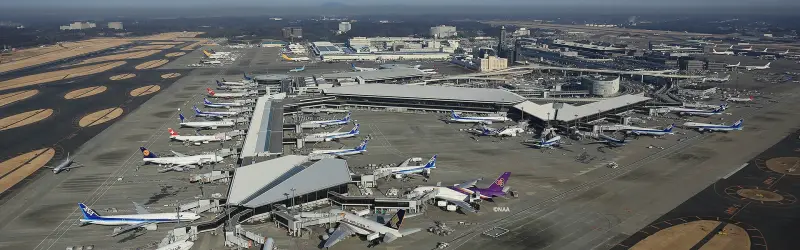
Haneda is the closer of Tokyo's airports, only about 15 km from Tokyo Station. Keikyu trains reach Shinagawa in about 11 minutes and the Monorail gets to Hamamatsucho in about 13. Terminal 3 handles international flights and stays open all night, while T1 and T2's domestic areas close from about midnight to 5 am. Wi-Fi is free.
By the bookingMentor Travel Desk · Updated · How we research
Whether you have a short connection, an overnight wait or are just passing through, this guide covers the services inside Haneda: lounges, WiFi, showers, lockers, hotels, food and the trains into Tokyo.
Please note: Hotels near the airport and car hire on this page can be booked directly on bookingMentor. We list places on merit, and bookings never affect what we say about them.
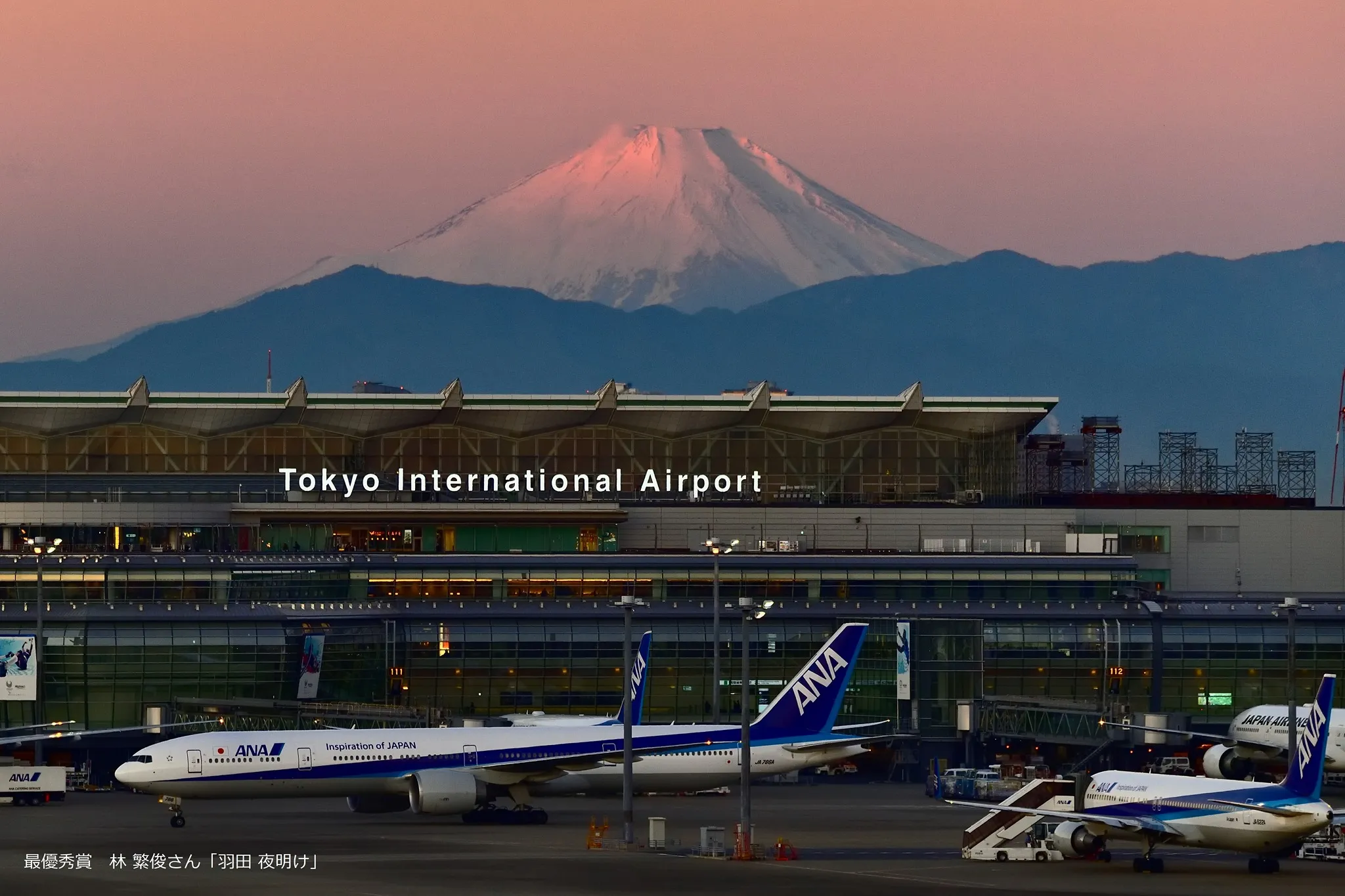
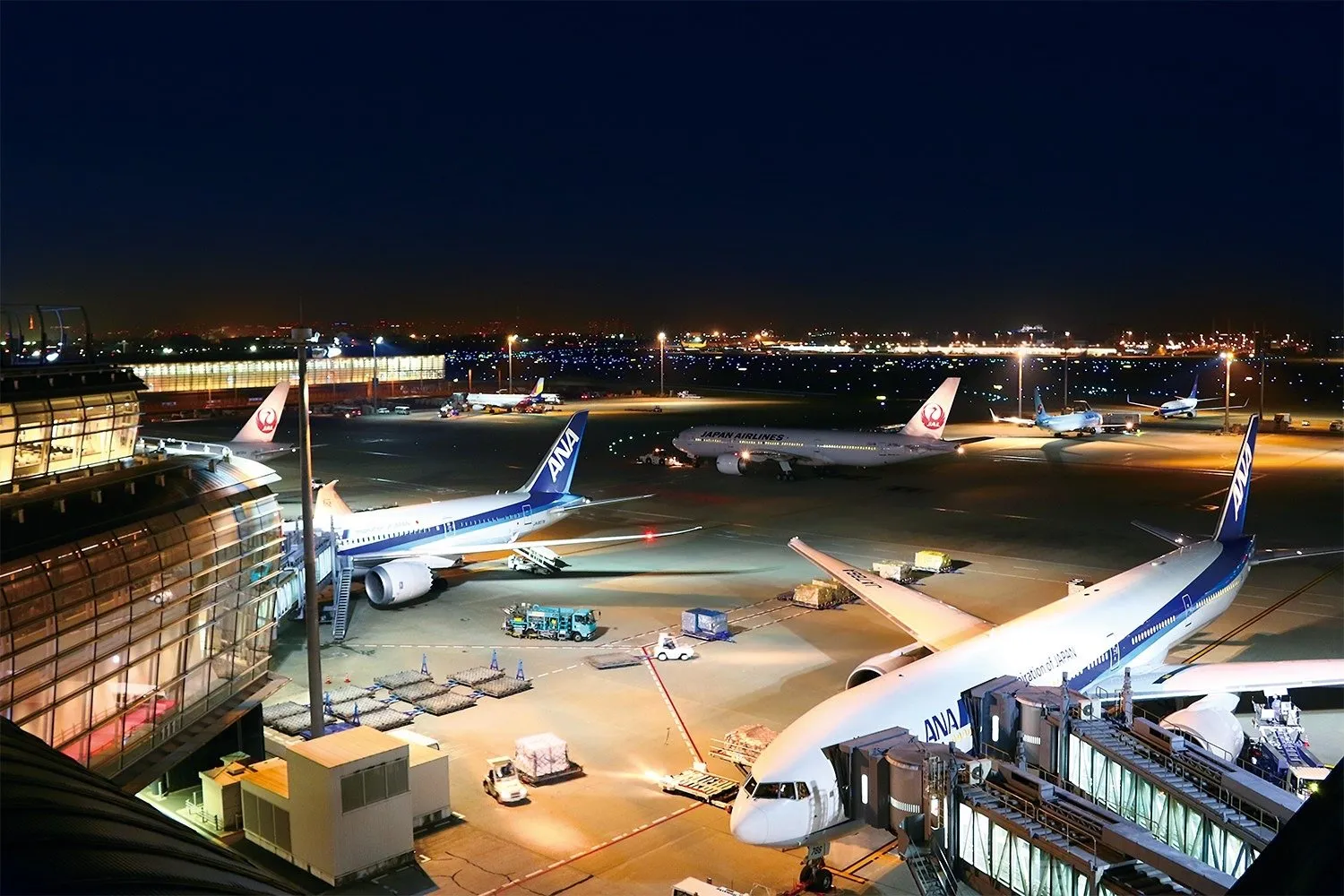
Tokyo Haneda Airport (HND) is the airport closest to central Tokyo, in Ōta ward on Tokyo Bay, about 15 km south of Tokyo Station. It is a hub for All Nippon Airways and Japan Airlines and handles most of Japan's domestic flights as well as a growing number of international ones.
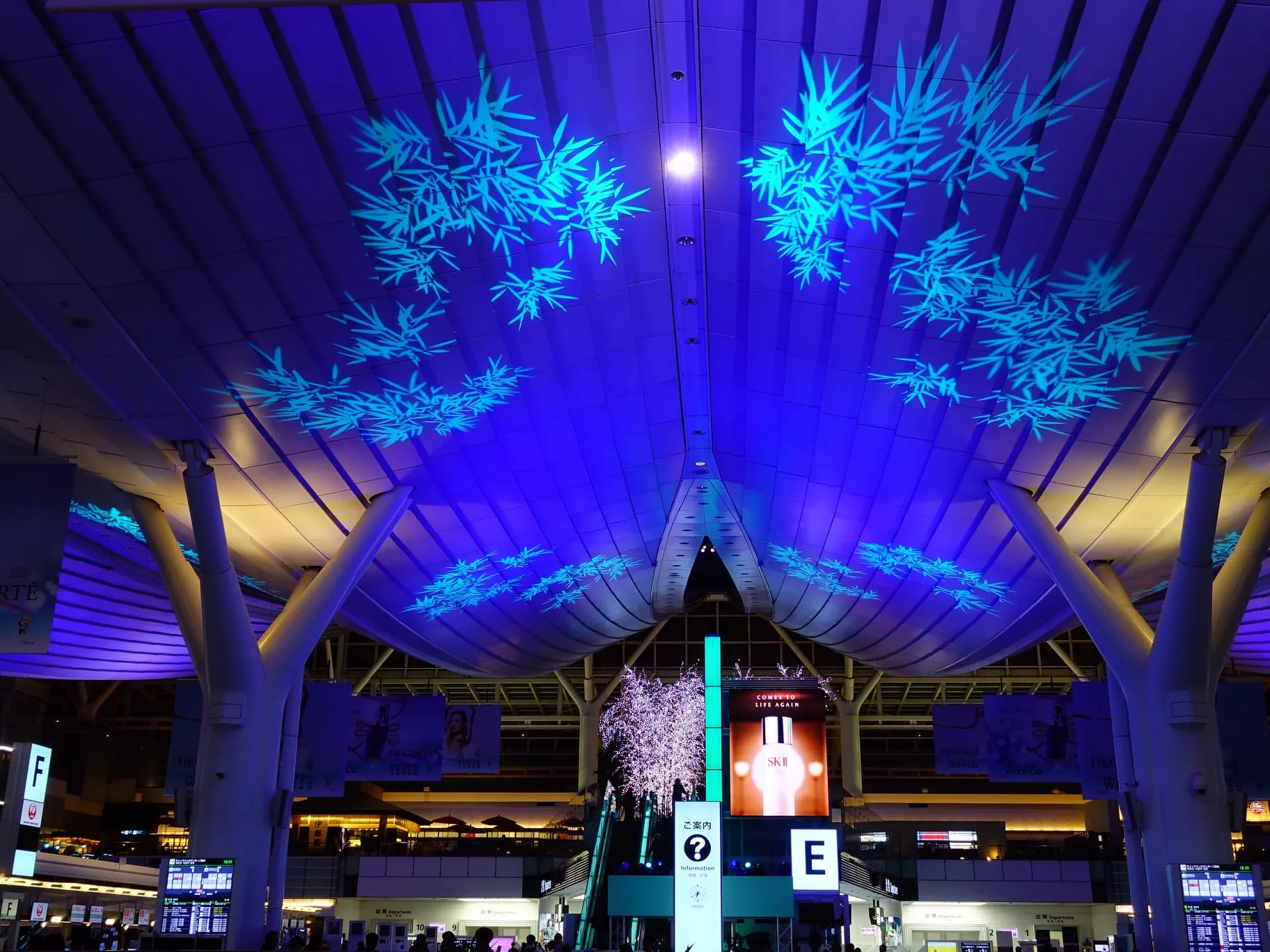
Haneda opened in 1931. Terminal 1 serves domestic flights of Japan Airlines, Skymark and StarFlyer; Terminal 2 serves ANA, Air Do and Solaseed Air's domestic flights and has an international wing; Terminal 3, opened in 2010, is the main international terminal. Free buses link the terminals, and the Keikyu line and Tokyo Monorail stop at each of them.
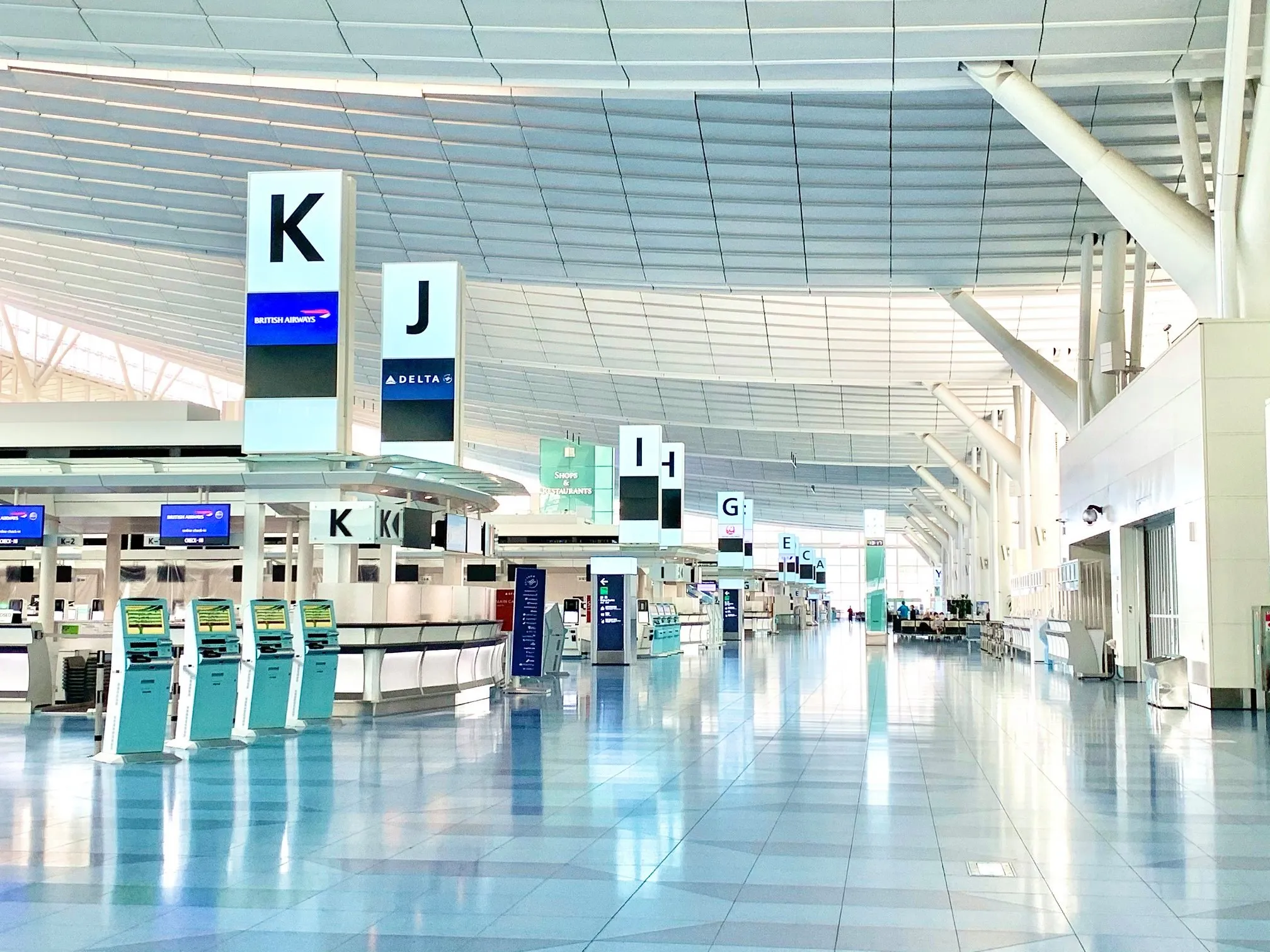
Terminal 3 and Terminal 2's international area are open 24 hours, while Terminal 1 and the domestic part of Terminal 2 close from about midnight to 5 am. For a long wait, Terminal 3 has 24-hour lounges and showers and a hotel you can use without entering Japan.
Haneda opened as Haneda Airfield on 15 August 1931. When Narita opened in 1978, most international flights moved there and Haneda became a domestic airport for three decades. It returned to the international market in October 2010, when a dedicated international terminal and a fourth runway (05/23) opened at the same time. That building was renamed Terminal 3 on 14 March 2020.
Four runways in two parallel pairs now carry one of the heaviest schedules anywhere. In 2024 Haneda handled 85,906,170 passengers, up 9.1 per cent, which made it the third-busiest airport in the world. Its closeness to the city is the main reason so many travellers choose it over Narita.
Free buses connect the three terminals, and the Keikyu and monorail lines also run between them. The trip from Terminal 3 to Terminals 1 and 2 is short, but a domestic connection after an international arrival includes immigration, customs and a new security check, so allow plenty of time. If you are flying on with ANA, you will usually head to Terminal 2; Japan Airlines domestic flights use Terminal 1.
Throughout this guide, landside is the public area before security, with check-in, arrivals, the stations and the shops. Airside is after security (and, at Terminal 3, departure immigration), with the gates and lounges. Only Terminal 3 and Terminal 2's international area are open all night.
This guide is written and maintained by the bookingMentor Travel Desk. We check terminal, transport and service details against the airport's own information and the published sources listed here, and update the page when something changes.
Last updated . Prices for lounges, showers, rooms and storage are as published by our sources and can change; train and bus fares are set by the operators. Spotted something out of date? Tell us.
Checked against trusted sources:
Haneda Airport passenger informationSleeping in AirportsKeikyu and Tokyo Monorail timetables
Departures and arrivals listed on bookingMentor for Tokyo International (Haneda) Airport.
Times are from the flights listed on bookingMentor, not a live departure feed. Always confirm with your airline before travelling.
Airlines with scheduled passenger flights at HND.
6 airlines
 All Nippon Airways
Japan
 Japan Airlines
Japan
No domestic match
38 airlines
 Air Canada
Canada
 Air China
China
 Air France
France
 Air India
India
 American Airlines
United States
 Asiana Airlines
South Korea
 British Airways
United Kingdom
 Cathay Pacific
Hong Kong
 China Airlines
Taiwan
 China Eastern Airlines
China
 China Southern Airlines
China
 Delta Air Lines
United States
 Emirates
United Arab Emirates
 EVA Air
Taiwan
 Finnair
Finland
 Garuda Indonesia
Indonesia
 HK Express
Hong Kong
 Korean Air
South Korea
 Lufthansa
Germany
 Philippine Airlines
Philippines
 Qantas
Australia
 Qatar Airways
Qatar
 SAS Scandinavian Airlines
Denmark
 Shanghai Airlines
China
 Singapore Airlines
Singapore
 Thai Airways International
Thailand
 Tianjin Airlines
China
 Turkish Airlines
Turkey
 United Airlines
United States
 Vietnam Airlines
Vietnam
 Scoot
Singapore
 Spring Airlines
China
 Tigerair Taiwan
Taiwan
 VietJet Air
Vietnam
No international match
Most lounges sell walk-in visits, including two in Terminal 3 that never close. Filter by what matters to you.
T3, 4F · 24 hours
Access: Walk-in ¥4,400 (ages 4–12 ¥2,200)
T3, 4F · 24 hours
Access: Walk-in ¥1,500 (ages 4–12 ¥750)
T2 international, 3F · 6:00–21:30
Access: Walk-in ¥4,400
T2, 3F
Access: ¥1,100, showers ¥320 per 30 minutes
T1 and T2 · about 6:00–21:00
Access: Walk-in ¥1,320
T3 · 7:30–23:00
Access: US$79 with a same-day Delta ticket
T1, T2 and T3
Access: Premium passengers and status members; some with rest zones
Free drinking water and bottle refill stations are airside, and the tap water in restrooms and food-court sinks is drinkable.
Terminal 3 has 15 shower rooms on the arrivals floor (2F, landside), open 24 hours: ¥1,500 for 30 minutes, ¥750 for each extra 15 minutes, with towels, toiletries, a hair dryer and a drink coupon. Royal Park Hotel's Refresh Rooms and several lounges also have showers.
Terminal 3 has @TIAT stations on several floors, landside and airside, with seats, outlets, desks and massage chairs; Terminals 1 and 2 have charging stations airside on 2F. Japan uses type A sockets at 100 V.
Staffed storage and coin lockers are in all three terminals; Terminal 3's storage counters are open 24 hours. Rates as published by the source:
| Bag size | Where | Per bag per day |
|---|---|---|
| T3 staffed storage (2F and 3F, 24 hours, up to 2 weeks) | Landside | ¥300 – ¥800 |
| T3 coin lockers | Landside | ¥300 – ¥500 |
| T1 and T2 staffed storage (B1F, 6:00–22:30) | Landside | ¥300 – ¥900 |
| T1 and T2 coin lockers (up to 7 days) | B1F, 1F, 2F | ¥300 – ¥500 |
Free WiFi on HANEDA-FREE-WIFI after registering with your name and a valid email address. A paid secure high-speed option is also available.
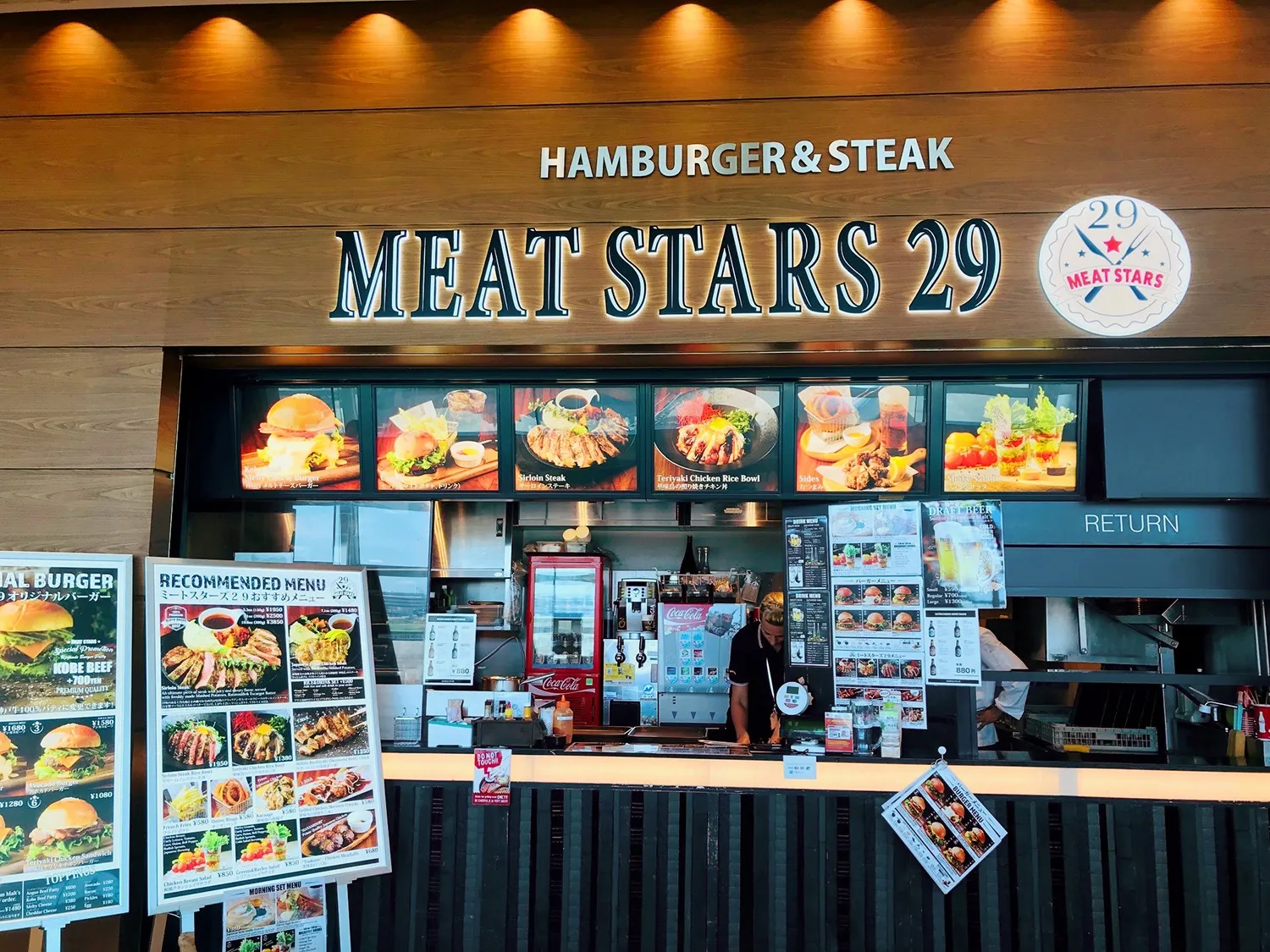
Late at night choice is limited: most shops in Terminals 1 and 2 close by 9 pm. Convenience stores keep going overnight.
Search for what you need: try "shower", "locker", "charge", "hotel" or "car".
Nothing matches that search. Try "sim", "wifi", "bag" or "food".
Terminal 3 and Terminal 2's international area operate 24 hours. Terminal 1 and the domestic part of Terminal 2 are open roughly from 5:00 to midnight, and people without tickets may be asked to leave overnight. Overnight, ticketed international passengers can stay airside in Terminal 3, where boarding passes are checked.
What happens between the aircraft door and the train, in order, so nothing catches you out.
For a domestic connection from Terminal 3 you clear immigration and customs, then take the free bus to Terminal 1 or 2.
International arrivals follow the signs to immigration.
Collect your bags and pass customs into the arrivals lobby (T3, 2F).
The Keikyu and Monorail stations are signed from the lobby; bus ticket counters and taxi stands are nearby.
T1 for JAL, Skymark and StarFlyer domestic flights, T2 for ANA domestic and some international flights, T3 for international flights.
Check in at your airline's counter; T3 departures are on the 3F.
International passengers also pass departure immigration.
Lounges at T3 are on the 4F airside.
Haneda is only about 15 km from Tokyo Station. The Keikyu line and the Tokyo Monorail stop at every terminal, and limousine buses serve the whole Kanto region. Take the Keikyu line for Shinagawa and the south and west of the city, and the Tokyo Monorail for Hamamatsucho and connections onto the JR Yamanote Line. The airport puts the Keikyu journey at about 15 minutes to Shinagawa, about 20 minutes to Hamamatsucho and about 30 minutes to Tokyo Station. The Tokyo Monorail's Haneda Express takes 13 minutes from Terminal 3 to Hamamatsucho, 16 minutes from Terminal 1 and 18 minutes from Terminal 2; local trains take 17, 22 and 24 minutes. In Terminals 1 and 2 both lines are on the B1 floor. Stations are named after the terminals, so check your terminal before you board, especially for domestic flights. A third rail option is on the way. JR East's Haneda Airport Access Line is under construction and is planned to link Terminals 1 and 2 directly with central Tokyo by 2031, which should make journeys from Tokyo Station simpler.
Car rental counters are on the ground floor of Terminals 1 and 2. Compare and book car hire on bookingMentor.
Book car hire on bookingMentorKeikyu trains run underground from the terminals to Shinagawa, a JR hub, and on towards central Tokyo and Yokohama.
The monorail runs to Hamamatsucho, where you change to the JR Yamanote line. The express is quickest.
Buy a ticket before boarding at the counters or vending machines.
Taxi stands are at the curbside of each terminal.
Free buses link the three terminals; T1 to T3 takes about 7 minutes. Terminals 1 and 2 are also a 5–10 minute walk apart.
Haneda is safe and well staffed. Overnight, boarding passes are checked in Terminal 3, and the domestic terminals ask non-ticketed people to leave.
Others of this kind you opened on this device, so you can get back to them quickly.
On the Tokyo Monorail, yes; on the Keikyu line, no. The monorail ends at Hamamatsucho, where you can stay on the pass and change to the JR Yamanote line.
You enter Japan at Terminal 3, collect your bags, then ride the free bus to Terminal 1 or 2. The buses stop at about 0:55, so after a very late landing plan to wait in T3 until morning.
First Cabin, on the Terminal 1 arrivals level, has one-person cabins with shared bathrooms, a cheaper choice than the hotels joined to Terminals 2 and 3.
In Terminal 3, at the @TIAT stations on several floors; in Terminals 1 and 2, at the airside charging stations on 2F. Bring an adapter for Japan's two-pin type A sockets.
Yes, even from the restroom and food-court taps. Airside you can also fill a bottle for free at the refill stations.
The rental desks are on the ground floor of Terminals 1 and 2, so if you land at Terminal 3 take the free bus across first.
Get an answer from the bookingMentor travel team and travellers who have flown through Haneda Airport.
Only Terminal 3 is open all night, so that is where overnight travellers stay. There are no dedicated sleep zones, but you will find recliners and padded benches without armrests; T3 quietens after the late flights, although lights, announcements and cleaning continue. Several hotels are inside or connected to the terminals.
Open 24 hours, with recliners and armrest-free benches in places.
Capsule-style private cabins on the Terminal 1 arrivals level.
Close from about midnight to 5 am; you may be asked to leave.
Ticketed international passengers can stay airside overnight; boarding passes are checked.
There are no dedicated free rest or quiet zones in the public areas. Informal spots with recliners and padded, armrest-free benches exist, mostly in Terminal 3. The @TIAT stations in T3 have seating with outlets and massage chairs, and quiet rest zones are found only in some airline lounges for eligible passengers.
Cots and blankets are not known to be handed out; ask your airline's desk if you are stranded. If your flight is cancelled, ask your airline about a hotel.
Haneda has hotels inside or connected to every terminal, including transit rooms you can use without entering Japan.
Terminal 3, connected; transit rooms airside
Landside rooms, airside transit rooms and short-stay Refresh Rooms with showers.
Terminal 3, covered walkway
Two hotels next to Terminal 3 with day rooms.
Terminal 1, arrivals level
Budget capsule-style hotel with one-person cabins.
Terminal 2, direct access from the departure lobby
Upscale hotel inside Terminal 2.
We search, you stay. Check out these great places and prices or explore all our hotel deals.
Haneda is only about 15 km from central Tokyo, so even a five-hour layover can include a short trip to Shinagawa or Hamamatsucho if you can enter Japan.
Tokyo
Meiji Jingu stands in a large wooded park in Shibuya, Tokyo, next to Harajuku Station and Yoyogi Park. It is dedicated to the spirits of Emperor Meiji, who reig...
Tokyo
Senso-ji is a Buddhist temple in Asakusa, in Taito City in north-eastern Tokyo. According to temple tradition, two fishing brothers found a small statue of the...
Tell us how long you have and whether you can leave the secure area.
Immigration, security and Tokyo traffic are already factored in.
Explore more options to hire a car for cheap
Everything travellers ask before flying through Tokyo.
Checked against the airport's information and the sources listed below.
Getting there
About 15 km south of Tokyo Station, which makes Haneda the closest airport to the centre. Both rail lines stop inside every terminal, and limousine buses cover the rest of the Kanto region.
Only in part. For a night at the airport go to Terminal 3, where ticketed international passengers may stay airside; the domestic terminals shut around midnight and can ask people without a ticket to leave.
In Terminal 3, yes, on recliners or benches without armrests, though lights, announcements and cleaning carry on all night. If you want a bed, the hotels in or beside each terminal sell day rooms.
International flights mostly use Terminal 3. Domestic flights are split by airline: JAL, Skymark and StarFlyer use Terminal 1, while ANA, Air Do and Solaseed Air use Terminal 2, which also has an international wing.
About 15 minutes on the Keikyu line, according to the airport. Tokyo Station is about 30 minutes away.
There are 6 ways from Tokyo International (Haneda) Airport into Tokyo: Car hire, Keikyu Airport Line, Tokyo Monorail, Limousine buses, Taxi and Inter-terminal buses. The details of each are under Getting to & from the airport.
The IATA code of Tokyo International (Haneda) Airport is HND and its ICAO code is RJTT.
General
Yes. The public shower rooms on the Terminal 3 arrivals floor stay open all night and include towels and toiletries. Airside, TIAT Lounge and Power Lounge Premium have showers for their guests.
Terminal 3's staffed storage never closes and keeps bags for up to two weeks. In Terminals 1 and 2 the counters keep daytime hours, so for a late pickup there, use a coin locker instead.
Stay & facilities
Yes, once you register a name and email address. If you need to work, a paid secure high-speed connection is also offered.
Prices & payment
Yes. In Terminal 3 the TIAT Lounge (¥4,400) and Sky Lounge (¥1,500) are open 24 hours; Power Lounges in T1 and T2 sell entry from ¥1,320.
Timing & weather
The Haneda Express monorail takes 13 minutes from Terminal 3, 16 minutes from Terminal 1 and 18 minutes from Terminal 2. Local monorail trains take a few minutes longer.
We use necessary cookies to make this site work. With your permission we would also like to remember your preferences, measure how the site is used, and show relevant ads and partner offers. You can change your mind at any time under "Cookie settings" on our Privacy policy page.