
Venue
University of Dhaka, Shahbagh, Dhaka, Bangladesh
Nobanno Utshob (নবান্ন উৎসব) guide
Nabanna falls on 16 November under Bangladesh's revised calendar, with village celebrations spread over several days. It suits food lovers curious about the aman rice harvest, rice cakes and milk puddings. Decide whether you want Dhaka's free stage programme or a village celebration, as they are different trips.
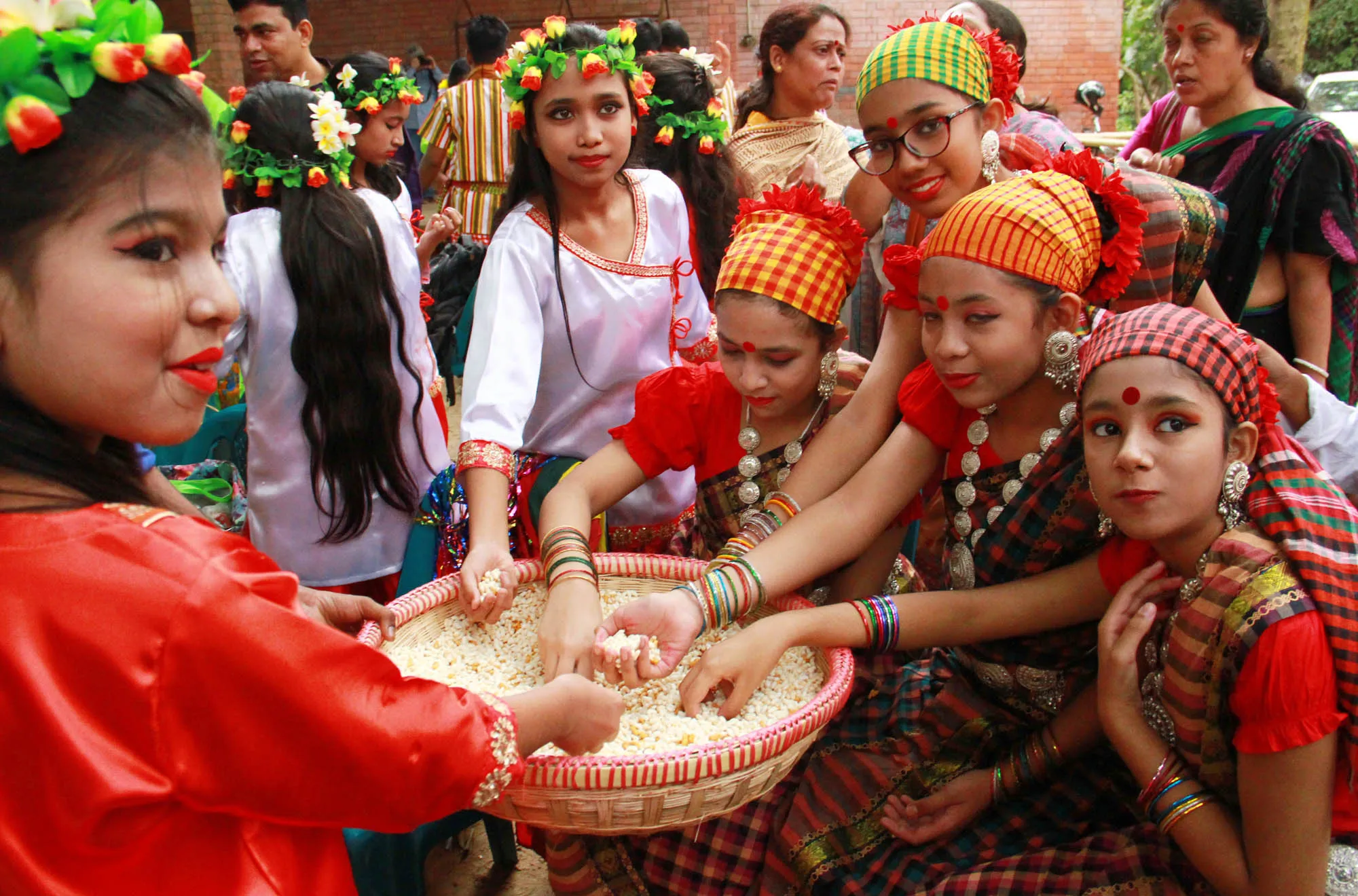
Nabanna, literally new food, is the Bengali harvest festival that greets the aman rice crop. Its heart is the kitchen. The first grain of the season is ground into flour for pitha, the rice cakes of the cool months, or simmered with milk into sweet puddings, and the results are shared with neighbours and offered in thanks.
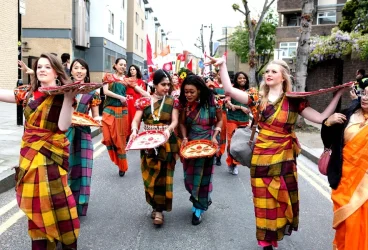
Villages keep it at home and at small fairs, much as they have for generations. Dhaka has its own version, a free day of folk music and dance with food stalls, organised by a national committee for more than a quarter of a century.
For a visitor it is the easiest way into the rural calendar that still shapes life in Bangladesh, and the start of the long pitha season that runs through the winter.
 “Nabanna Festival – A Beautiful Memory of Bengali Culture and Tradition”
University of Dhaka, Shahbagh, Dhaka, Bangladesh
Hotels near the venue fill up around the event dates.
Take food and pass things with your right hand, and accept at least a taste of whatever is offered. Ask before photographing anyone at prayer or making an offering of new rice. Dress modestly, with shoulders and knees covered, and slip off your shoes when you step inside a home.
Families are busy around the date, grinding, cooking and receiving relatives. Keep visits short unless you are asked to stay, and follow your guide's lead on whom to greet first.
Pitha stalls and village fairs run on cash, and change for large notes is scarce, so carry a good supply of small taka notes. Buy from stalls cooking in front of you, where the rice cakes come straight off the steamer or griddle.
Much of the food is eaten by hand, so wet wipes are useful. A cloth bag or a small box helps if you want to carry sweets and muri back to your hotel, and both keep well for a day or two.
Do not turn up at a farmhouse unannounced. Go through a contact who knows the family, or a tour operator that already works with the village, and agree in advance what the visit includes and whether a meal is part of it.
A small gift of sweets or fruit for the household is welcome. If you want to pay for hospitality, settle it through your contact; handing money to your hosts at the door which can embarrass them in front of the neighbours.
The Dhaka programme opens with a procession. Arrive near the start.
The strongest folk performances come early, and the food tables are fullest before lunch.
Allow at least half a day; by mid-afternoon the programme winds down.
In the countryside families grind new flour and cook over several days, so a visit a day early or late misses little.
Nabanna opens the season of rice cakes sold hot from roadside stalls through the cool months.
Decide early which Nabanna you want, because they are two different trips. The city version is a free programme of folk songs, dancing and food stalls in central Dhaka, put on every year since 1998 by a national festival committee. It is easy to reach and easy to leave, and it gathers singers and performers from across the country in one place. Its weakness is uncertainty. The venue moves from year to year and is usually named only a few days before, so keep the plan loose until mid-November and read the Dhaka papers.
The rural version is the original. Nabanna grew up in the farming villages, where the aman paddy has just come in from the fields, and a day with a farming family shows the harvest as households really keep it. You need an introduction. A Bangladeshi friend with relatives in the countryside, or a tour operator that runs village stays, can arrange one, and the small district melas nearby add food, children's toys and usually a singer.
Three or four days let you do both: the city festival on the date, then a village on either side of it.
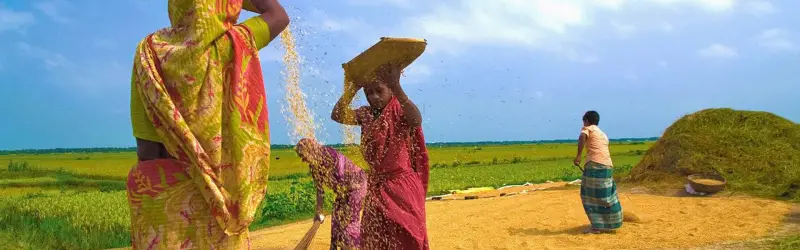
The name means new food, and nothing about it is metaphorical. Once the aman crop has been cut and threshed, households grind the first grain into fresh flour. Part of it becomes pitha, the rice cakes of the Bengali winter, from steamed bhapa pitha packed with jaggery and grated coconut to rolled patishapta. Some is shaped into puli, small dumplings stuffed with coconut, and the rest is simmered in milk as kheer and payesh, two sweet rice puddings. A pot of khichuri, rice and lentils cooked together, often feeds the family the same day. Muslim families send shinni, a sweet offering, round to the neighbours. Hindu families present the new rice in worship, usually to Lakshmi, the goddess of wealth and the harvest, with thanks for this crop and a prayer for the next.
The word carries a darker echo too. Nabanna is the title of Bijon Bhattacharya's play about the Bengal famine of 1943, a reminder of what a full granary means in a land that has known hunger.
It is also a time for visiting. Families make pitha together, invite relatives and neighbours to eat, and share the first meal of the harvest with the people who helped bring it in. In the villages the small fairs add folk songs, dancing, the odd travelling play and games such as tug of war. Joining in, even as a guest, is the quickest way to be welcomed.
Dhaka's festival brings the countryside to town. In 2022 the Shilpakala Academy gave a whole day to folk music, Lalon and Tagore songs among it, with recitation and dance. In 2025 there were processions and Baul singers, Indigenous groups performed, tables were laid with pitha, and farmers received awards. The stalls tend to give out muri, or puffed rice, with something sweet.
Hazrat Shahjalal International Airport is about 17 km north of the centre. Regional routes include Kolkata to Dhaka and Bangkok to Dhaka.
With luggage, a ride-hail car or prepaid taxi is simplest. The Elevated Expressway to Farmgate costs 80 taka in toll.
The line runs from Uttara North to Motijheel. Shahbag and Dhaka University stations are close to Ramna Park and the fine arts campus, and trains have started at about 7 am.
Intercity buses stop in market towns, not at farm gates. Hiring a car with a driver lets you reach a mela and leave when you choose.
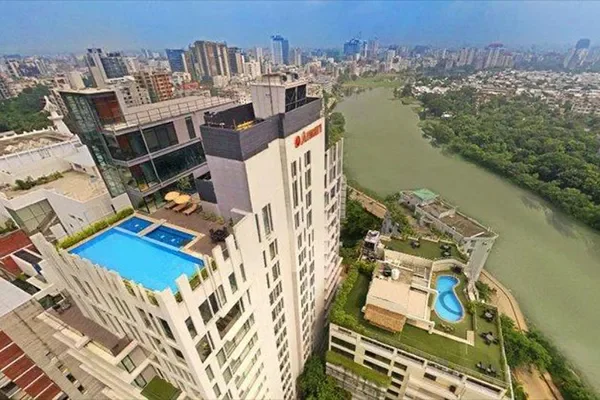
Hotels near Shahbag and Segunbagicha put all three recent venues within a short ride. Gulshan and Banani have more international hotels but mean a slower trip through traffic on festival morning.
 Top Rated
20 photos

Dhaka
 Top Rated
19 photos

Dhaka
 Top Rated
15 photos
Dhaka
 10 photos

Dhaka
Free cancellation
 Save 14%
5 photos

Dhaka
Free cancellation
 5 photos

Dhaka
Dhaka's 1991 to 2020 normals give November an average high of 29.7 °C and a low of 19.5 °C, with only 21 mm of rain on about two days.
The monsoon is over and mornings are fresh, a comfortable time for an outdoor festival. Haze and dust are common in the city.
The busiest routes into Dhaka (DAC).
Door to door from Hazrat Shahjalal International Airport (DAC) to Faculty of Fine Arts, with stops where you like.
Places to eat in Dhaka before or after the celebrations.
House 16, Road 4, Block F. Banani Chairmanbari Moshjid Road. Beside Banani Police Station Dhaka, 1213
Cuisine:BengaliBangla-Chinese

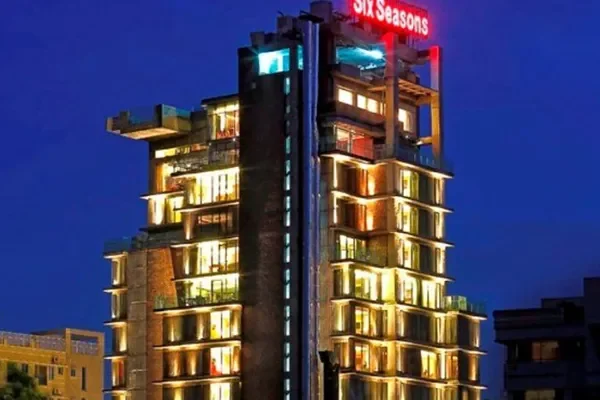
15th Floor, Six Seasons Hotel, House 19, Road 96, Gulshan 2, Dhaka 1212, Bangladesh
Cuisine:InternationalBuffet

Level 12-13 & Rooftop, Rahman Regnum Center, 191/B Gulshan Link Road, Tejgaon, Dhaka 1208, Bangladesh
Cuisine:ContinentalChinese
Dasura Tower (2nd Floor), Mirpur Road, opposite Sher-e-Bangla National Cricket Stadium, Mirpur, Dhaka 1216
Cuisine:BangladeshiChinese

Khan Tower (Level 13-14), Plot 14 & 16, Sonargaon Janapath, Sector 11, Uttara, Dhaka 1230, Bangladesh
Cuisine:ThaiContinental

Road 11, Banani, Dhaka, Bangladesh
Cuisine:BengaliSteaks


Others of this kind you opened on this device, so you can get back to them quickly.
No questions yet about Nobanno Utshob (নবান্ন উৎসব). Ask the community or our travel team, and the answer will show here once it is published.
Our team answers questions here
Sights within easy reach of the festival.
Dhaka
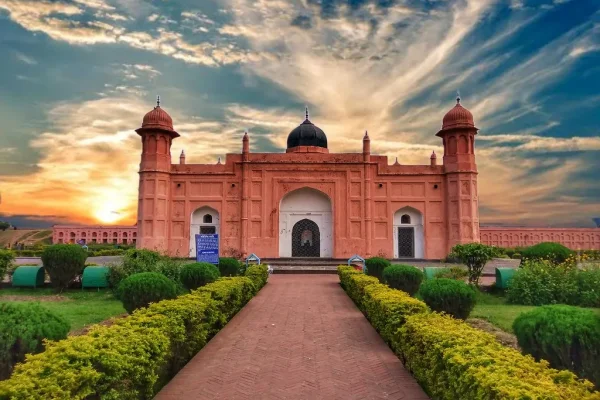
The fort stands in the Lalbagh area of Old Dhaka, near the old course of the Buriganga River. Prince Muhammad Azam Shah, a son of the emperor Aurangzeb, started...
Dhaka
Ahsan Manzil, known as the Pink Palace, is the former palace of the Nawabs of Dhaka at Kumartoli in Old Dhaka, on the bank of the Buriganga River near Sadarghat...
Dhaka
Dhakeshwari Temple, officially Dhakeshwari Jatiya Mandir, is the National Temple of Bangladesh and the country's largest Hindu temple, on Dhakeshwari Road near...
Dhaka
Jatiya Sangsad Bhaban, the National Parliament House of Bangladesh, is the seat of the country's parliament in Sher-e-Bangla Nagar, central Dhaka, designed by t...
Festivals held in the same weeks, if you want to plan more than one.
Cultural Events, Religious Festivals, Social Festivals
Sukhothai, Thailand
1 photo
Cultural Events, Religious Festivals, Fair
Bagerhat, Bangladesh
Cultural Events, Arts Festivals, Religious Festivals
Moulvibazar, Bangladesh
Festivals and events across Bangladesh, with dates, venues and ticket details where available.

Cultural Events, Folk Festival, Social Festivals
Dhaka, Bangladesh
Cultural Events, National Day, Parade
Dhaka, Bangladesh
10 photos
Tell us where and when you want to go, and local travel experts send you offers for your trip.
Hire someone who lives in Dhaka to plan the route, translate and get you to the best spots early.
Neither in particular. It is a harvest festival first. Muslim households mark it by sharing a sweet offering with neighbours, Hindu households offer the new rice in worship, and the city fair draws everyone.
Yes. The national committee's programme is open to anyone who turns up, with no tickets or passes. You pay only for what you eat or buy at the stalls.
Aman is the rice crop that grows through the monsoon and is cut in Agrahayan, the month Nabanna opens. It is the harvest the festival exists to celebrate, and its first grain goes straight into the festival kitchen.
Patishapta is a thin rice-flour pancake rolled around a sweet filling, often coconut and jaggery or thickened milk. It is one of the pitha you will meet from Nabanna onwards, alongside the steamed bhapa kind.
The Jatiya Nabanna Utsab Udjapan Parishad, the national committee for the festival. It was founded by Shahriar Salam and has run the city celebration each year since 1998.
Yes. Bengali communities in West Bengal and Tripura keep it, as do people in the Barak Valley of Assam. The customs are close cousins of those in Bangladesh, built around new rice, sweets and family meals.
Sometimes. By the festival much of the paddy is already cut, but threshing and flour-grinding carry on around the date. Ask your contact whether the family is happy for a guest to lend a hand; most visitors end up in the kitchen instead.
Shinni is a sweet offering that Muslim families prepare and share with their neighbours at Nabanna and on other occasions. If a bowl is offered to you, accepting it is the polite response.
Very well. The signature foods are rice cakes, puffed rice and milk puddings, none of which contain meat. Vegans should ask about ghee and milk, which turn up in many pitha and in every payesh.
Because the revised calendar ties the first day of the harvest month to one fixed date in mid-November. Under the older reckoning, dates did not always land on the same day of the western calendar from year to year.
We use necessary cookies to make this site work. With your permission we would also like to remember your preferences, measure how the site is used, and show relevant ads and partner offers. You can change your mind at any time under "Cookie settings" on our Privacy policy page.









 Plan your trip with AI